Visual guides
Open a picture to browse the gallery and read a short explanation. Use Read more for the complete guide, sources and a question to try. Explore all 100 guides or choose a topic.
Try a different word or choose another topic.
Scroll sideways to explore the topics and their guides.
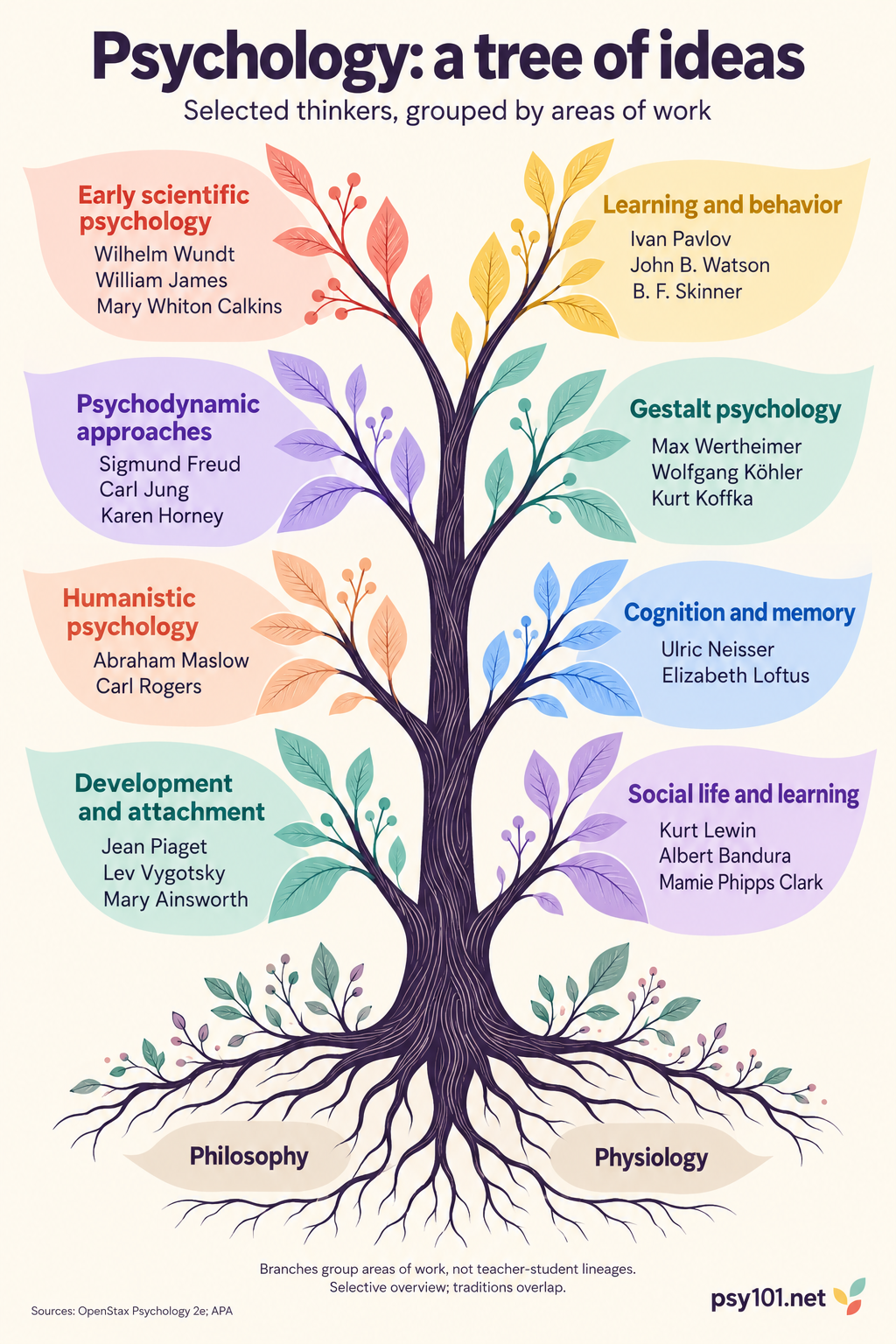
People and fields
Find a thinker or a field, then follow the question into psychology.
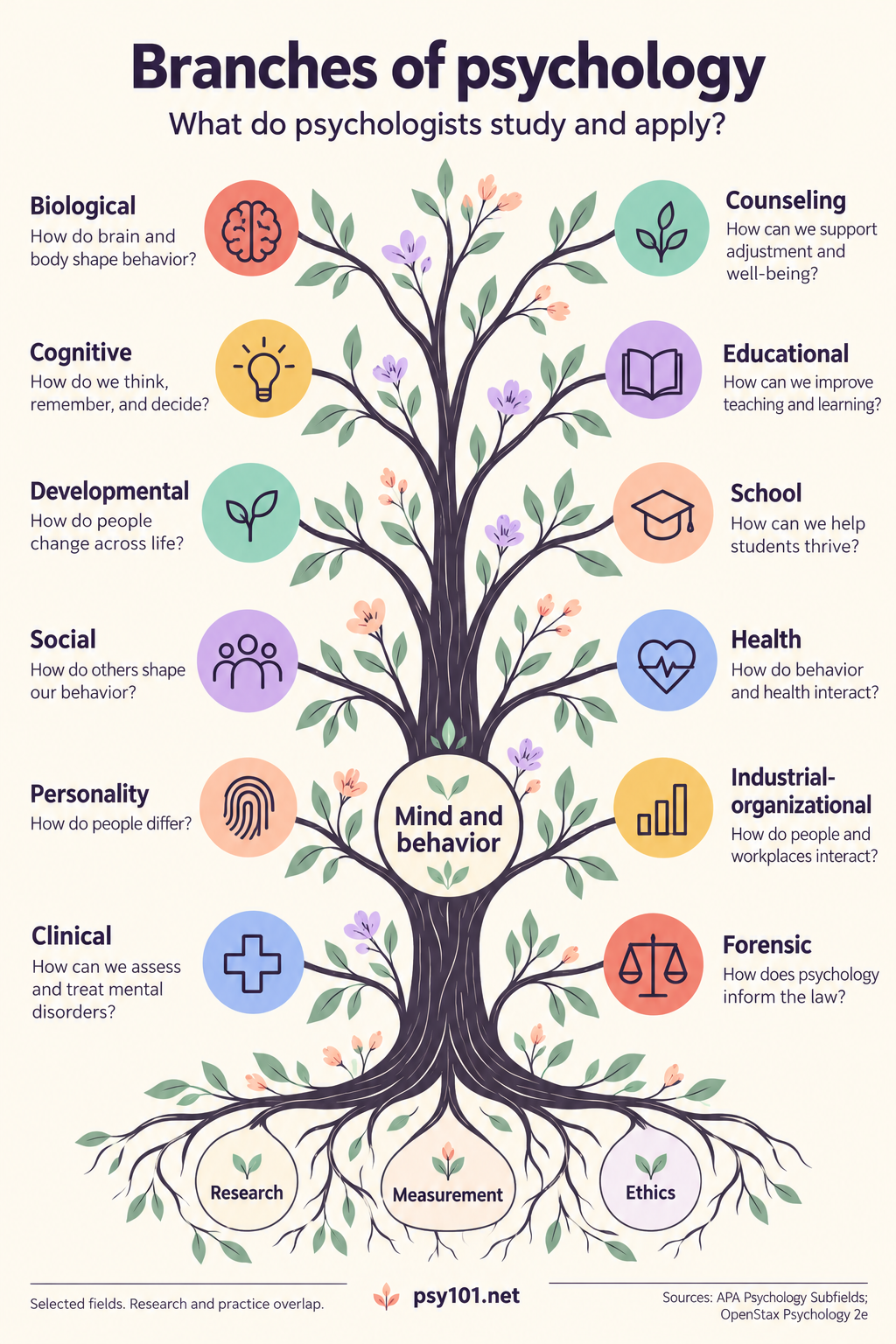
Branches of psychology
Explore twelve fields through the kinds of questions they investigate.
Read moreWhat is psychology?
Read the short lessonTurn an everyday observation into a question about mind and behavior.
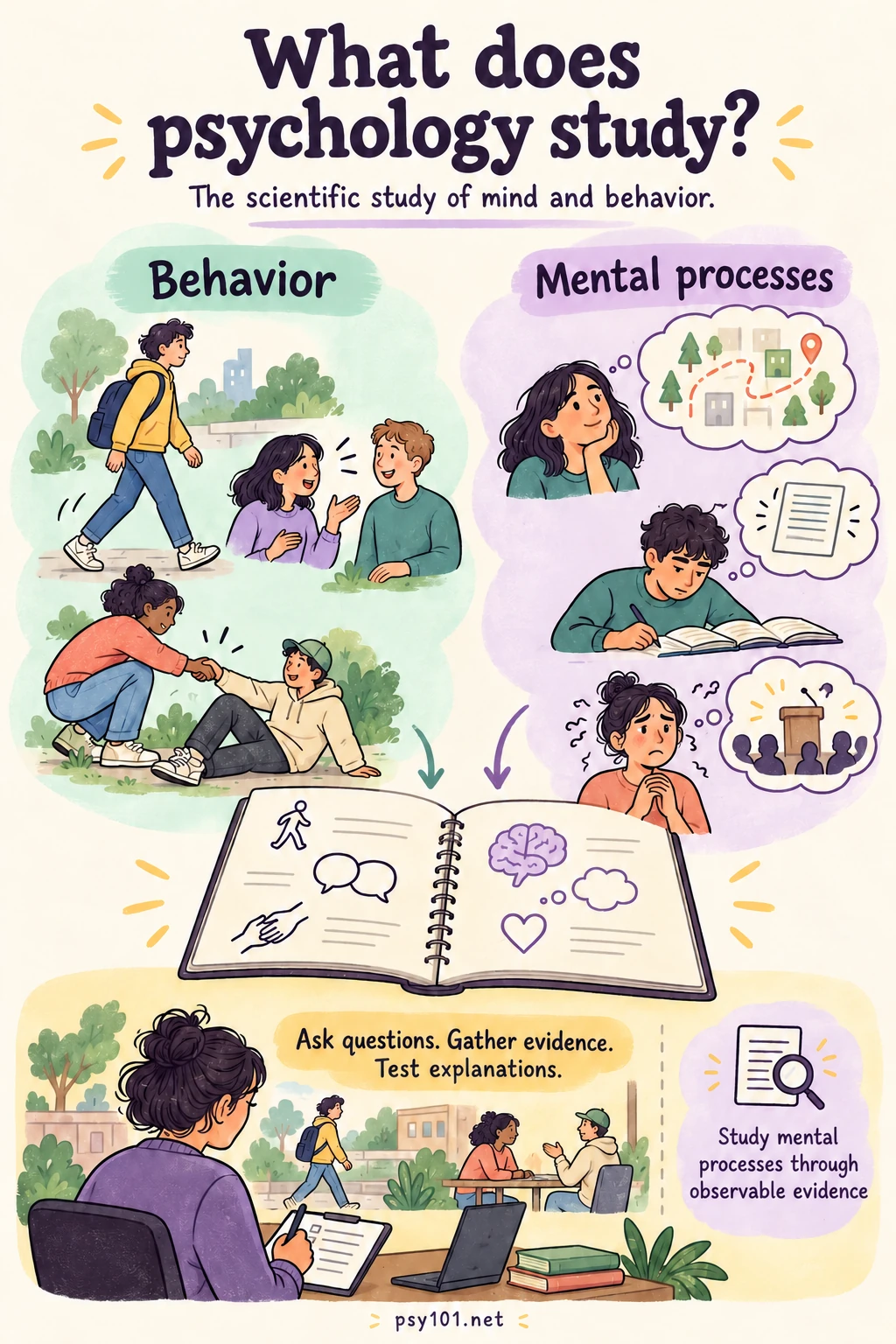
What does psychology study?
Connect everyday actions with questions about thoughts, feelings and evidence.
Read more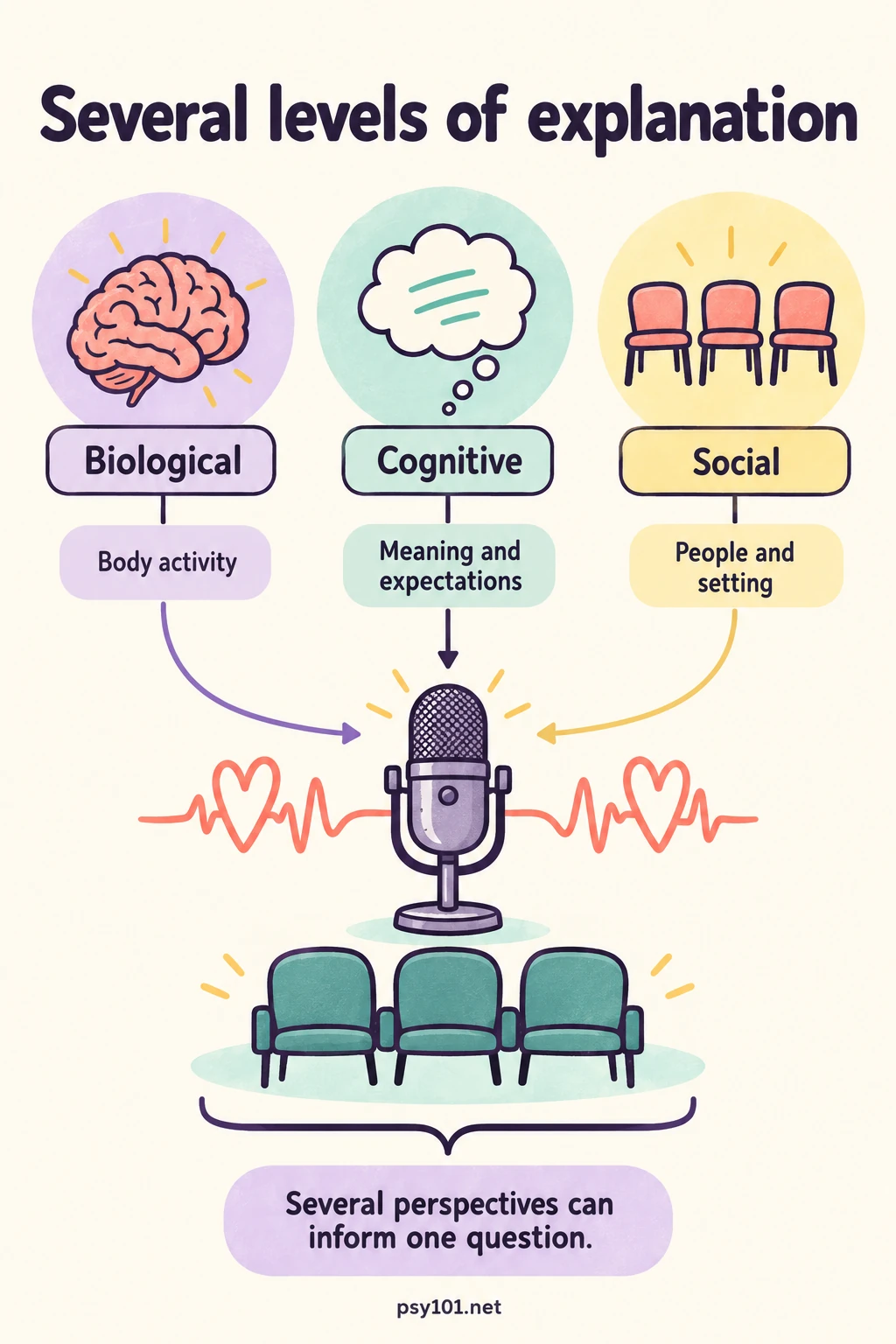
Several levels of explanation
Explore how several kinds of explanation can inform the same event.
Read more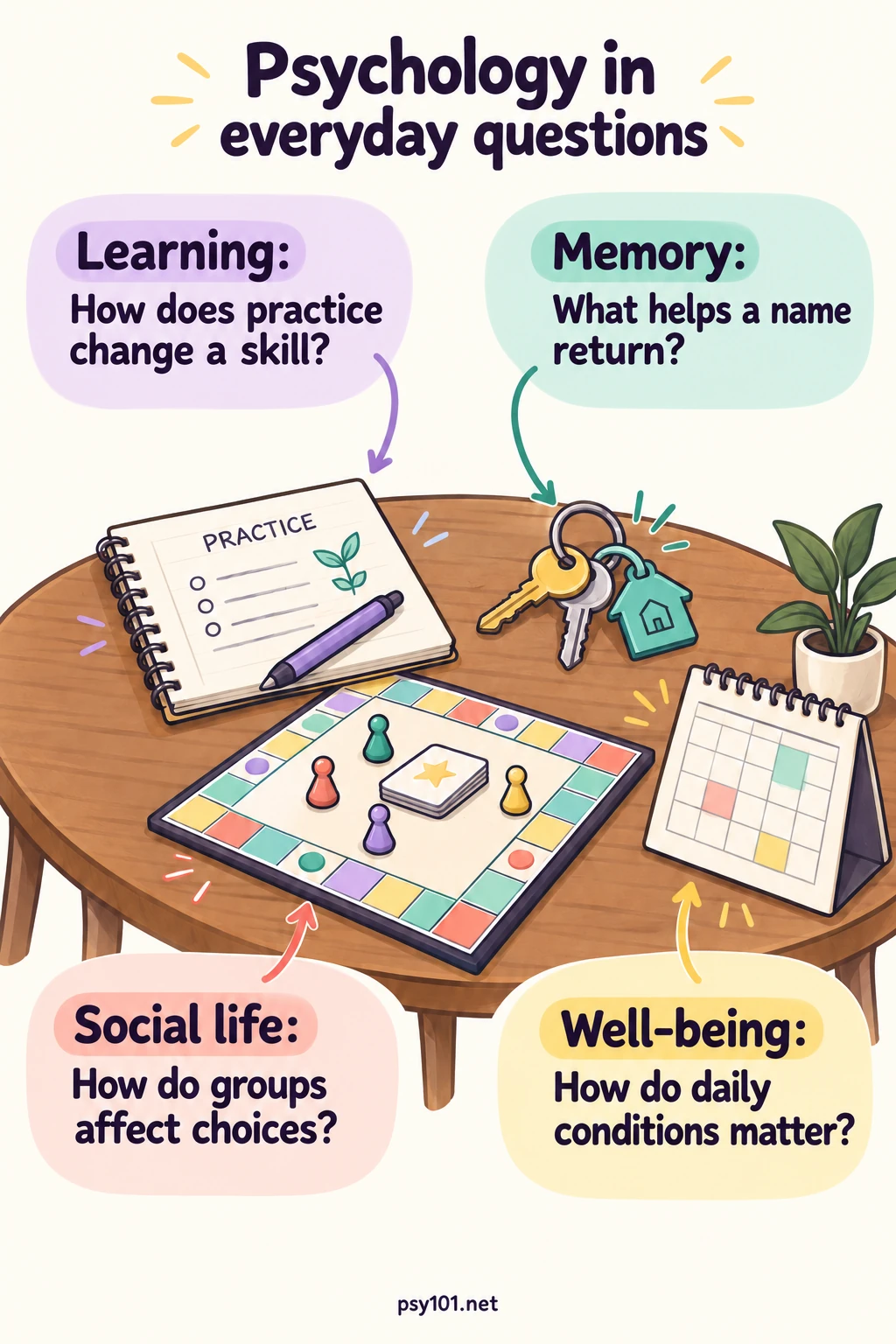
Psychology in everyday questions
Find research questions in familiar objects and activities.
Read more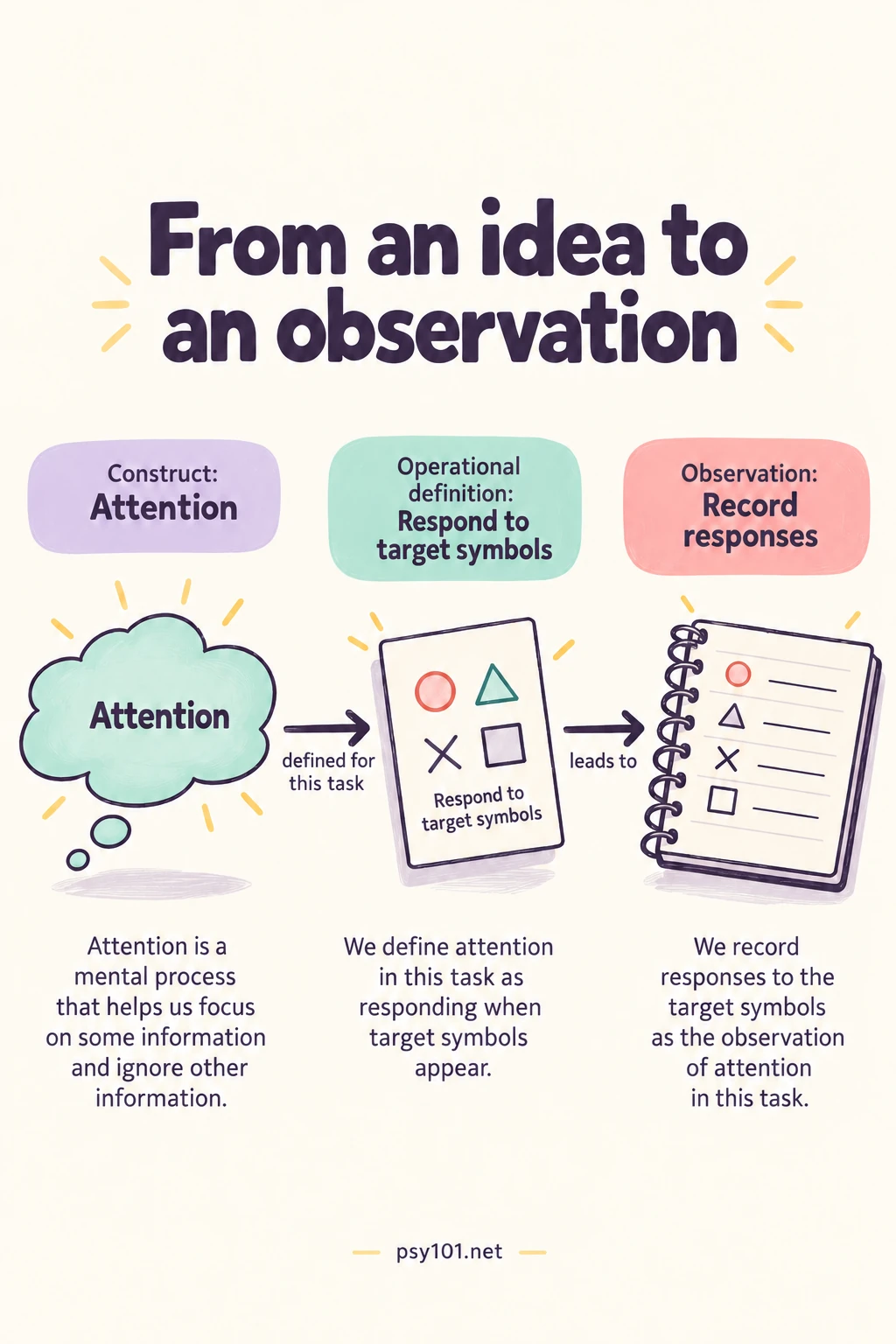
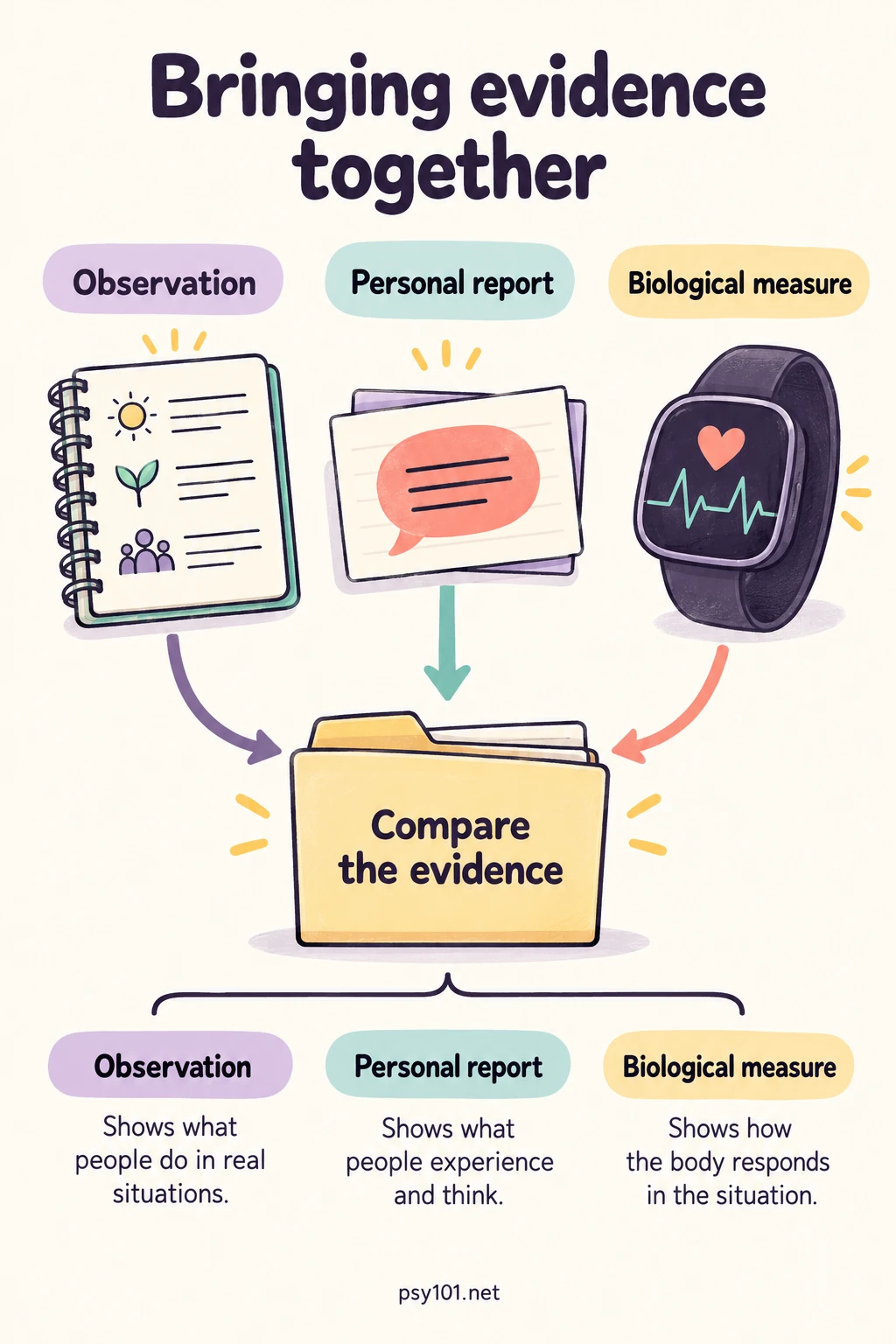
How do we know?
Read the short lessonExplore the explanations for a relationship between two things.
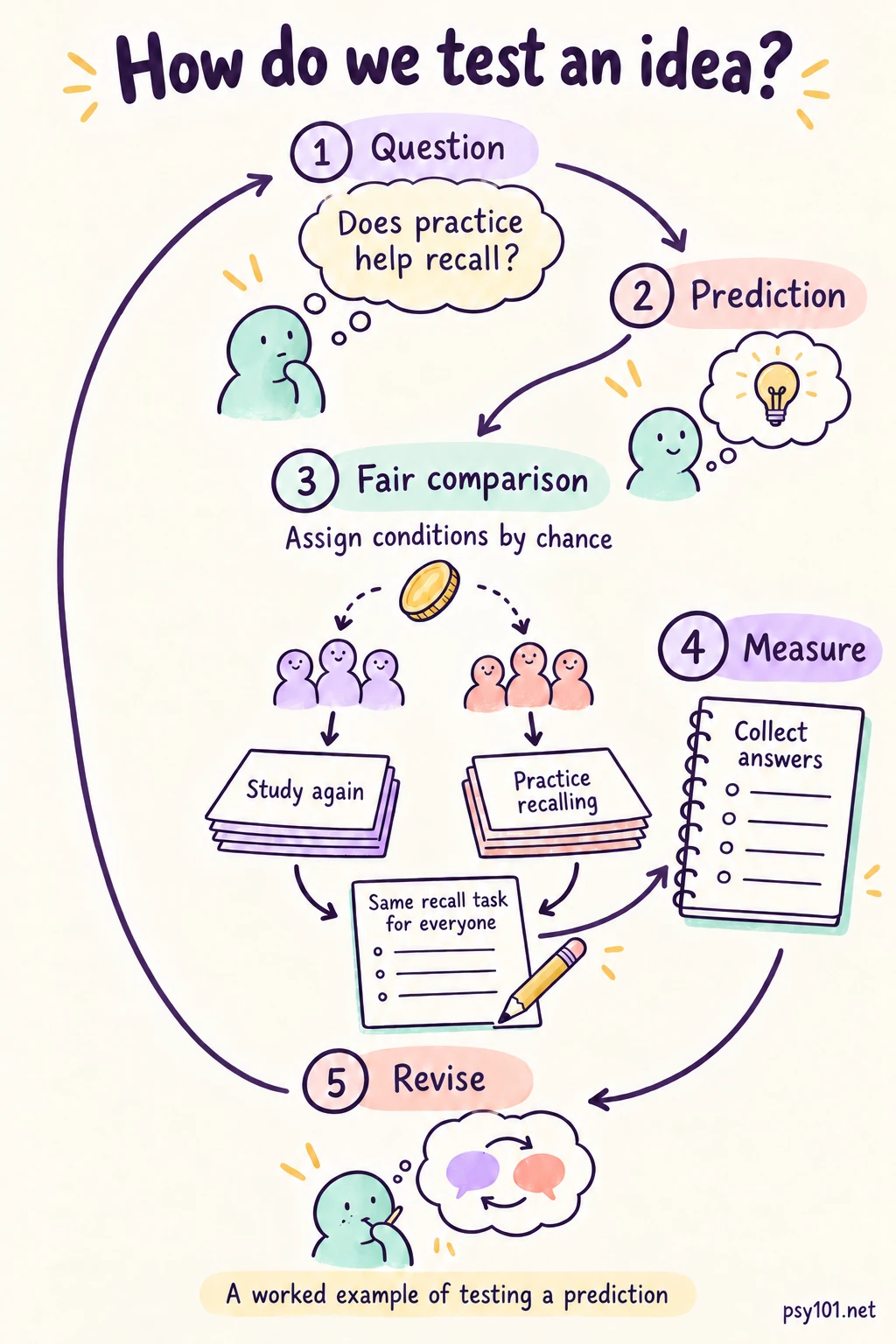
How do we test an idea?
Follow a prediction through a fair comparison, measurement and revision.
Read more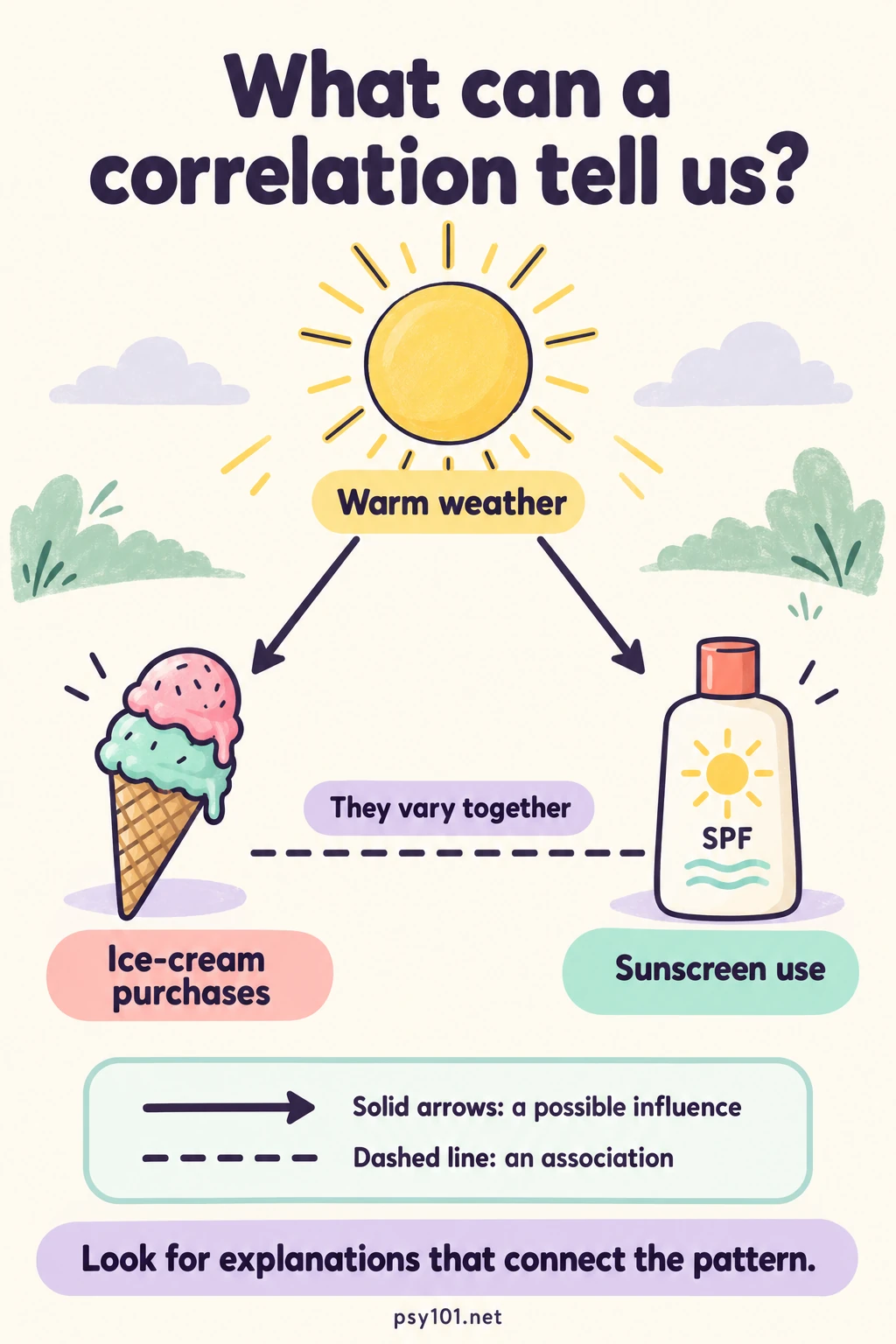
What can a correlation tell us?
Look for an explanation connecting two things that vary together.
Read more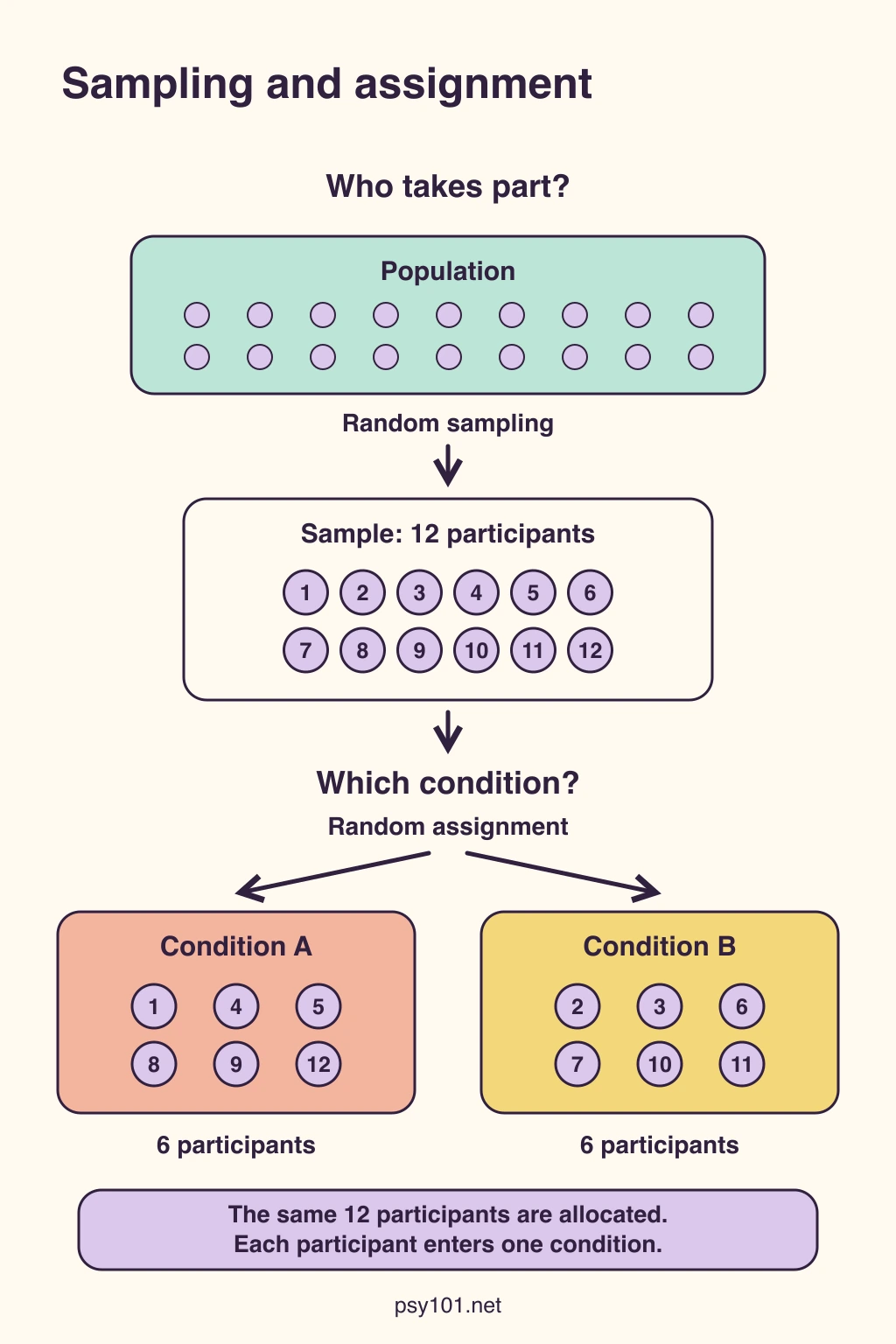
Sampling and assignment
Follow participant selection and allocation as two steps in a study.
Read more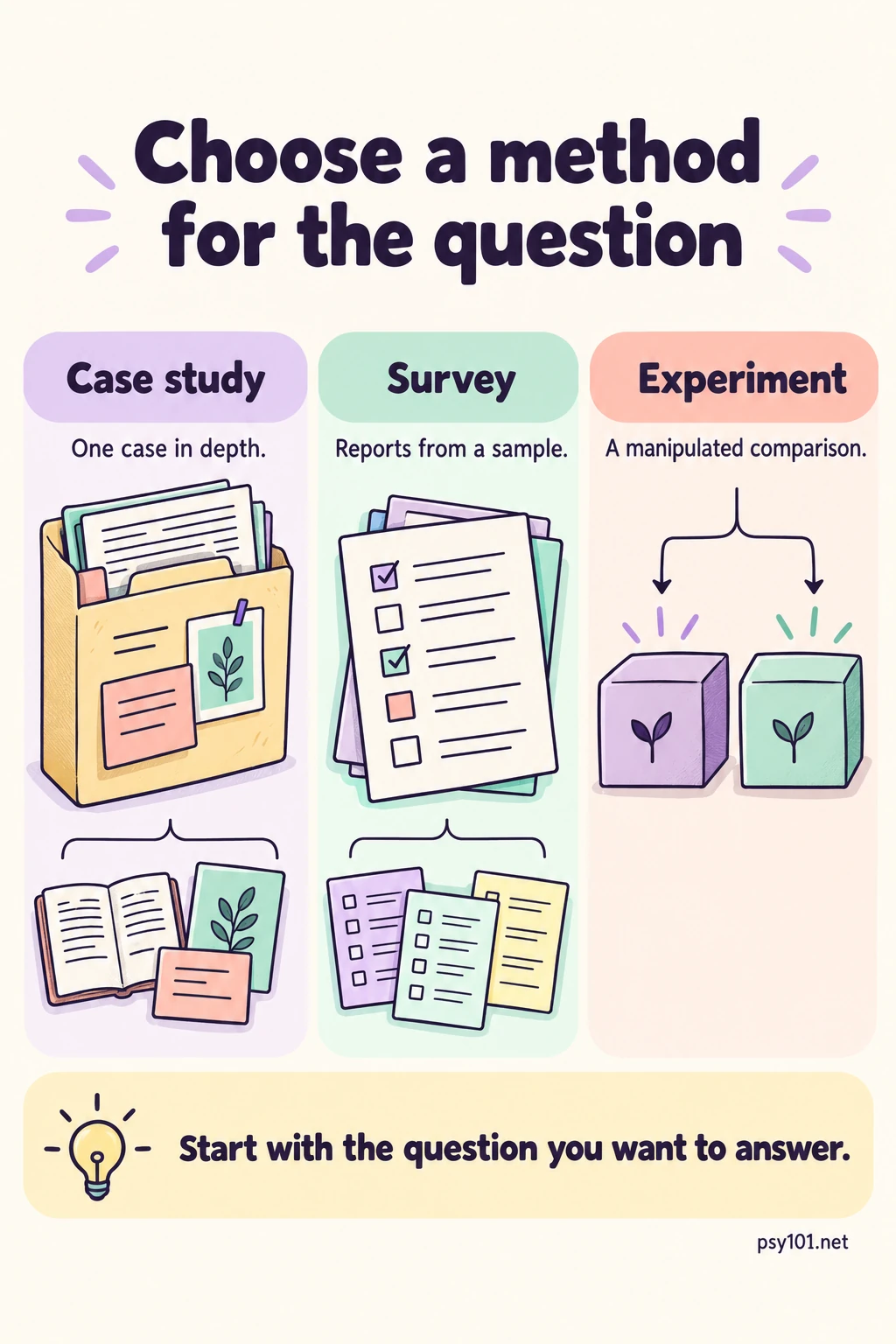
Choose a method for the question
Match a research question with a suitable way of gathering evidence.
Read more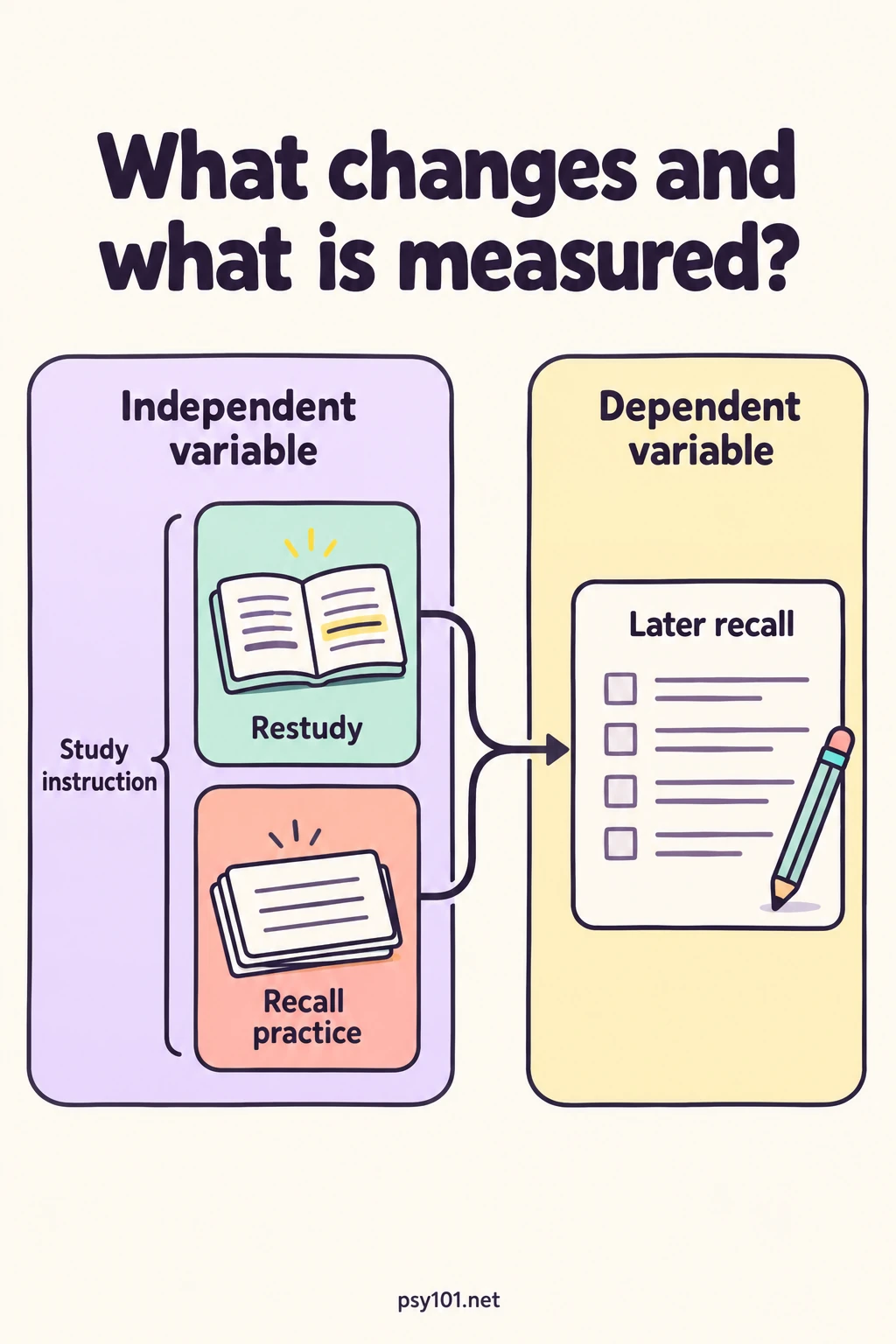
What changes and what is measured?
Separate the experimental condition from the outcome recorded.
Read more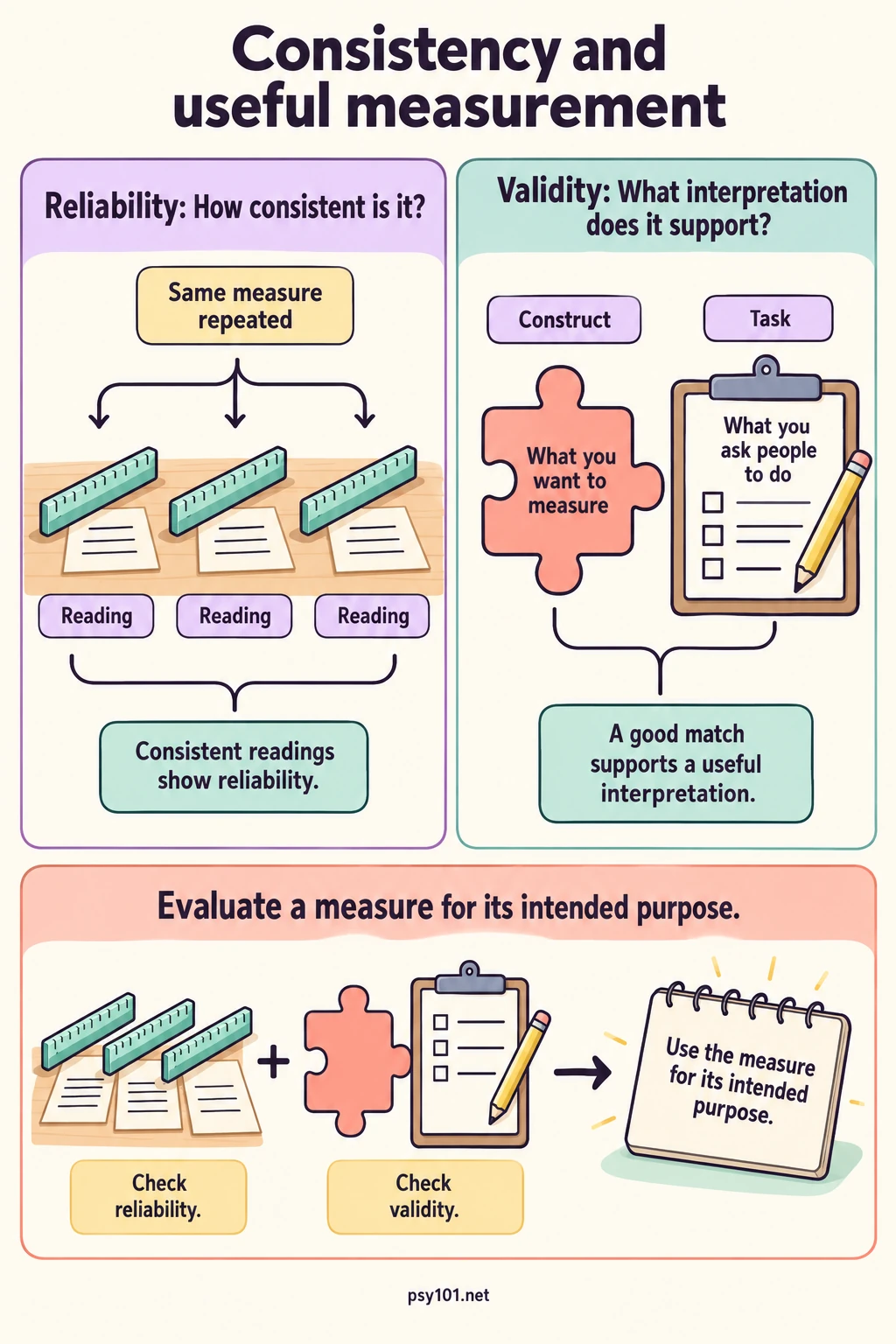
Consistency and useful measurement
Ask whether a measure is consistent and supports its intended interpretation.
Read more
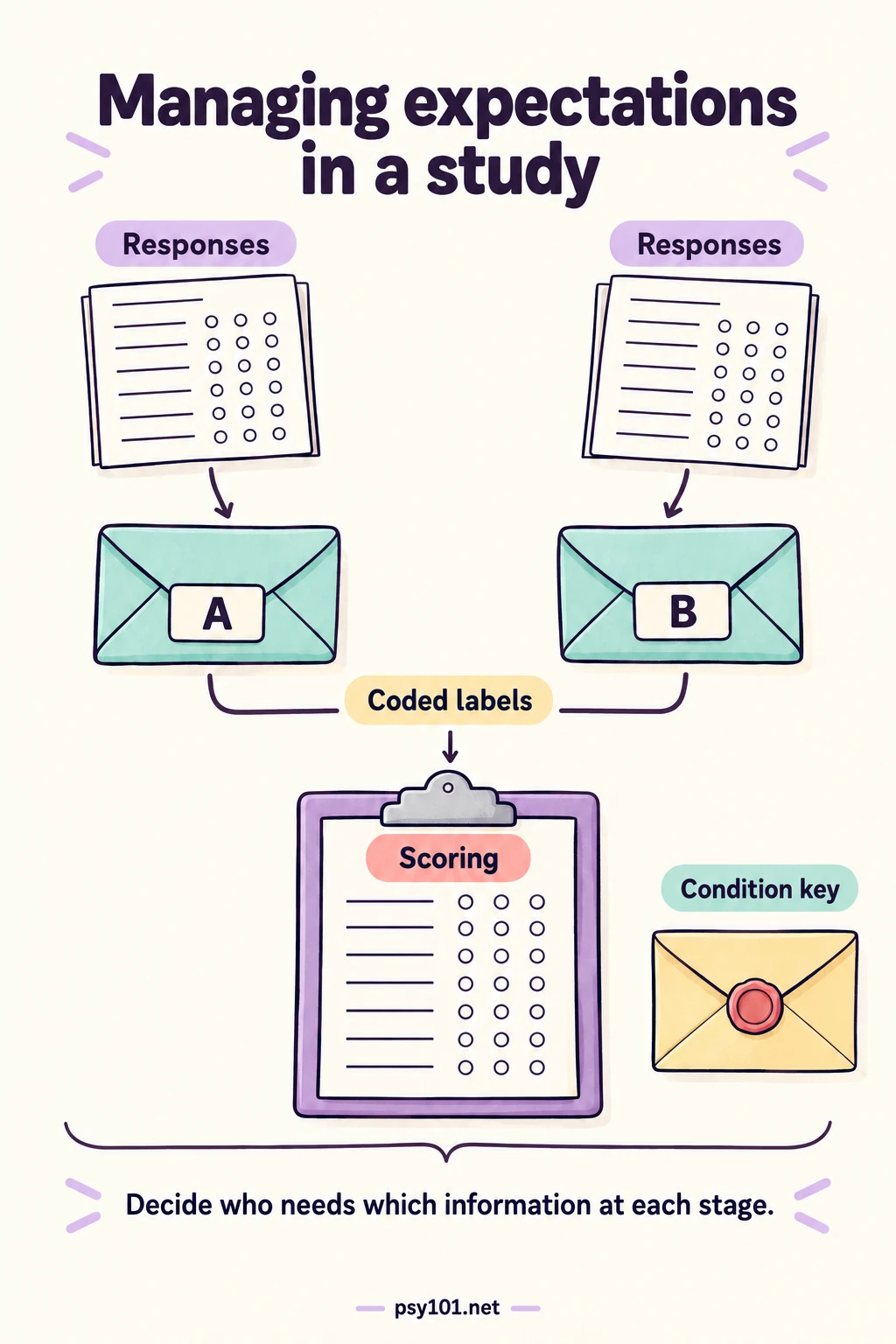
Managing expectations in a study
Consider how information about a condition can influence a study.
Read more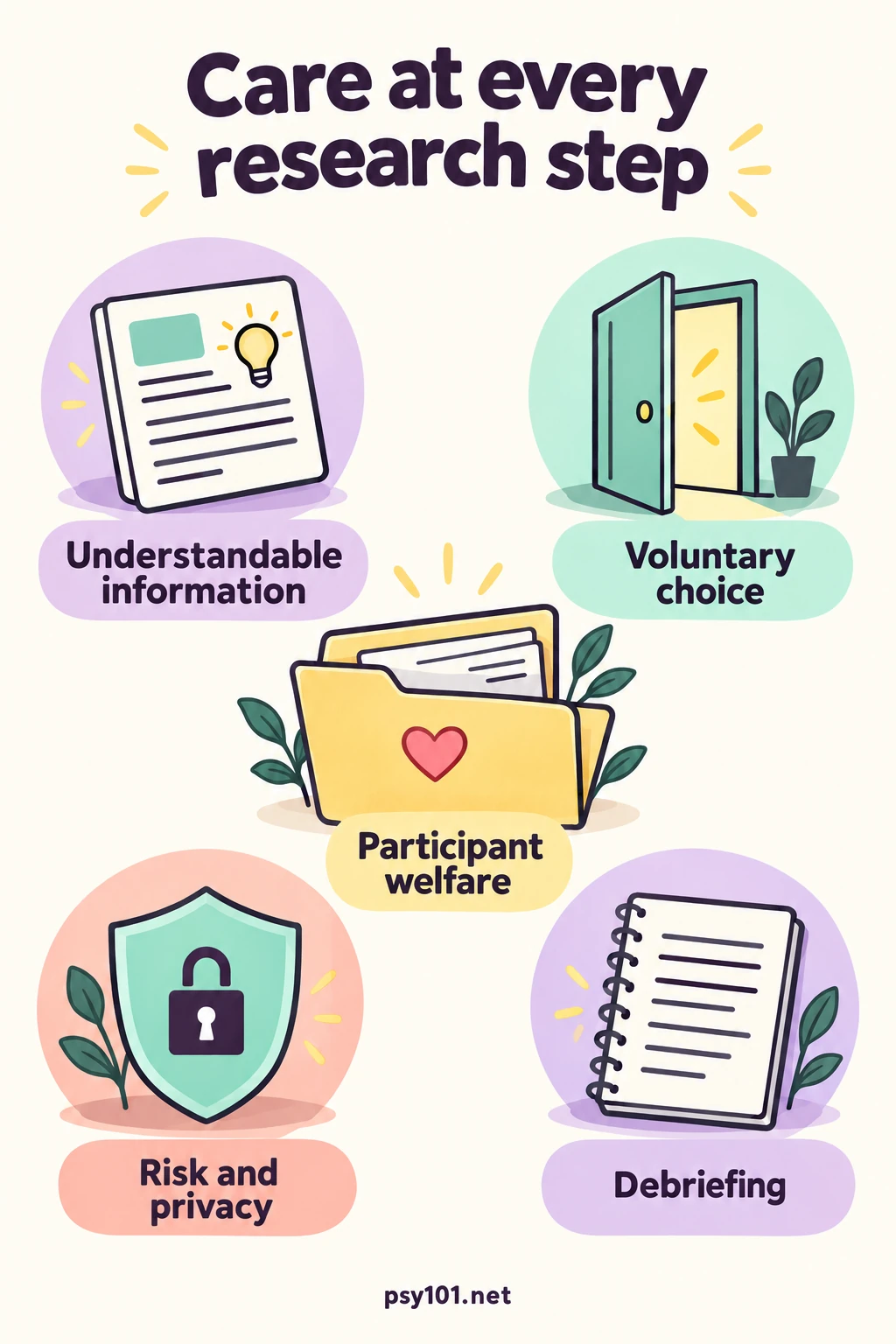
Care at every research step
Connect a study’s question with the rights and welfare of its participants.
Read more
Brain and body
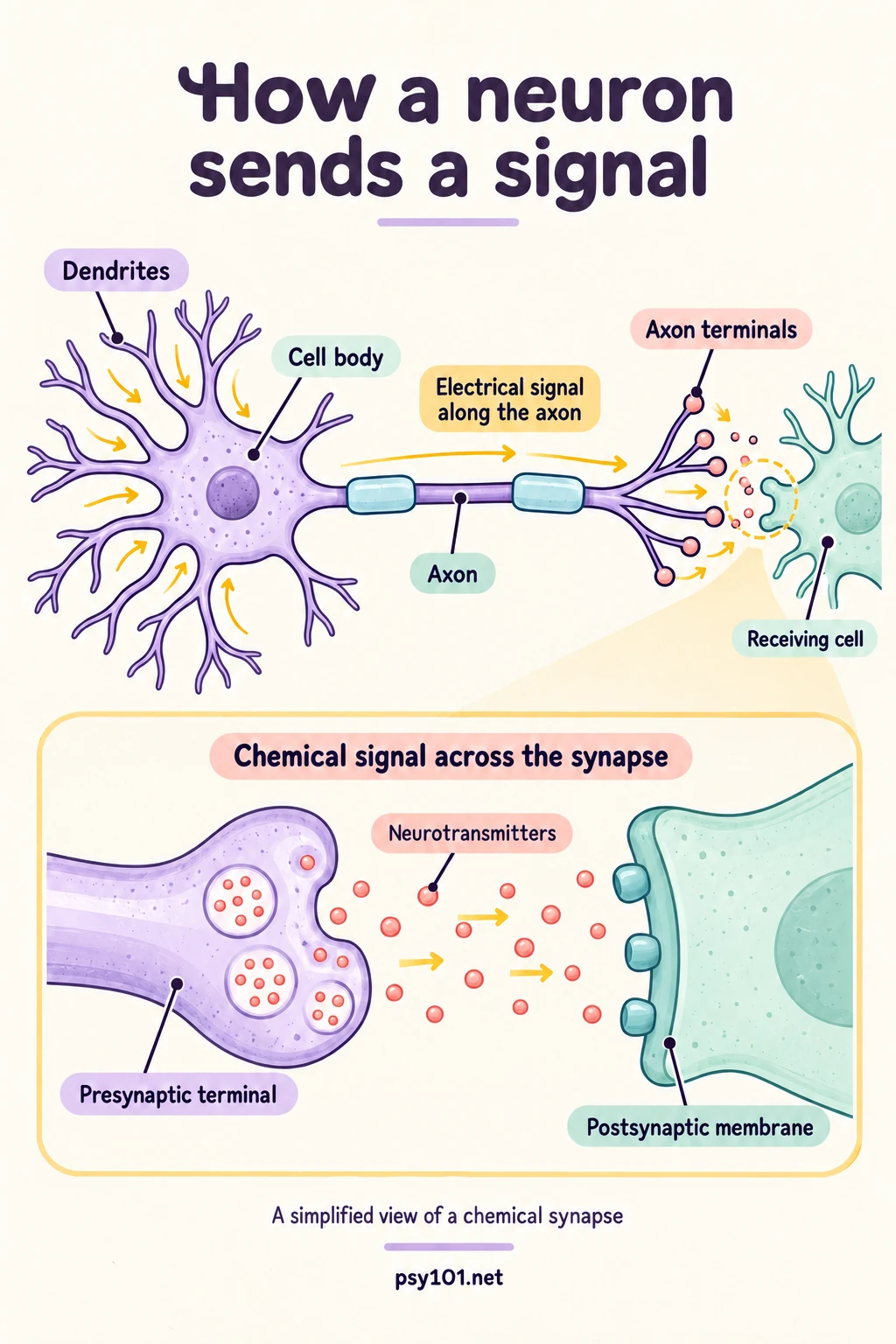
Read the short lessonFollow communication within a neuron and between cells.
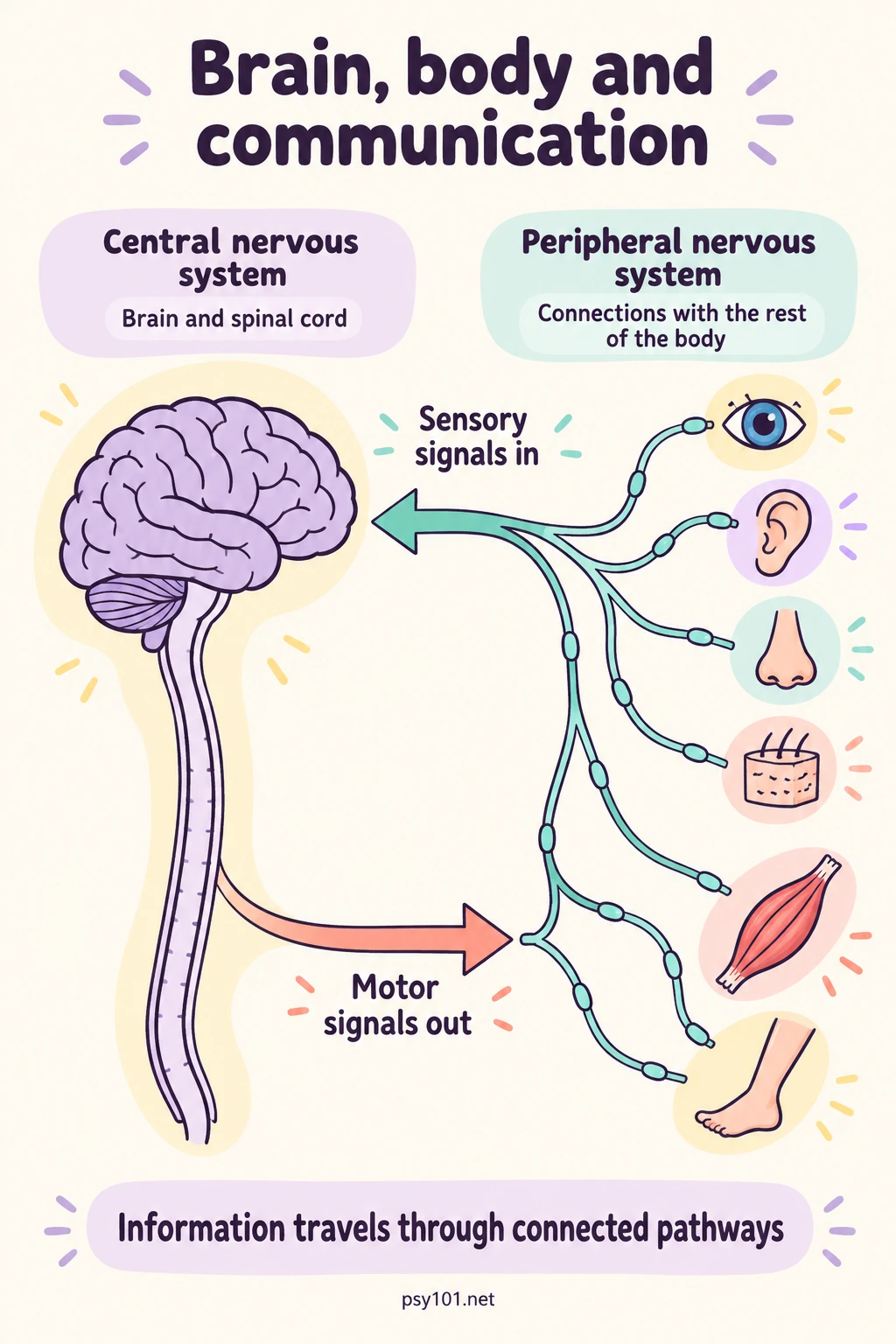
Brain, body and communication
Connect the central nervous system with pathways throughout the body.
Read more
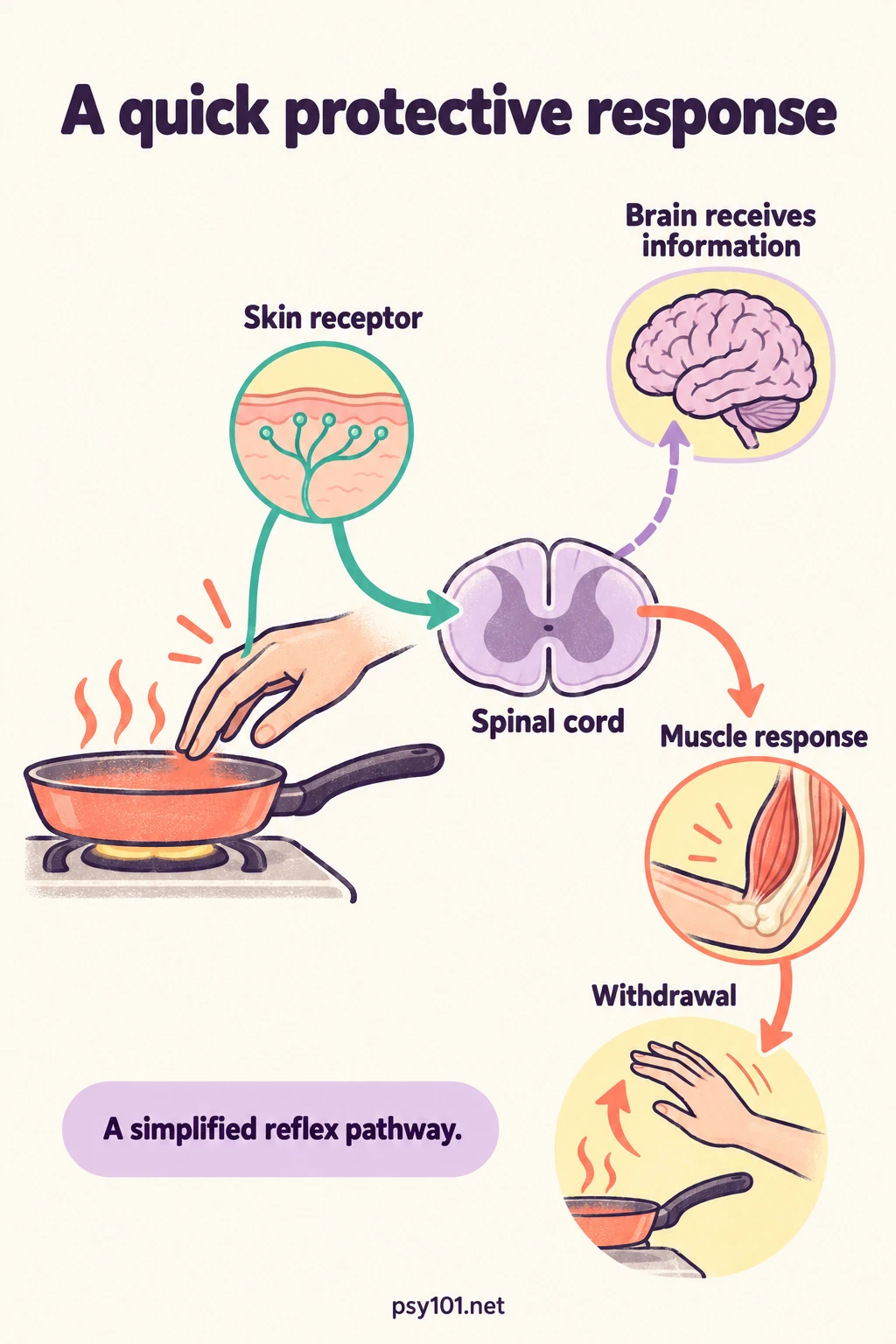
A quick protective response
Follow one simplified pathway involved in withdrawing from heat.
Read more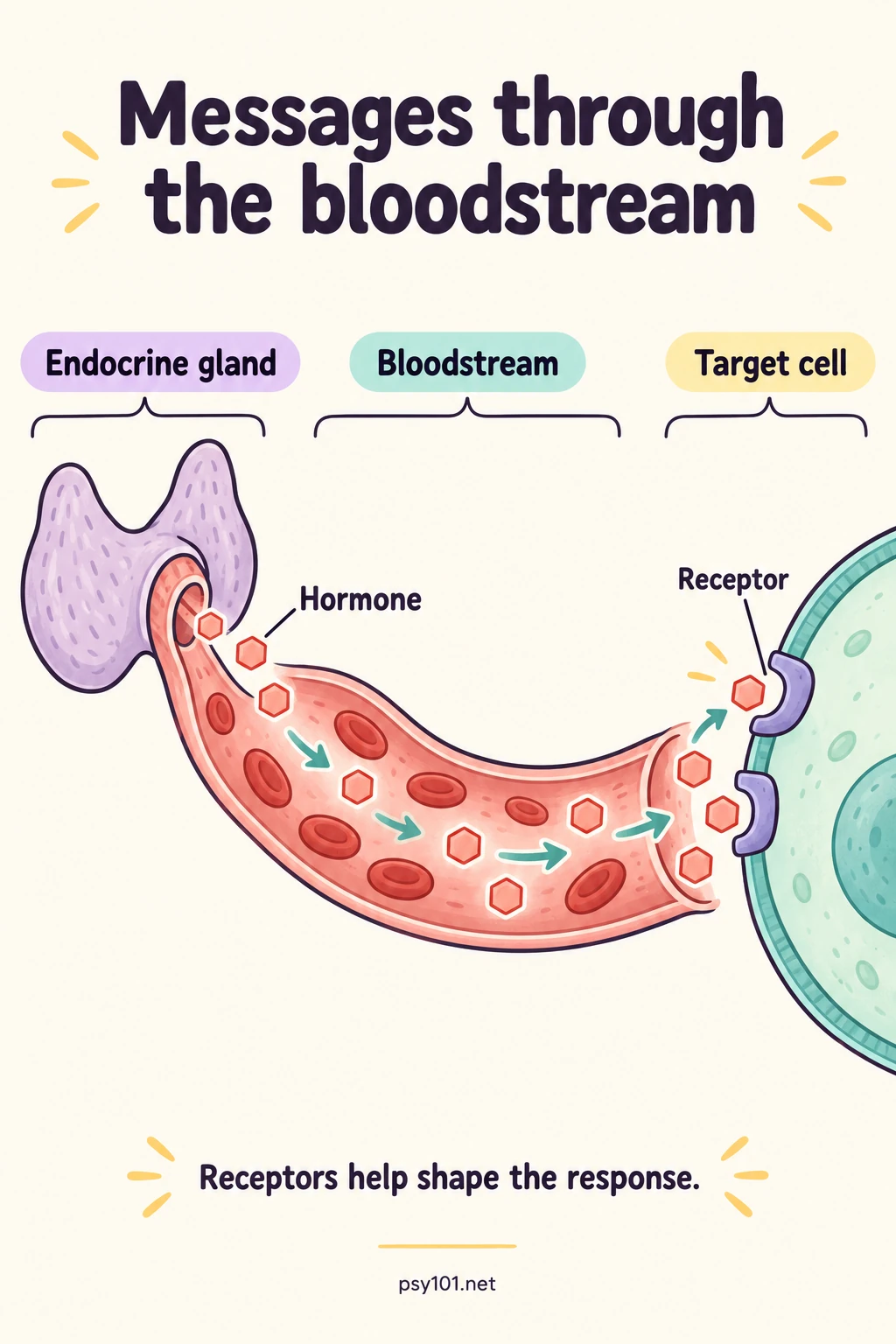
Messages through the bloodstream
Trace a hormone from an endocrine gland to a responsive target.
Read more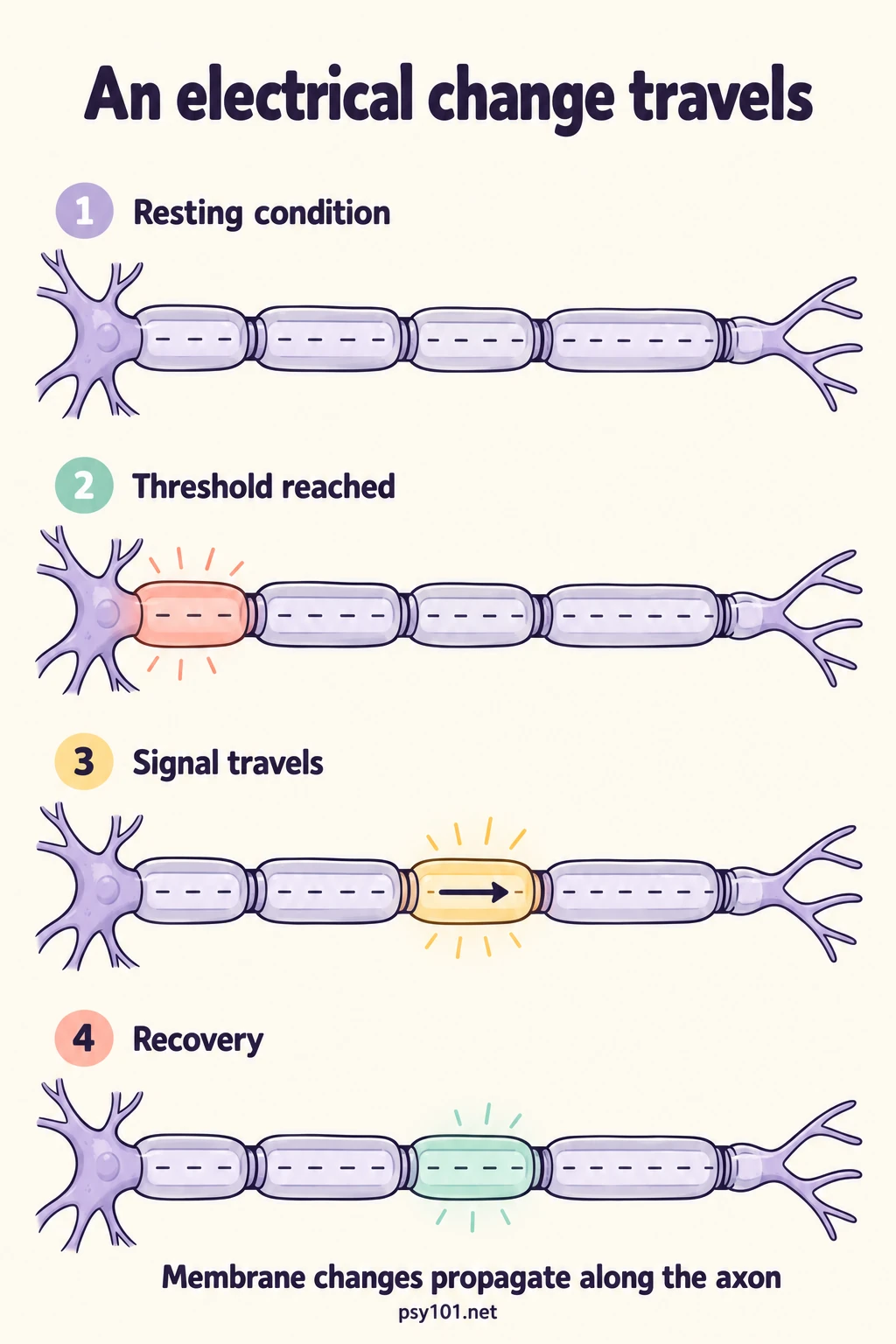
An electrical change travels
Follow a signal as changes in the cell membrane propagate along an axon.
Read more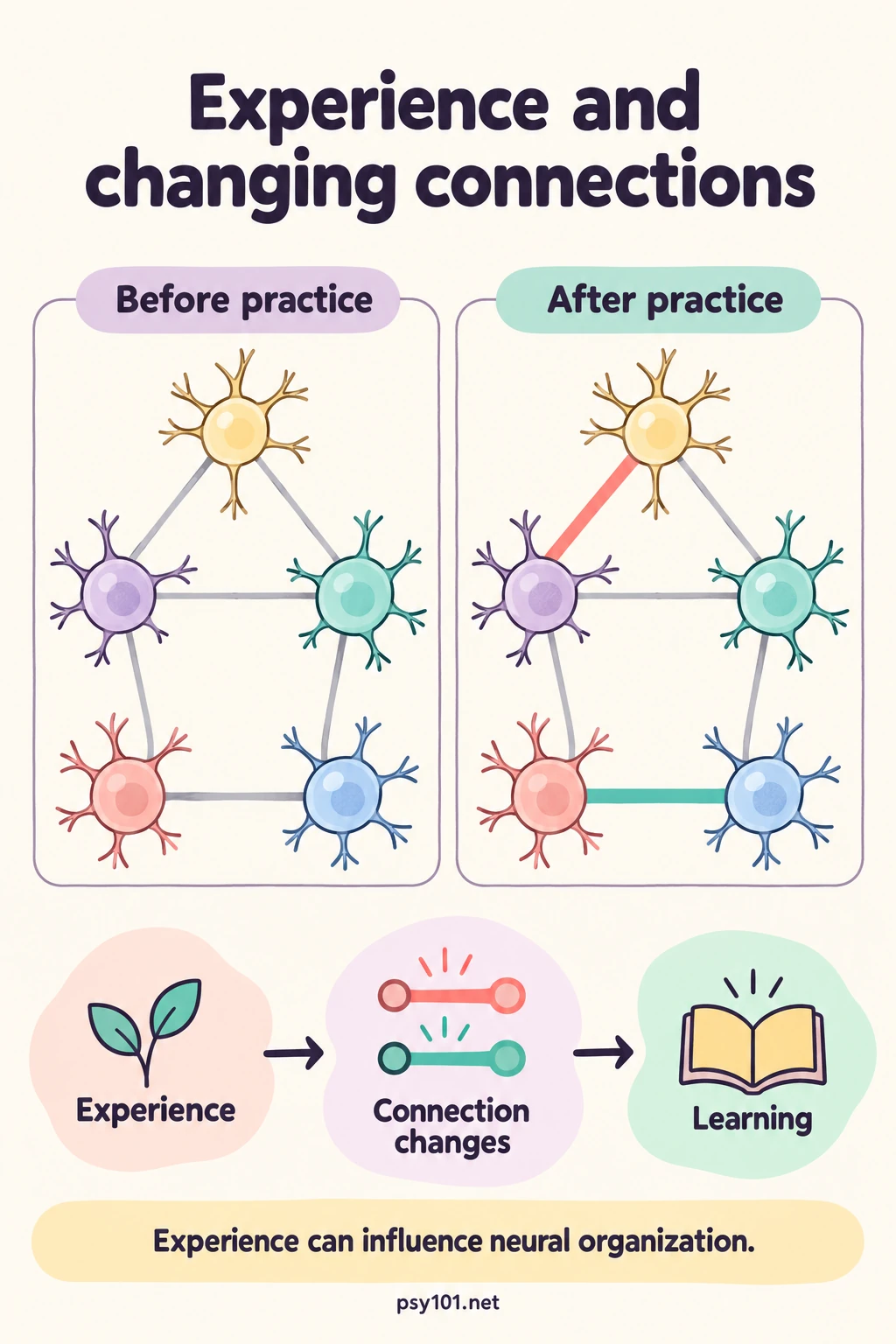
Experience and changing connections
Explore how experience can be associated with changes in neural connections.
Read moreSleep and daily rhythms
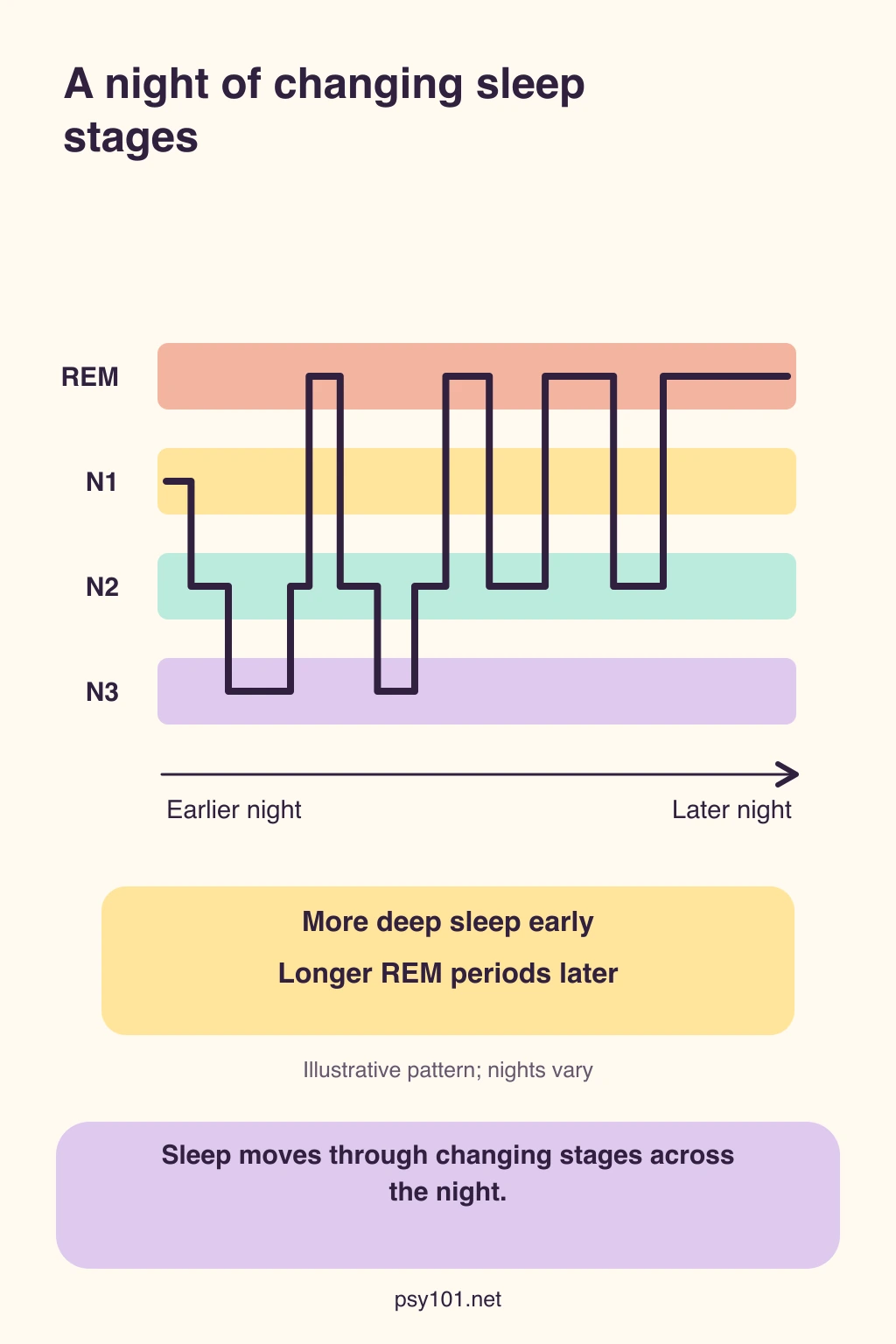
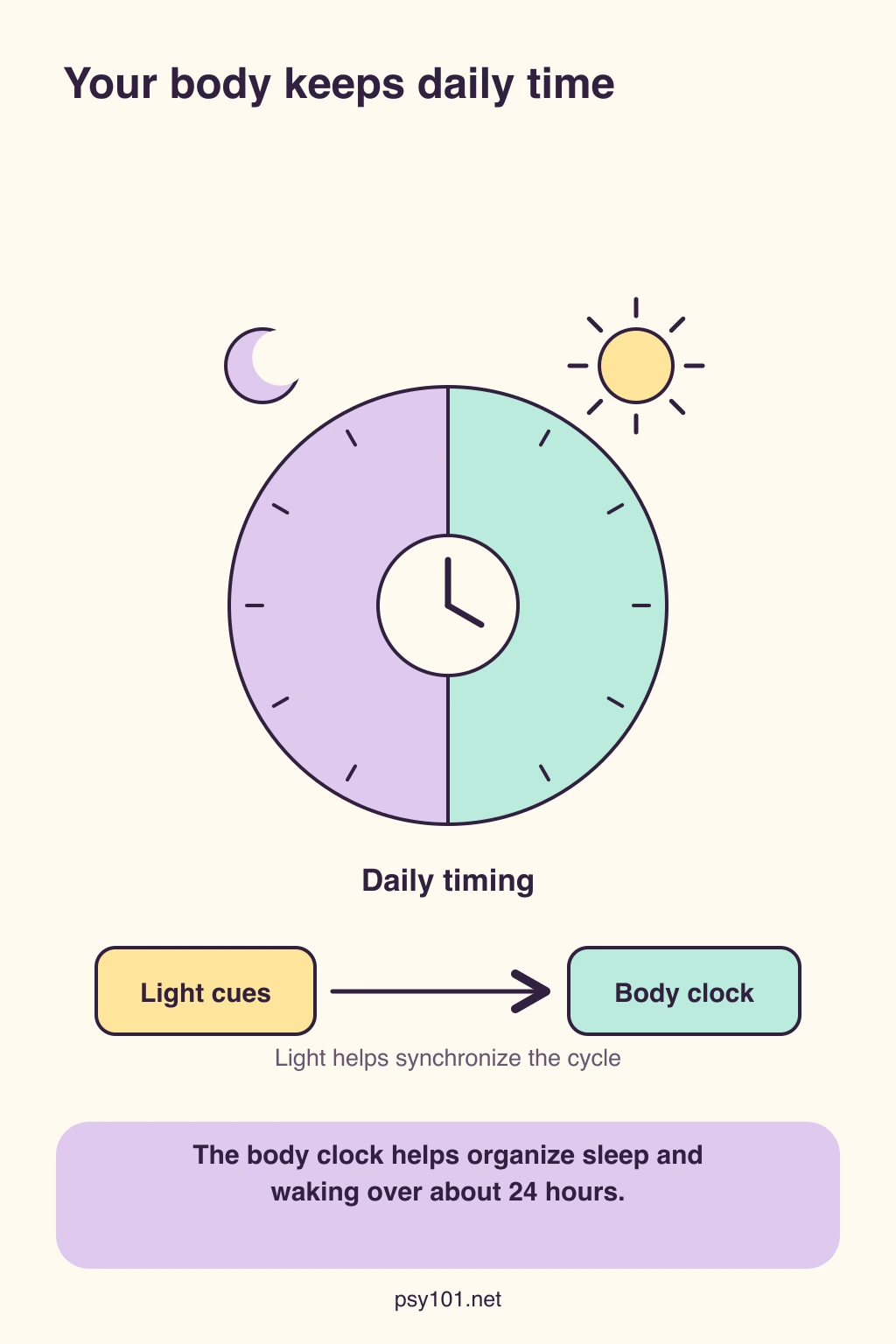
Read the short lessonExplore sleep stages, daily timing and the growing need for sleep.
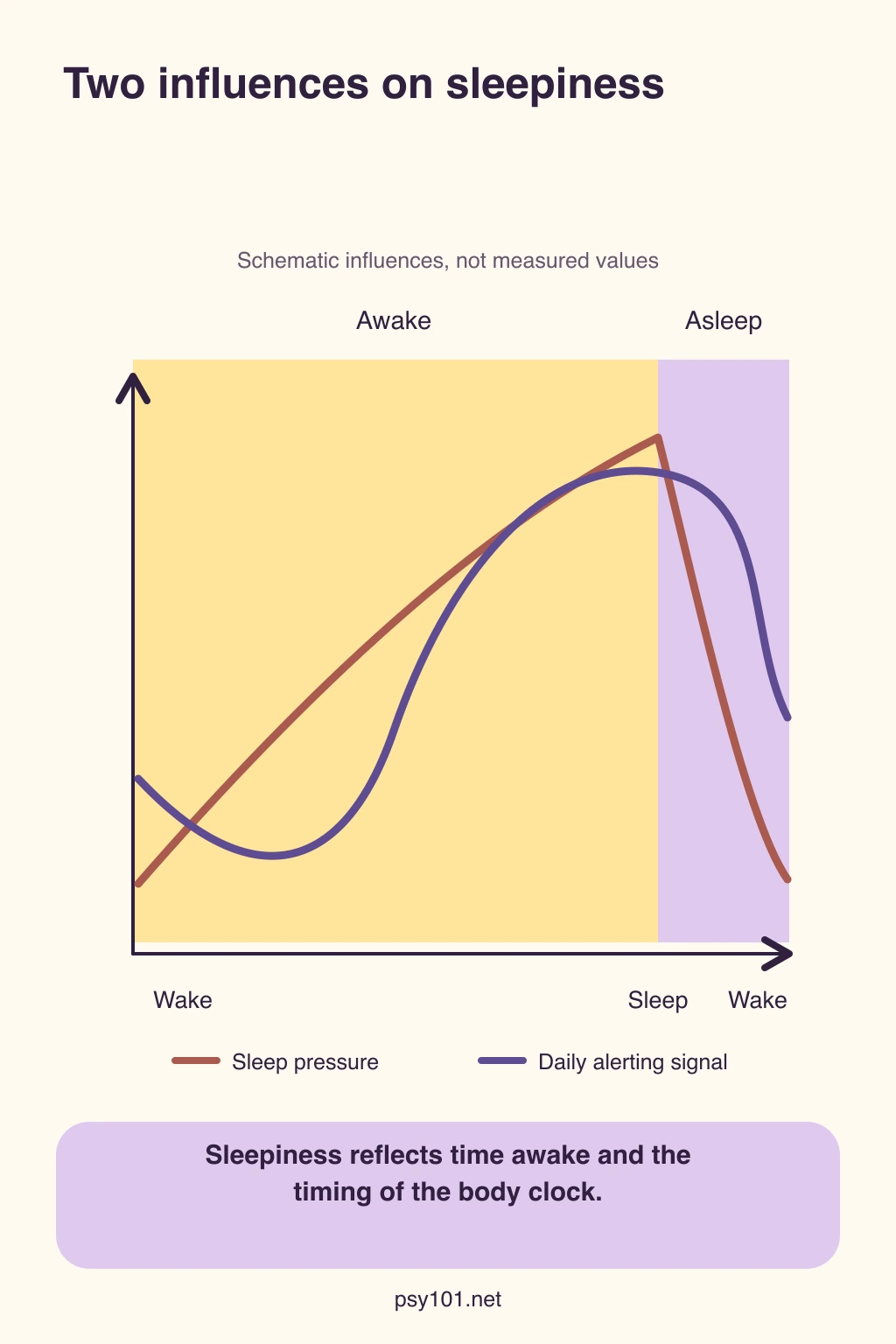
Two influences on sleepiness
Compare accumulating sleep pressure with a daily alerting rhythm.
Read moreSensation and perception
Read the short lessonConnect sensory detection with interpretation and context.
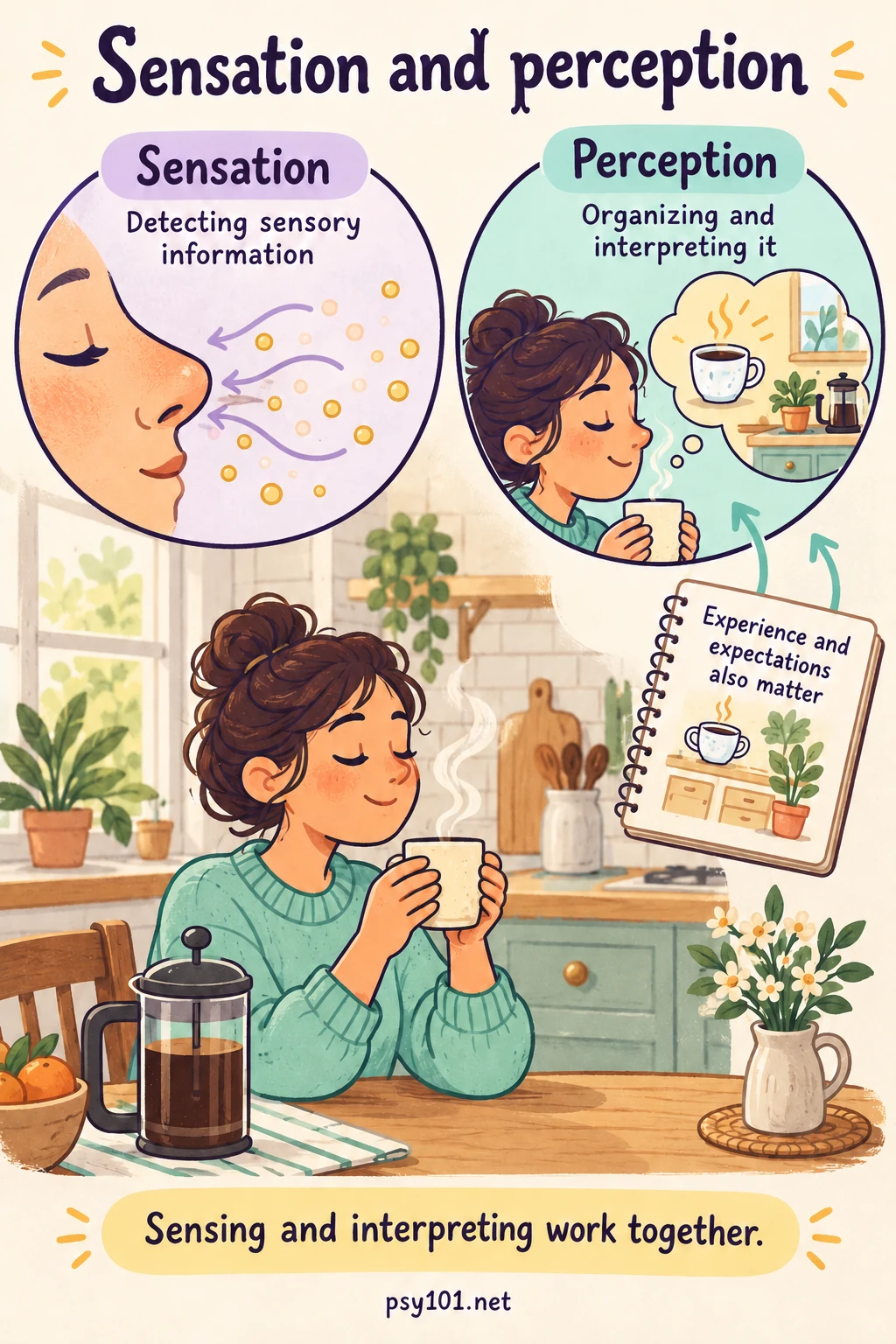
Sensation and perception
Use a familiar smell to connect detecting information with interpreting it.
Read more
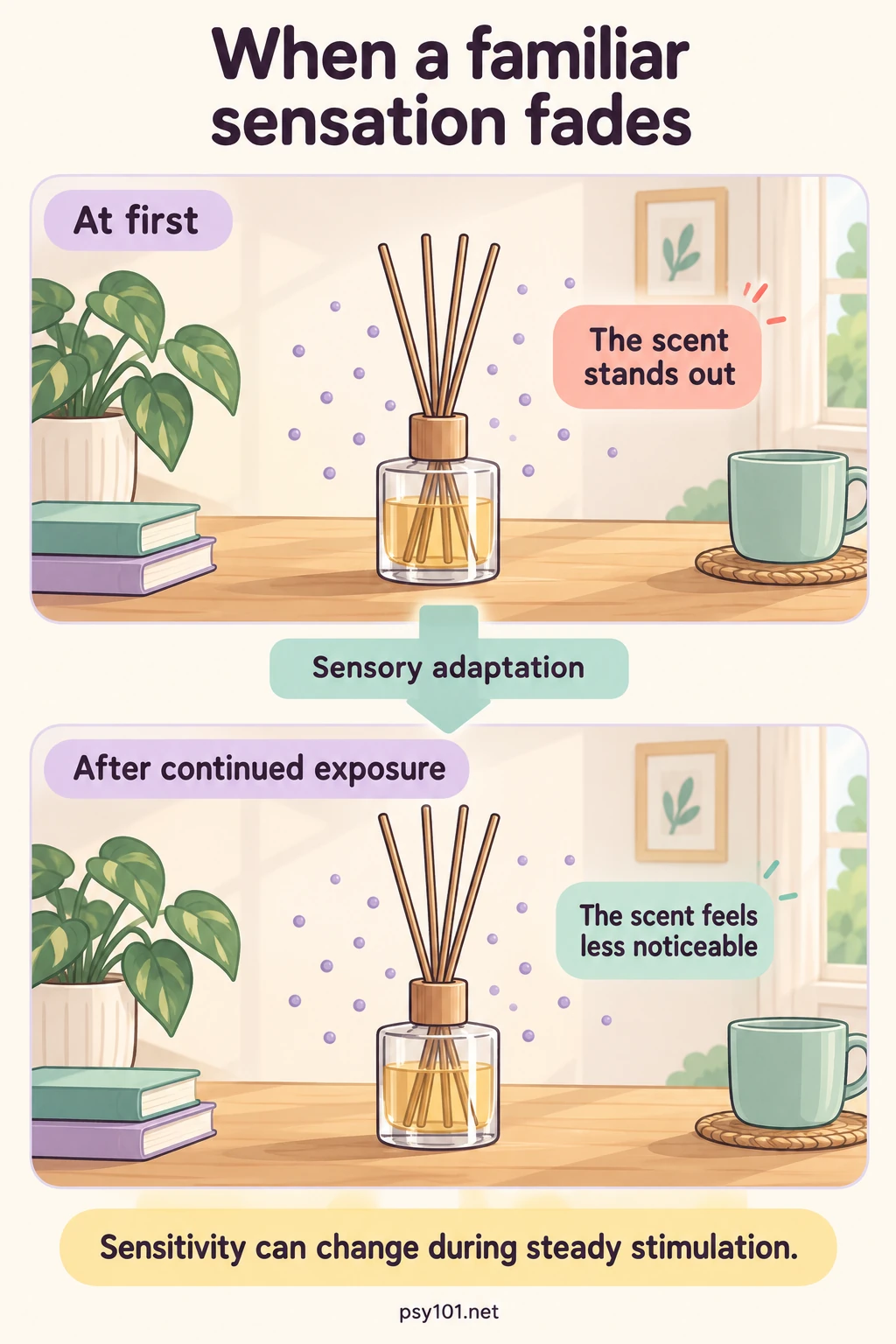
When a familiar sensation fades
Follow a steady scent as it becomes less noticeable during exposure.
Read more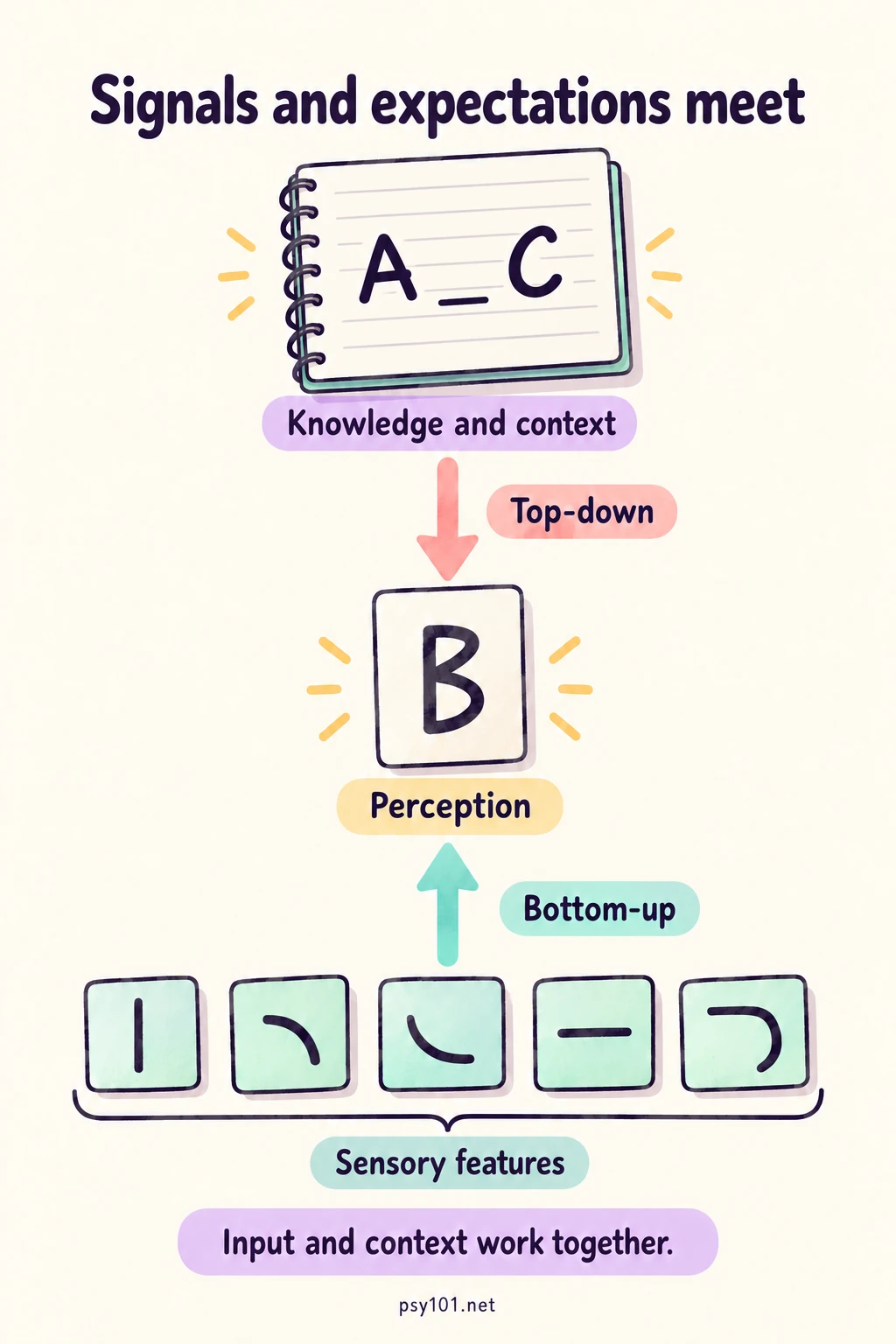
Signals and expectations meet
Connect incoming sensory information with knowledge and context.
Read more
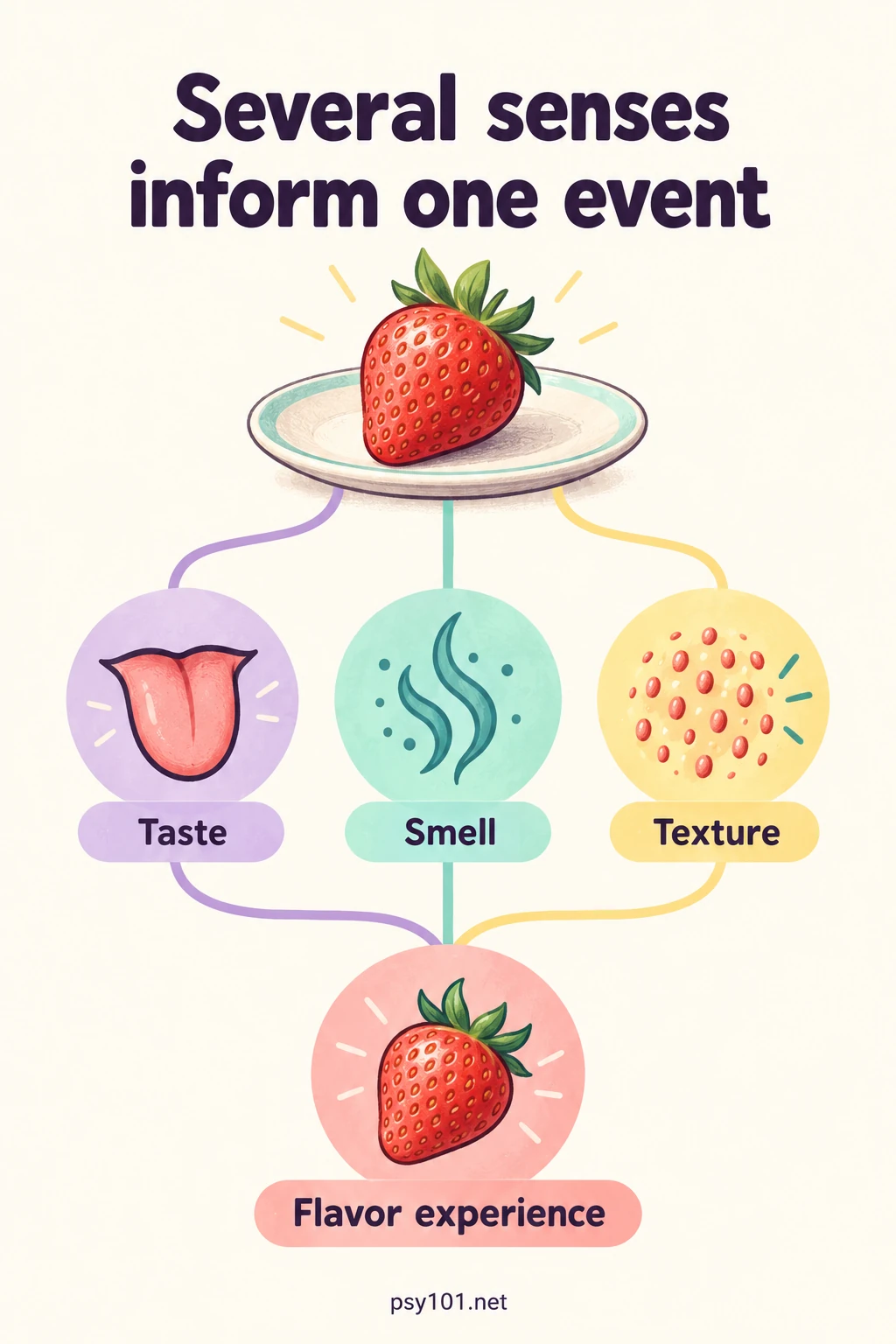
Several senses inform one event
Explore how information from different senses contributes to experience.
Read more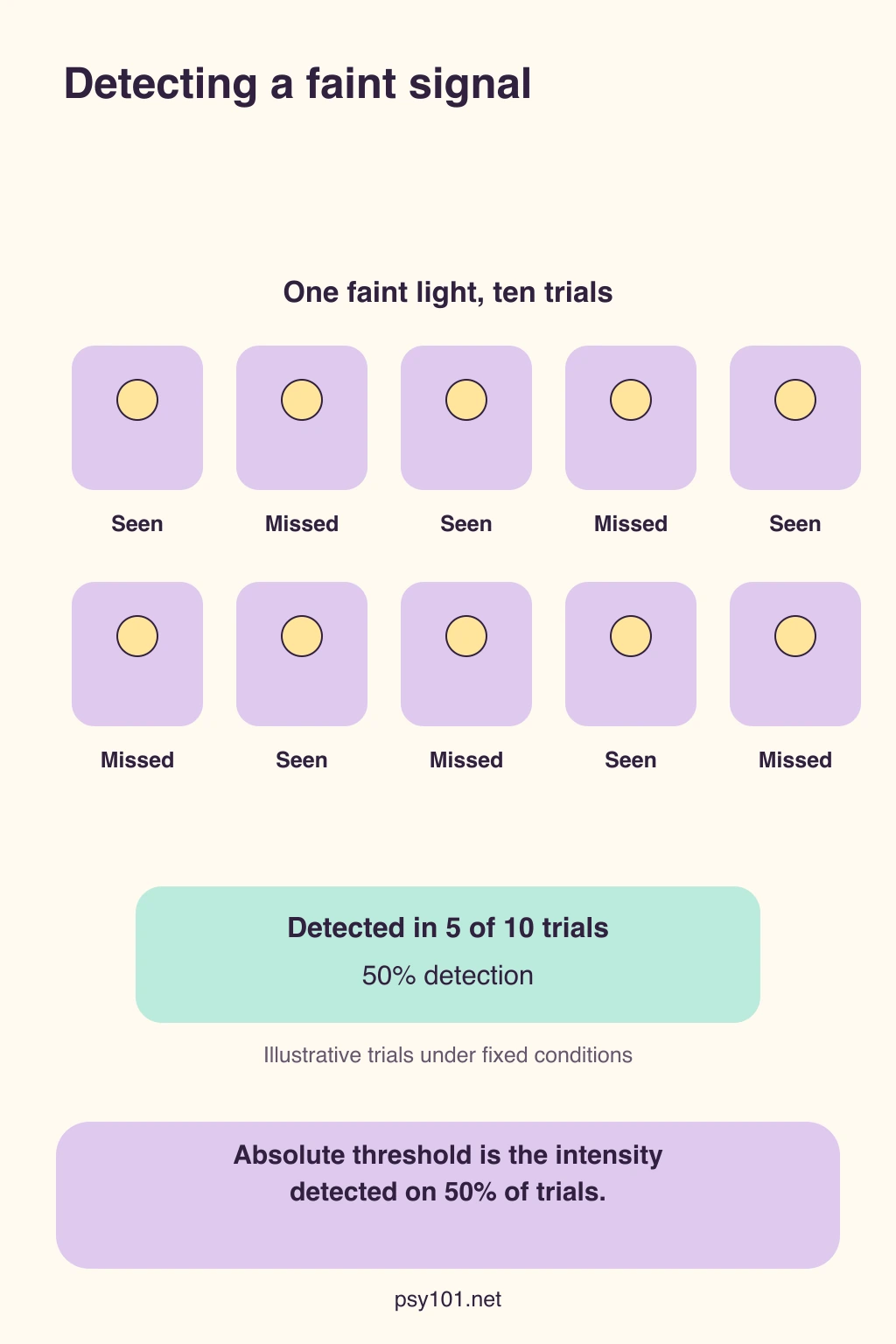
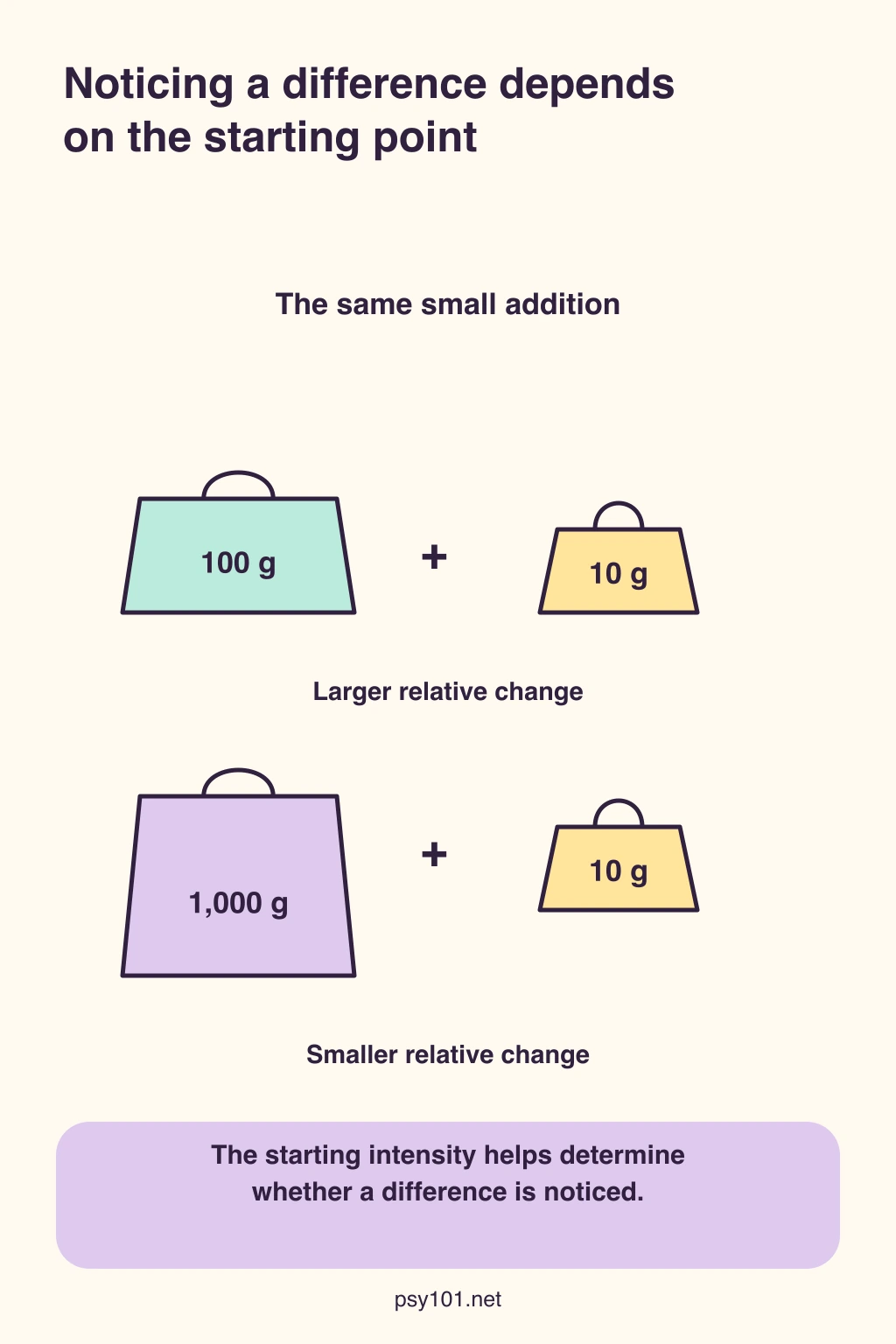
Noticing a difference depends on the starting point
Compare the same addition against different starting amounts.
Read moreLearning
Read the short lessonCompare learning about signals with learning from consequences.
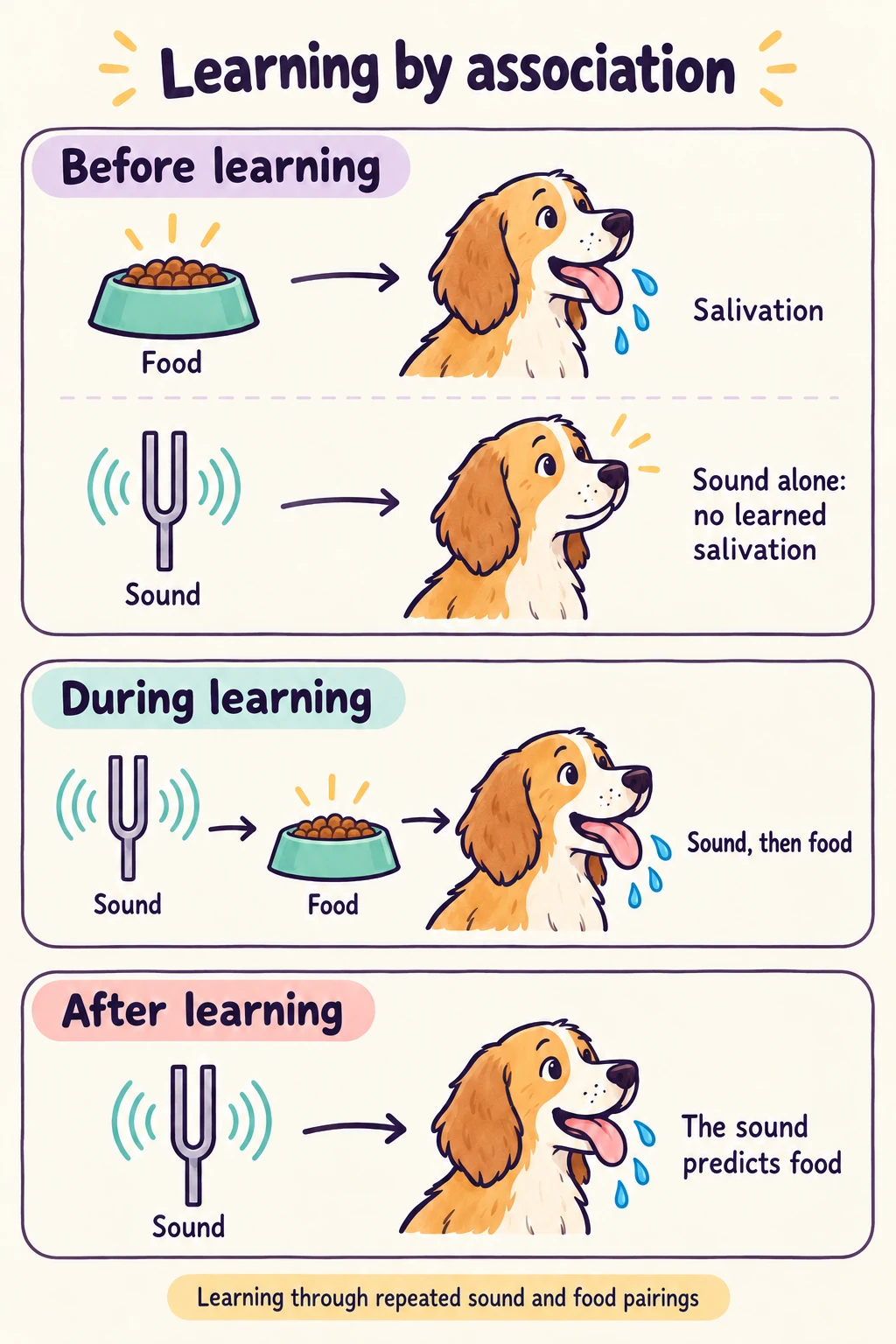
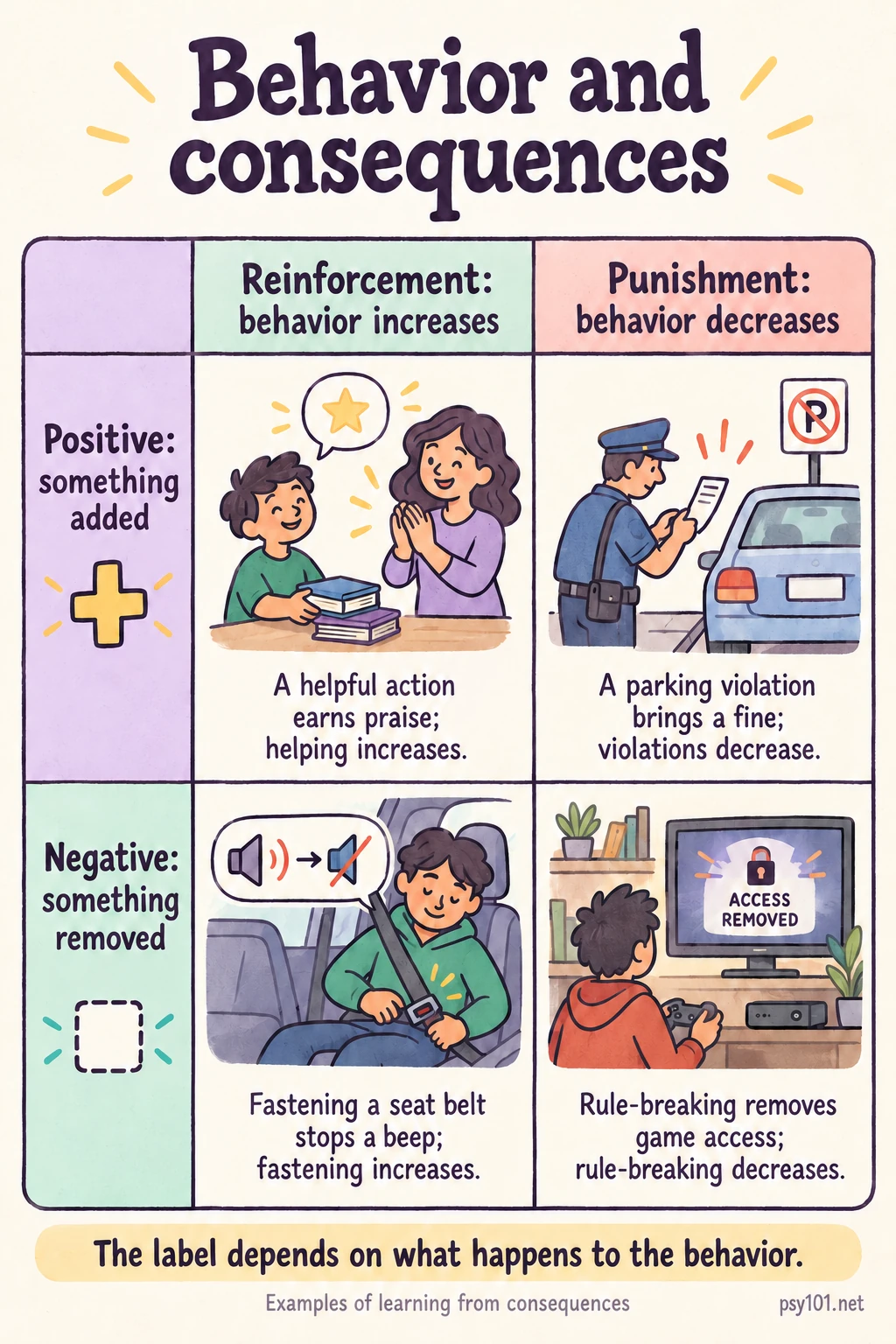
Behavior and consequences
Read consequences by what is added or removed and how behavior changes.
Read more
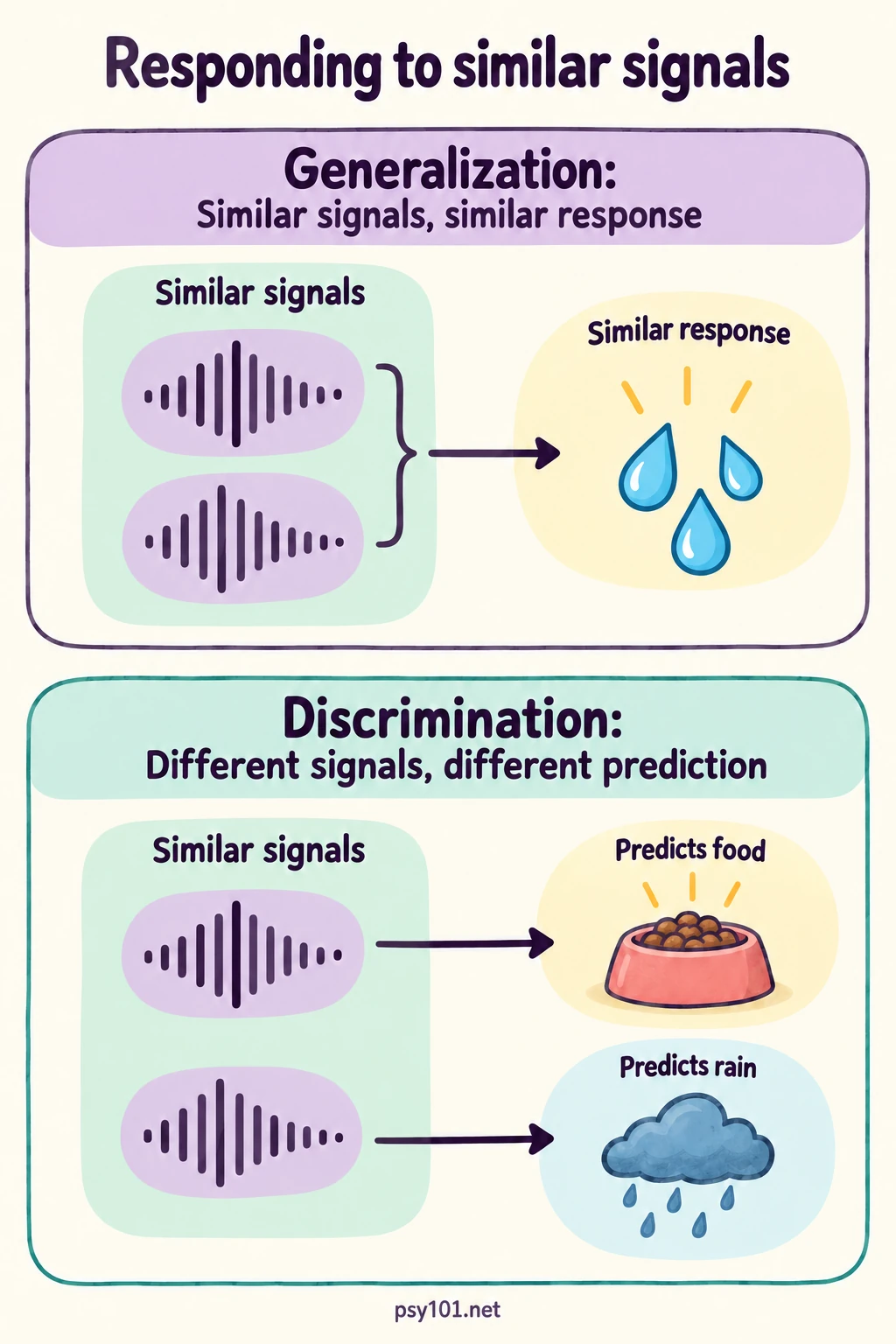
Responding to similar signals
Compare a response spreading to similar cues with learning to distinguish them.
Read more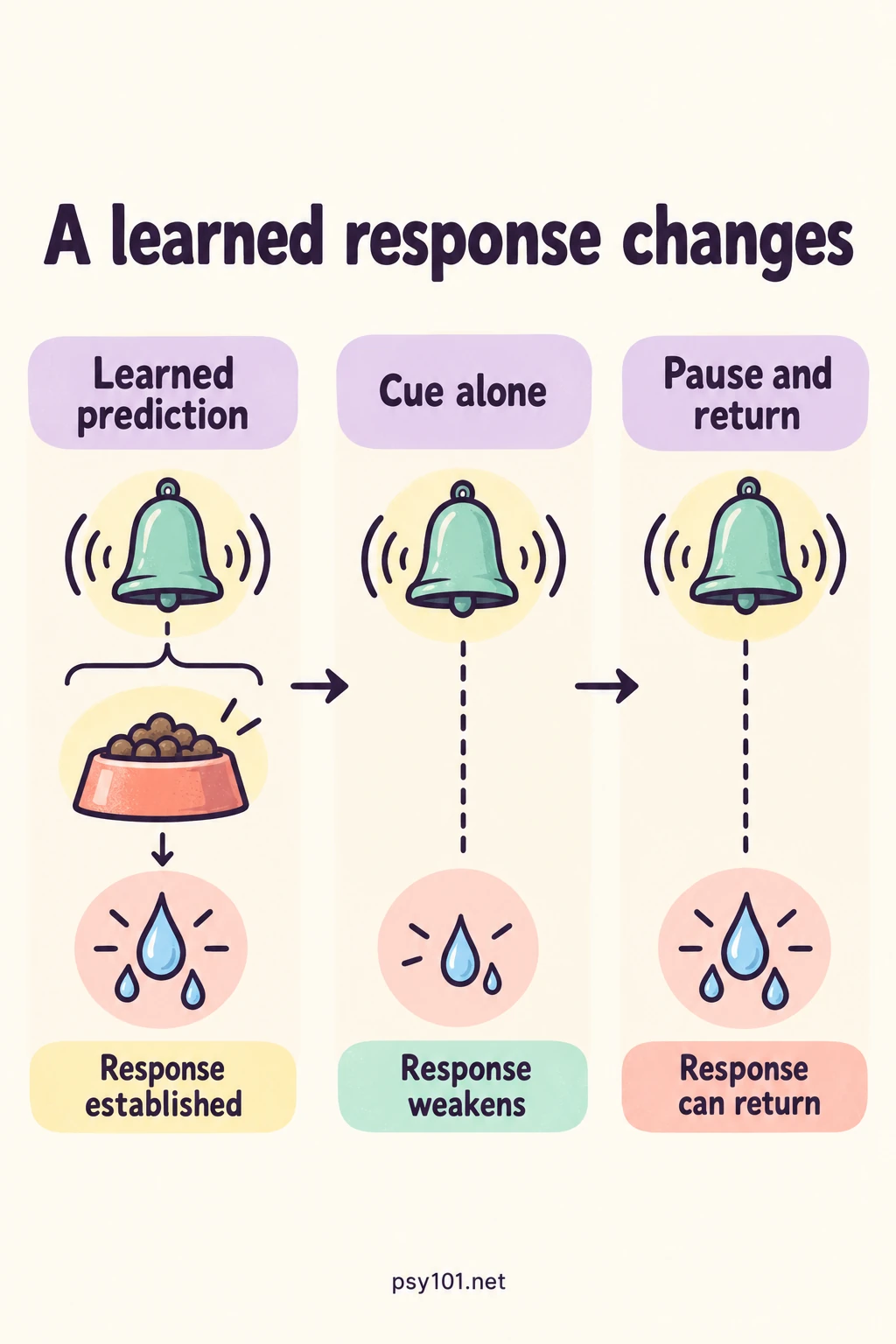
A learned response changes
Follow how responding can change when a familiar cue appears alone.
Read more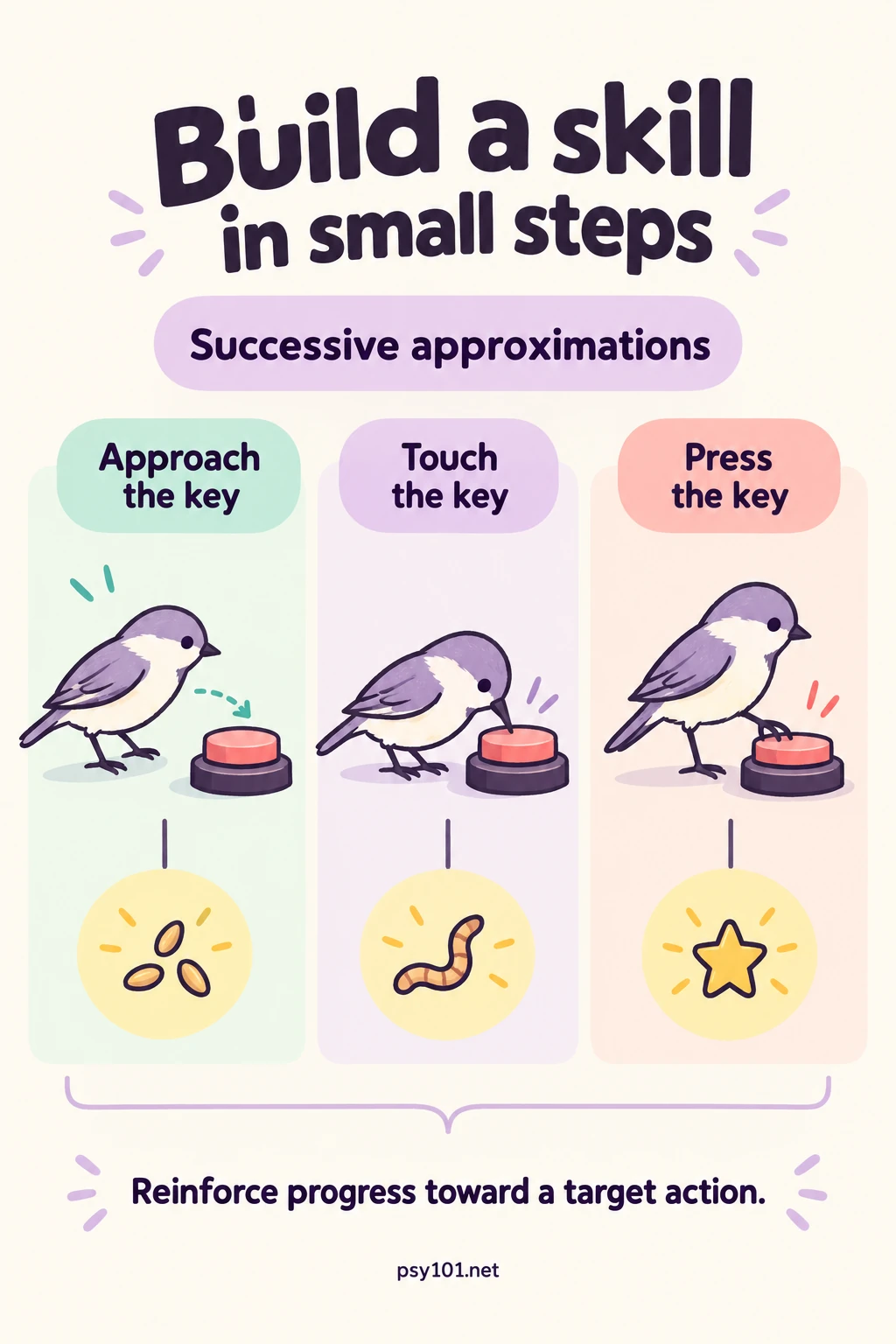
Build a skill in small steps
See how reinforcing successive approximations can support a new action.
Read more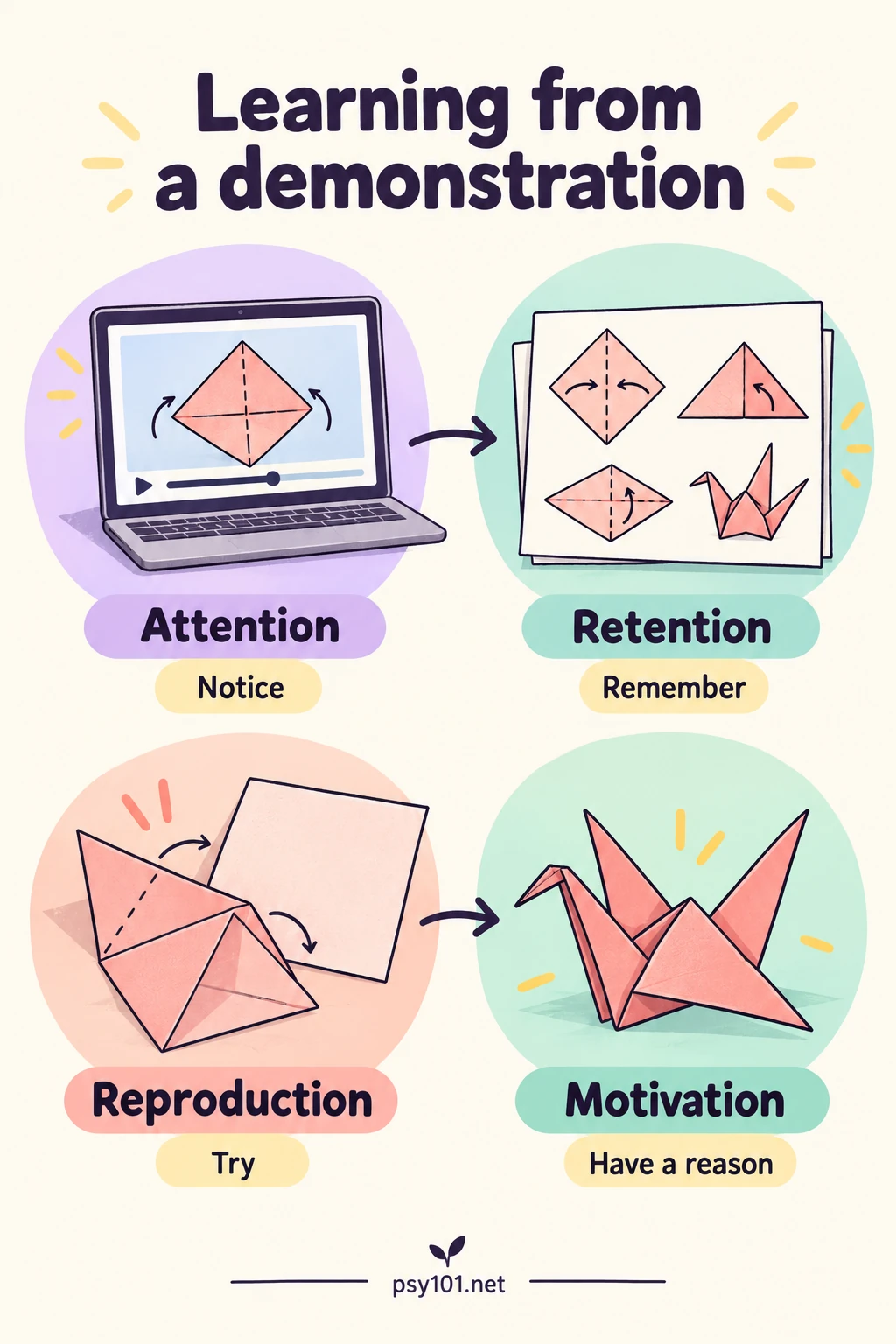
Learning from a demonstration
Connect noticing a model with remembering and attempting an action.
Read more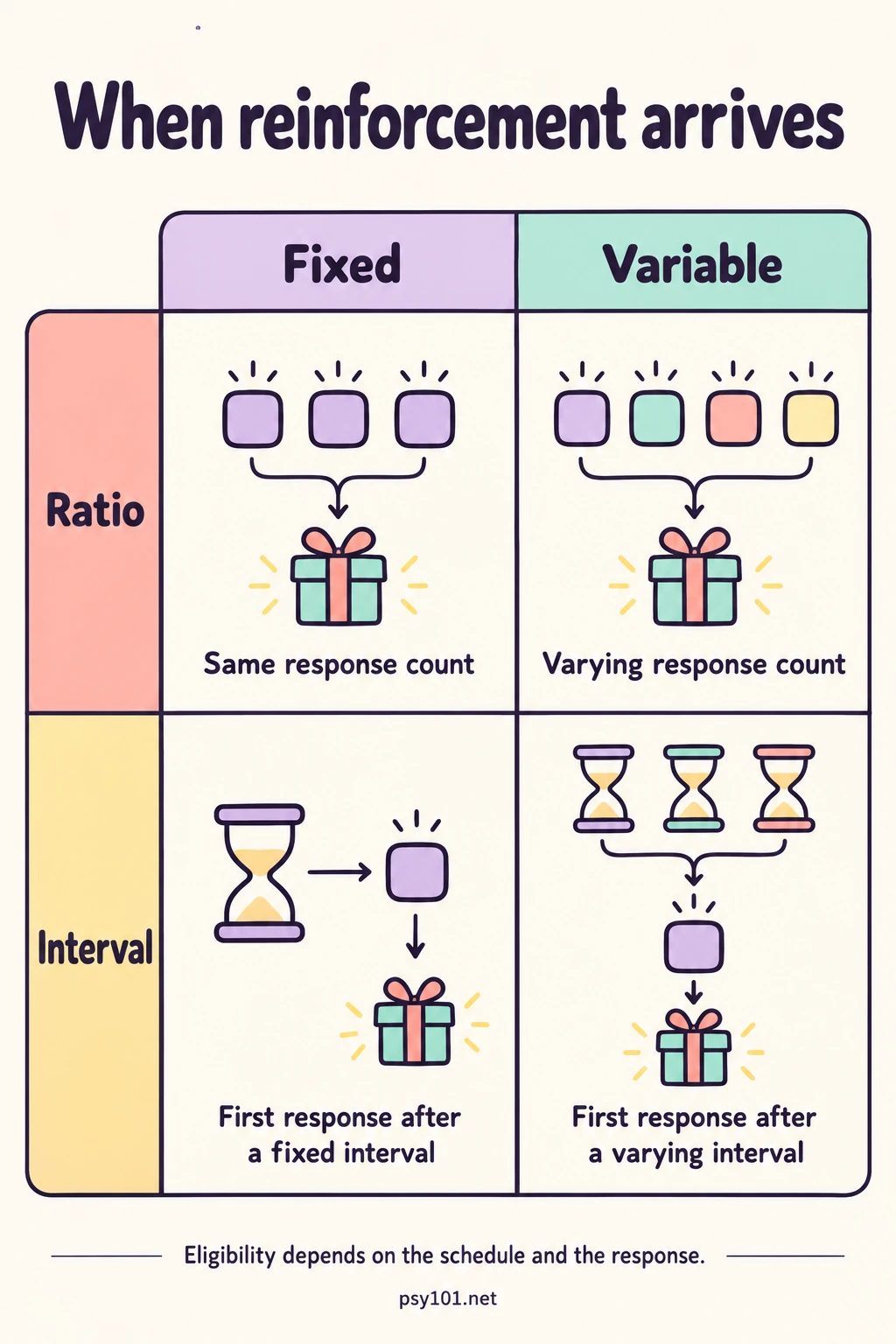
When reinforcement arrives
Compare schedules based on response counts with schedules based on elapsed time.
Read moreThinking and language
Read the short lessonExplore categories, language and strategies for making sense of a question.
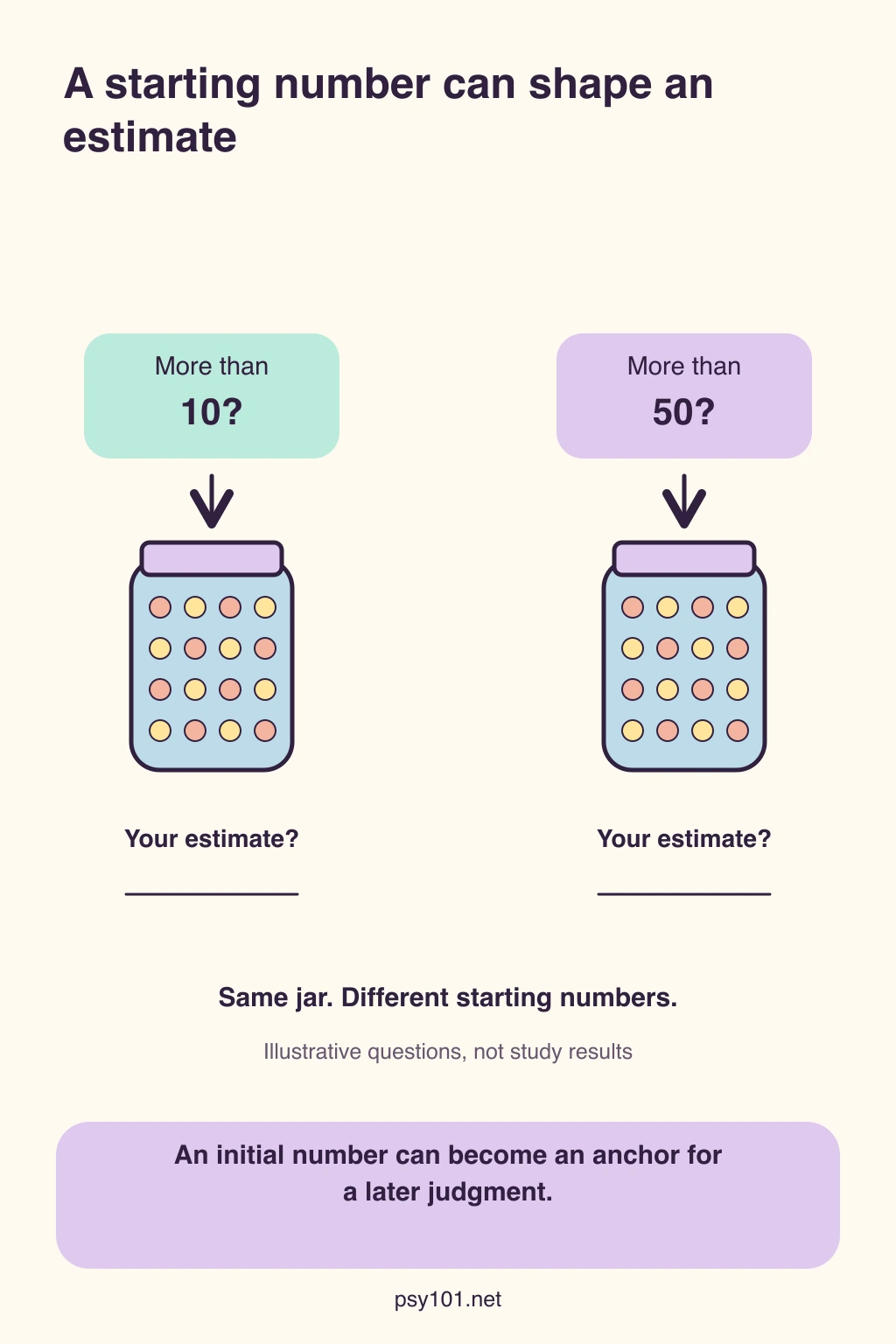
A starting number can shape an estimate
Explore how an initial number can influence an estimate.
Read more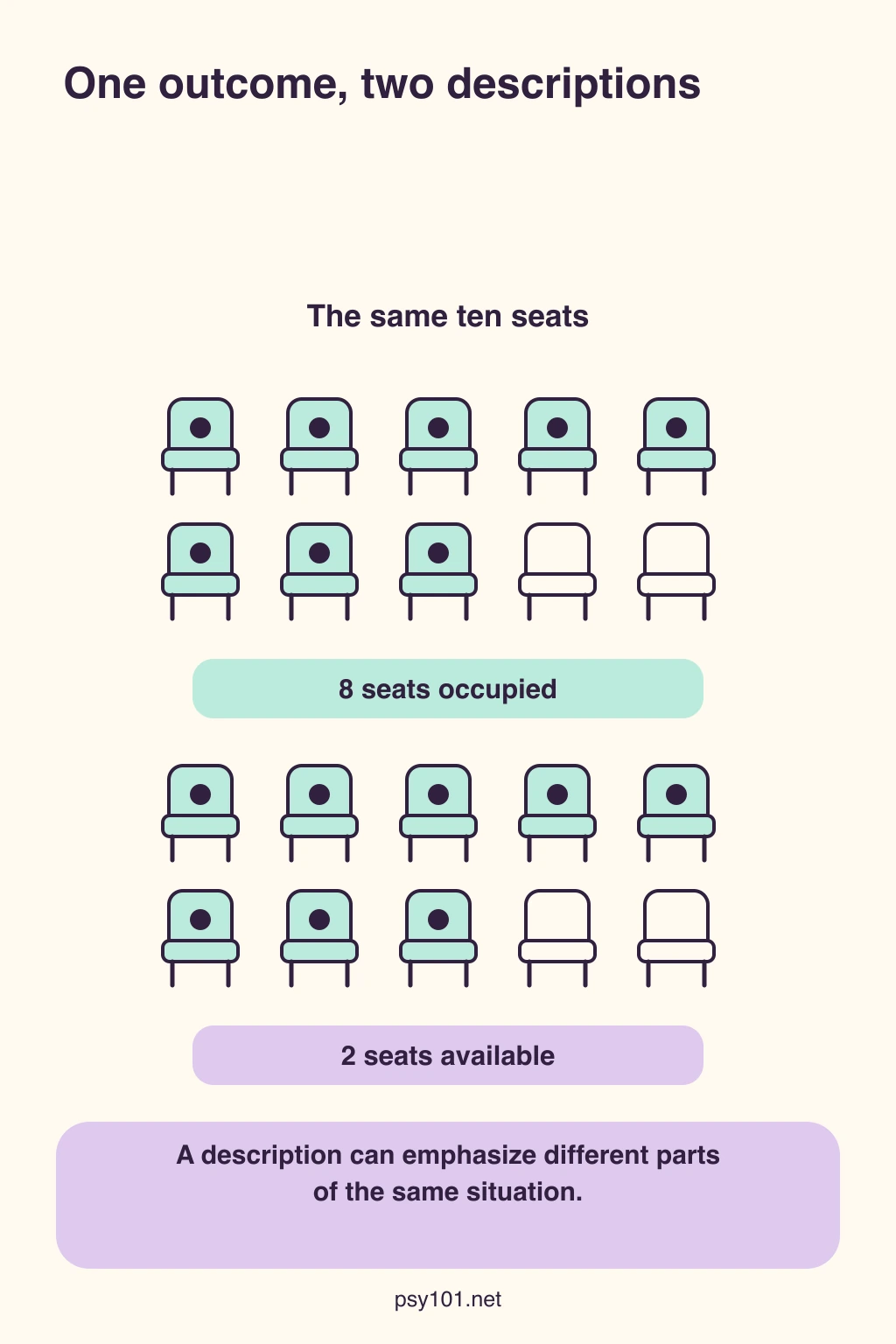
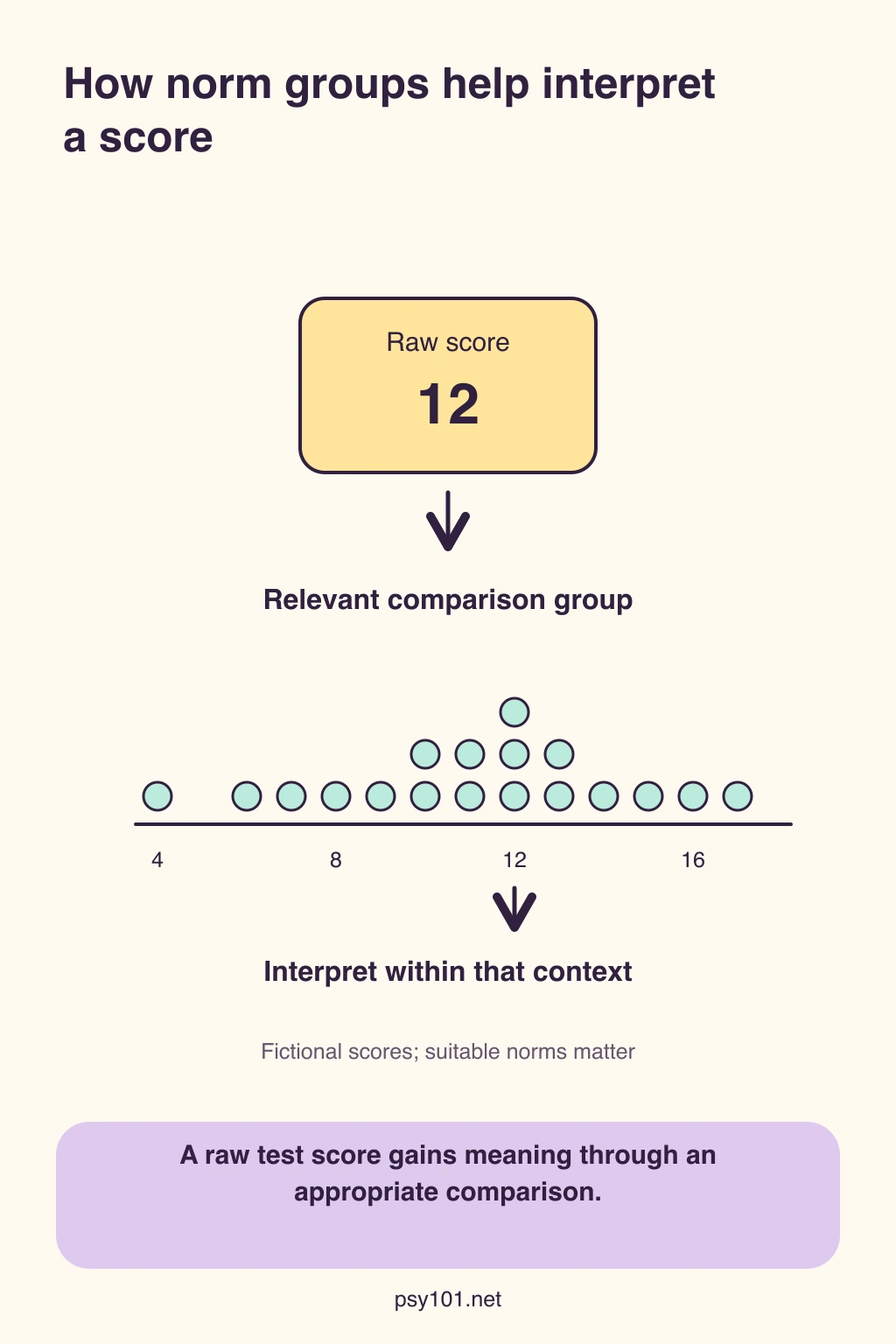
How norm groups help interpret a score
Explore how a norm group gives a test score a comparison context.
Read moreMemory
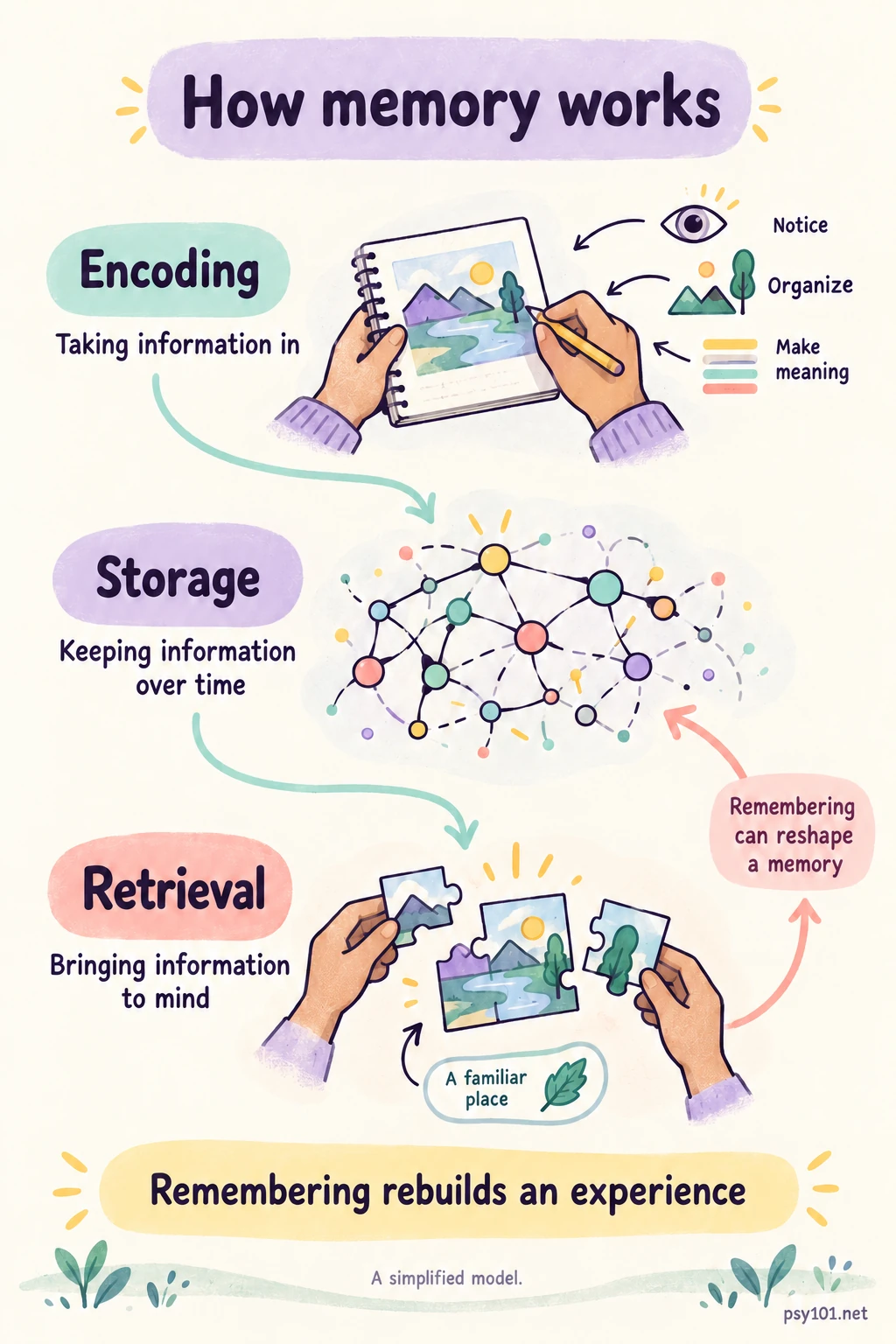
Read the short lessonFollow encoding, storage and retrieval through an everyday example.
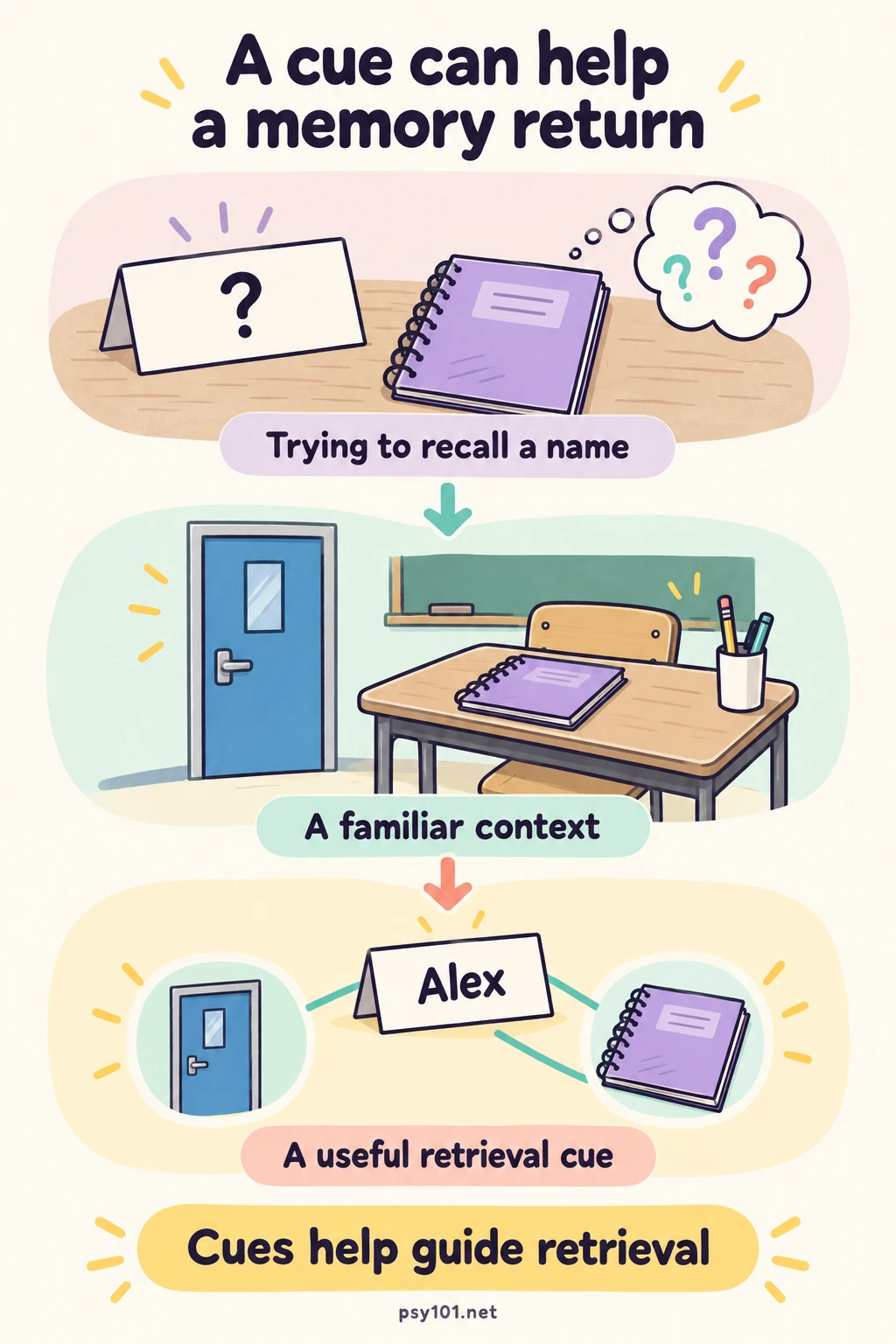
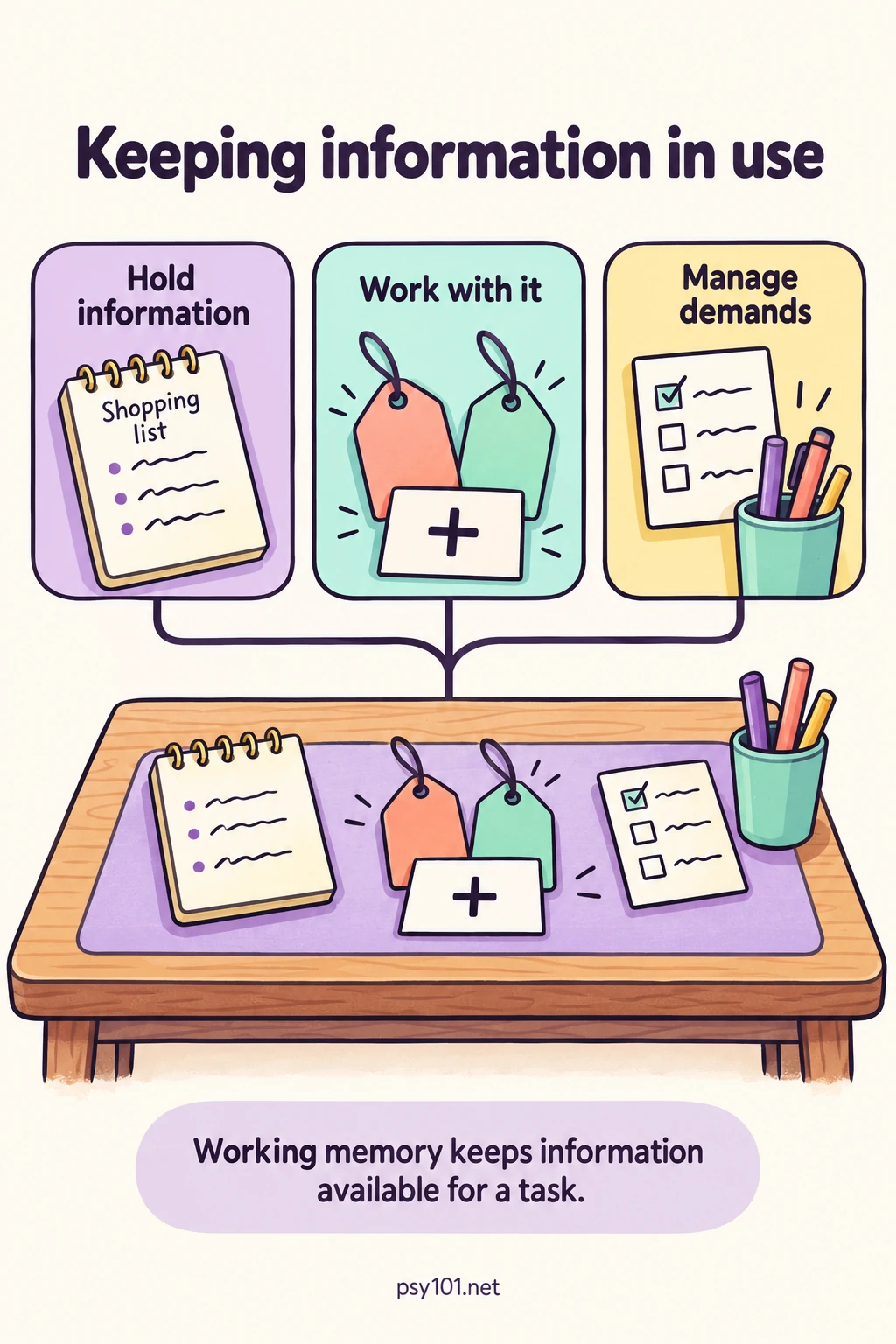
Keeping information in use
Explore how information can be held and worked with during a task.
Read more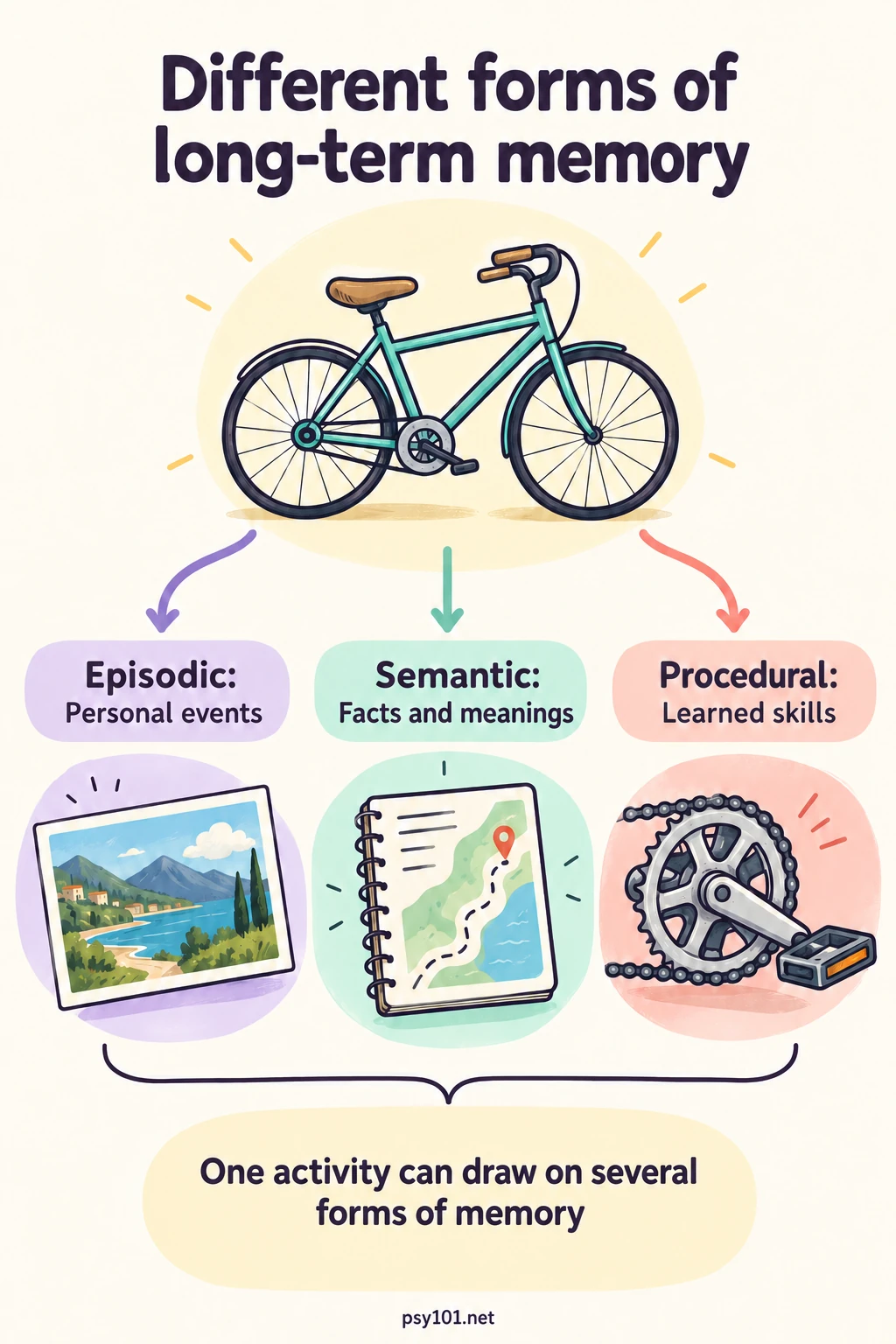
Different forms of long-term memory
Organize memories by the kinds of information and performance they support.
Read more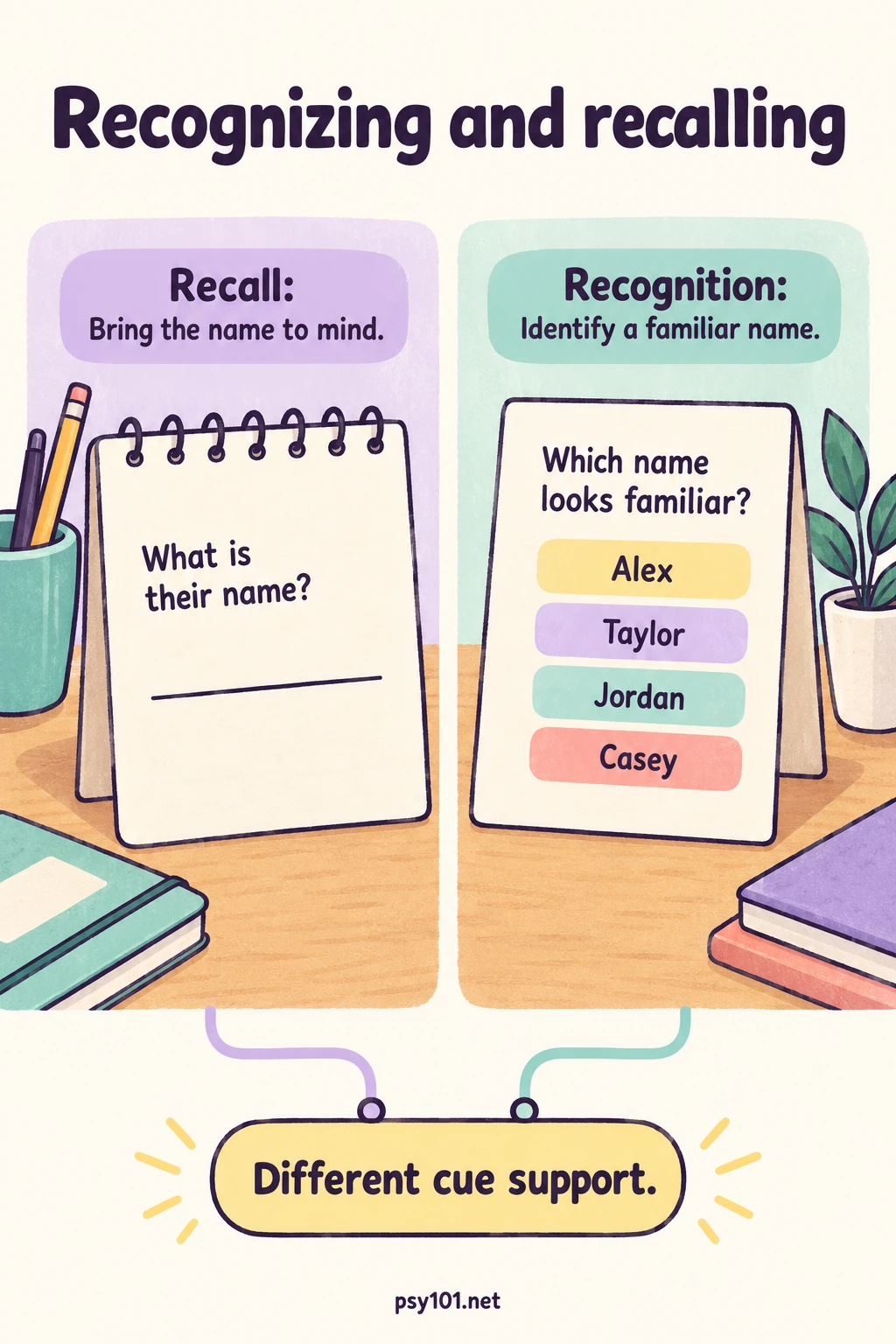
Recognizing and recalling
Compare bringing information to mind with identifying it among options.
Read more
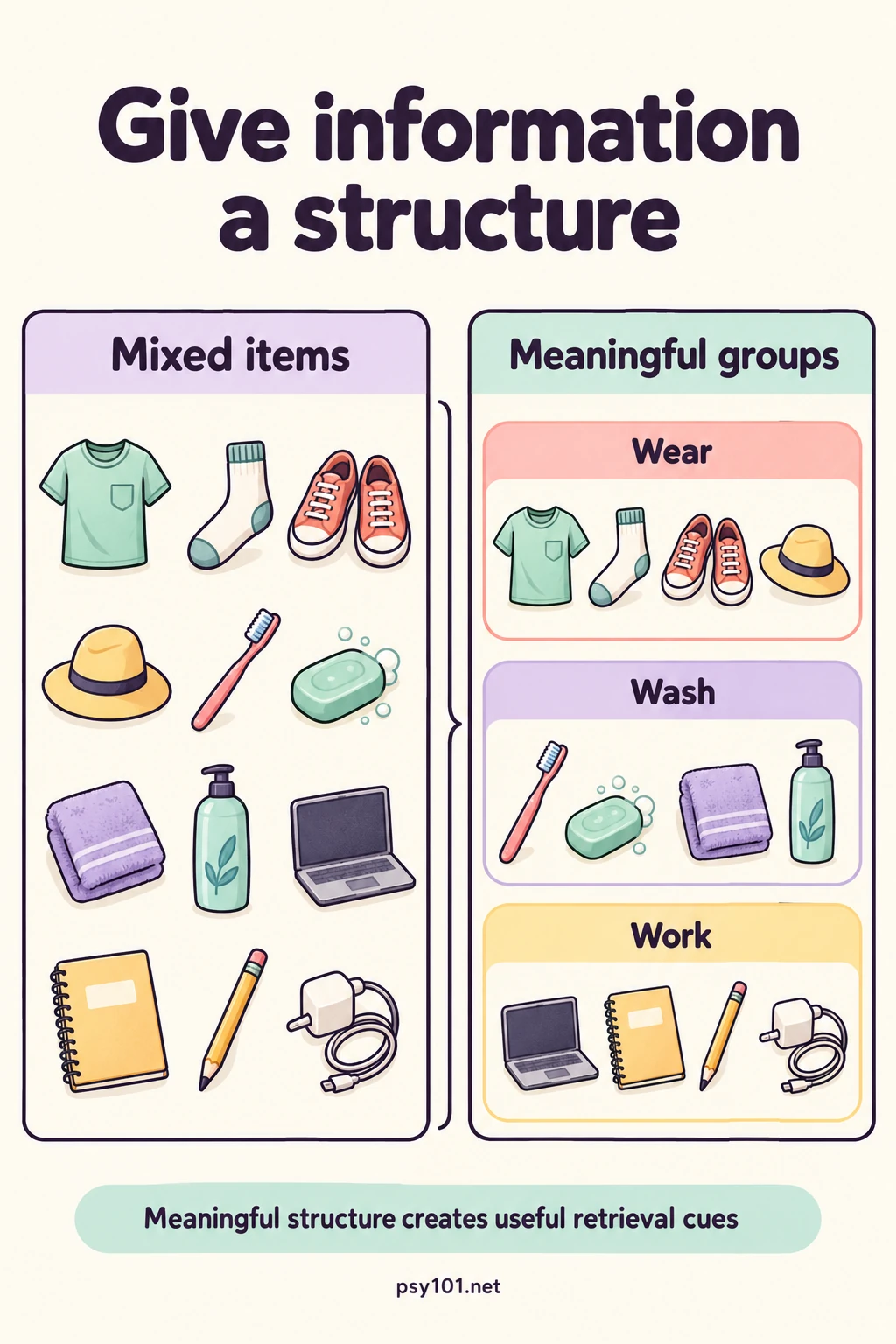
Give information a structure
Connect meaningful grouping with how information is encoded and retrieved.
Read more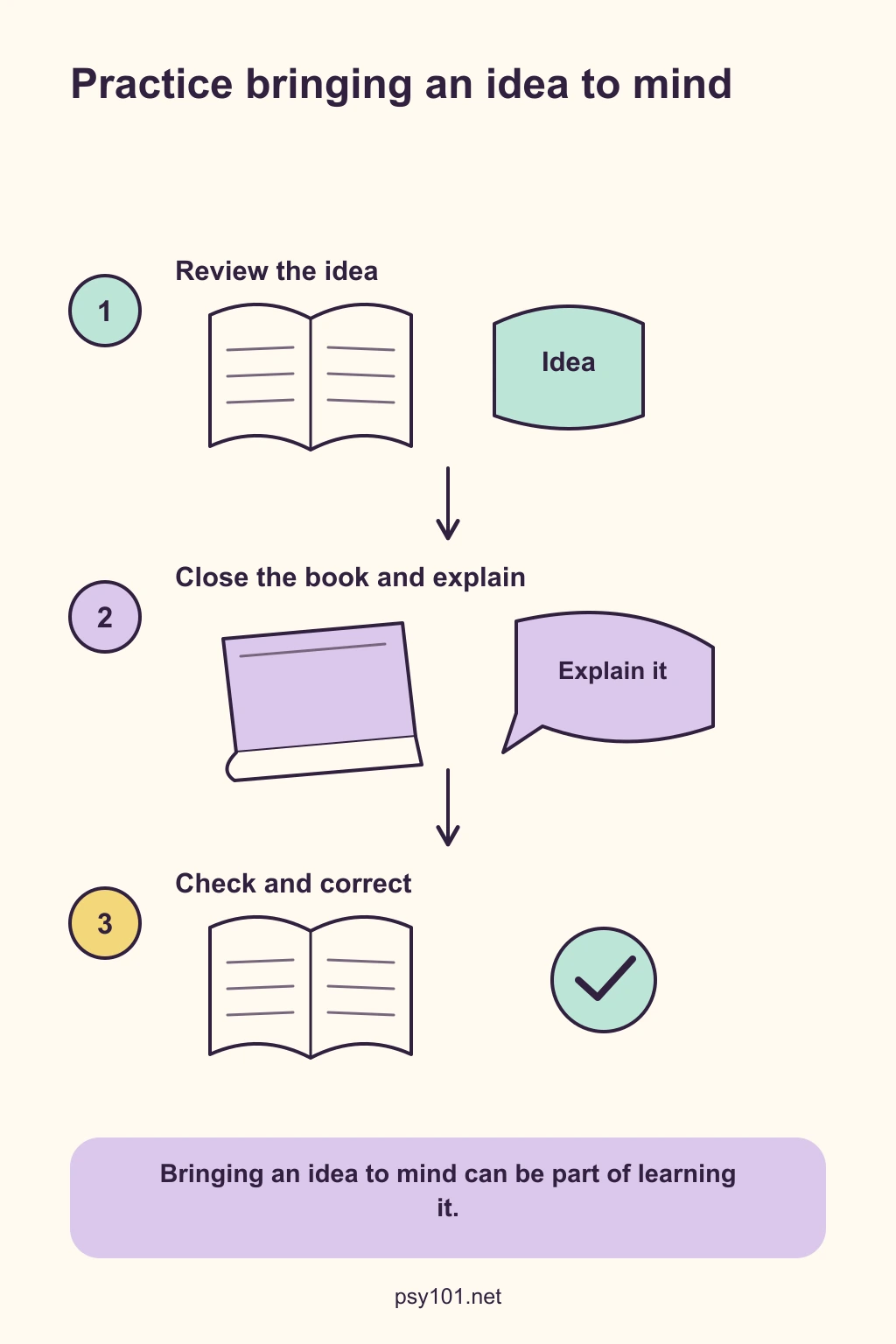
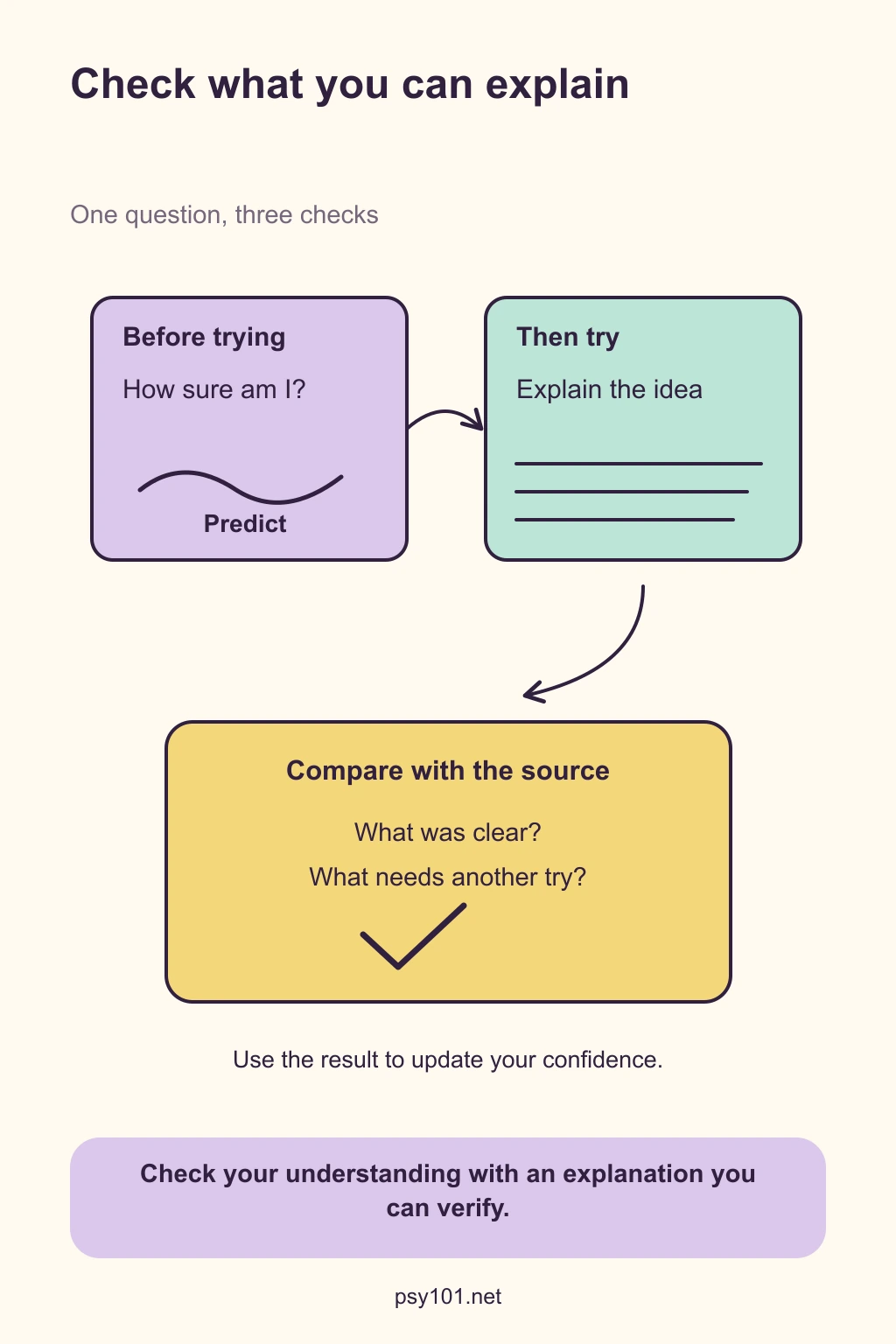
Check what you can explain
Compare your expectation of remembering with an explanation attempt.
Read moreEmotion
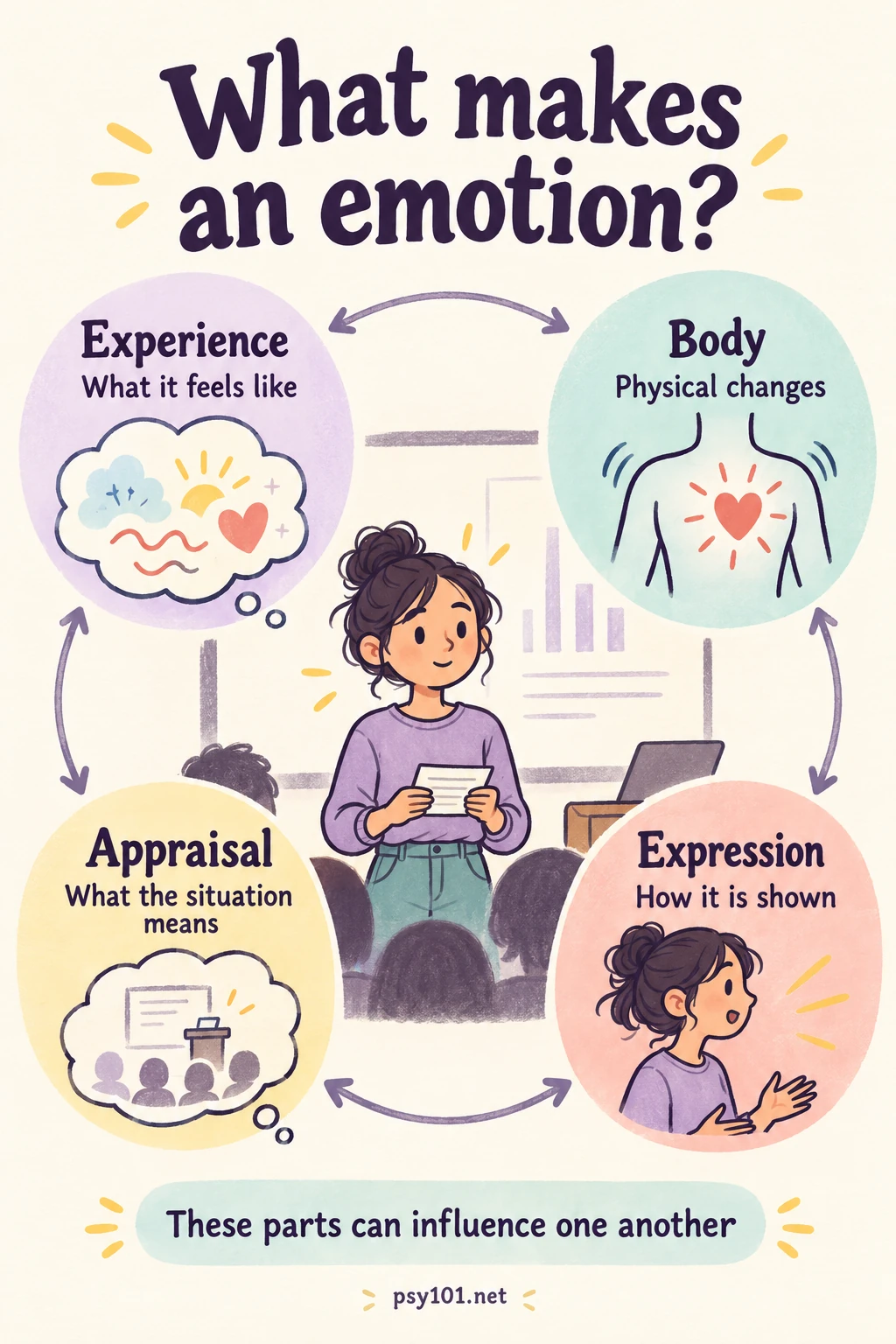
Read the short lessonConnect bodily changes, interpretation, feeling and expression.
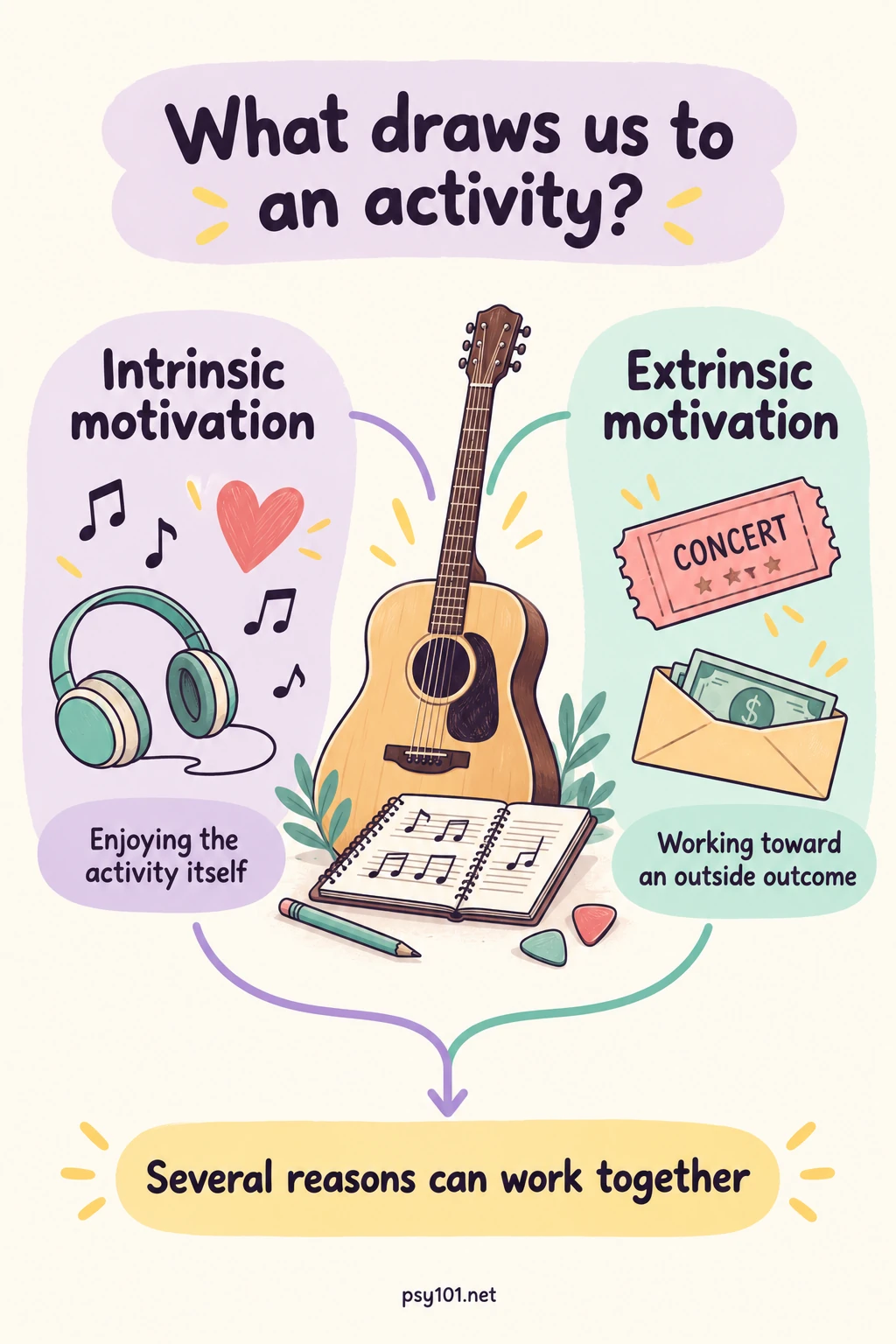
What draws us to an activity?
Explore enjoyment of an activity alongside the outcomes it can bring.
Read more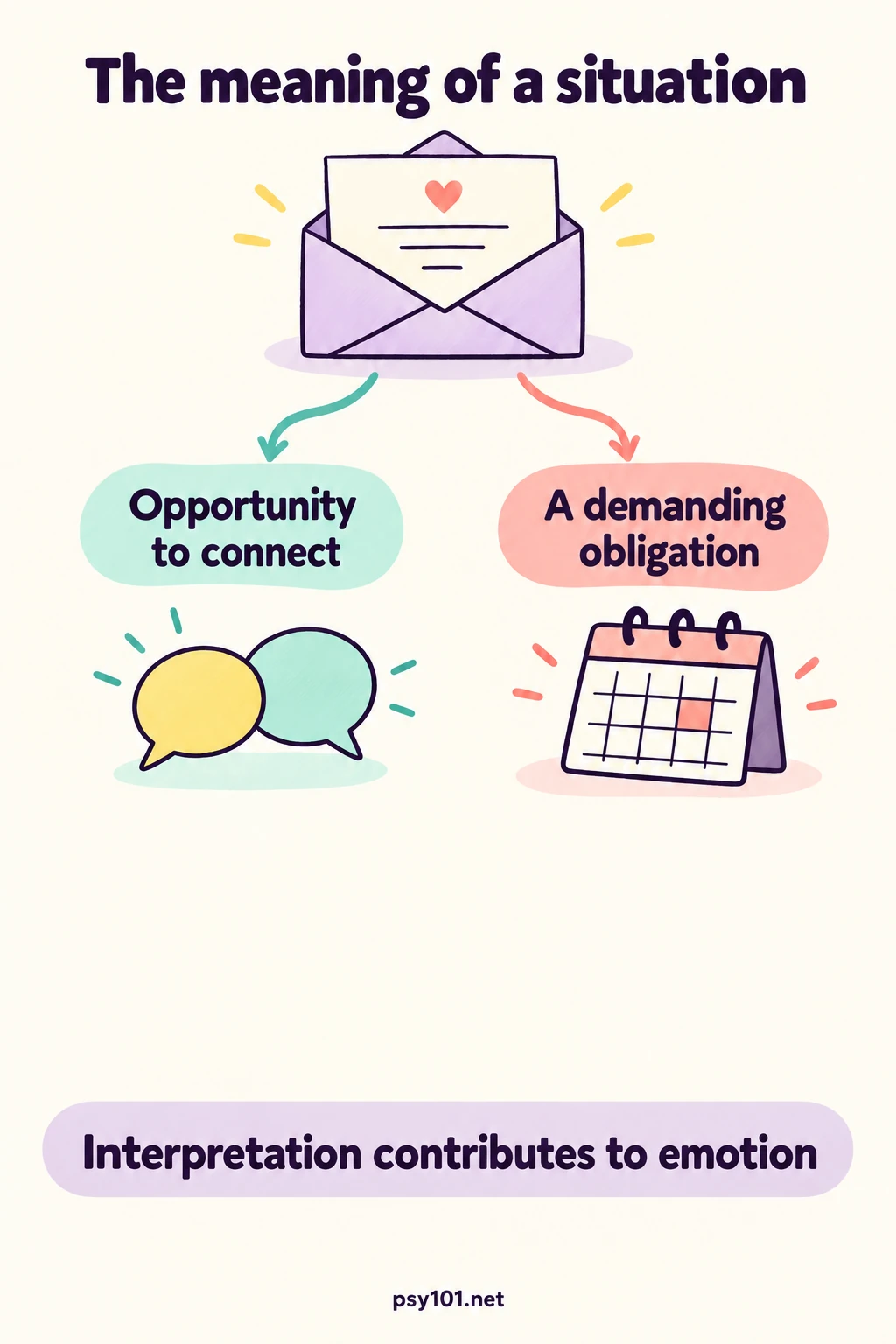
The meaning of a situation
Explore how interpreting an event contributes to an emotional episode.
Read more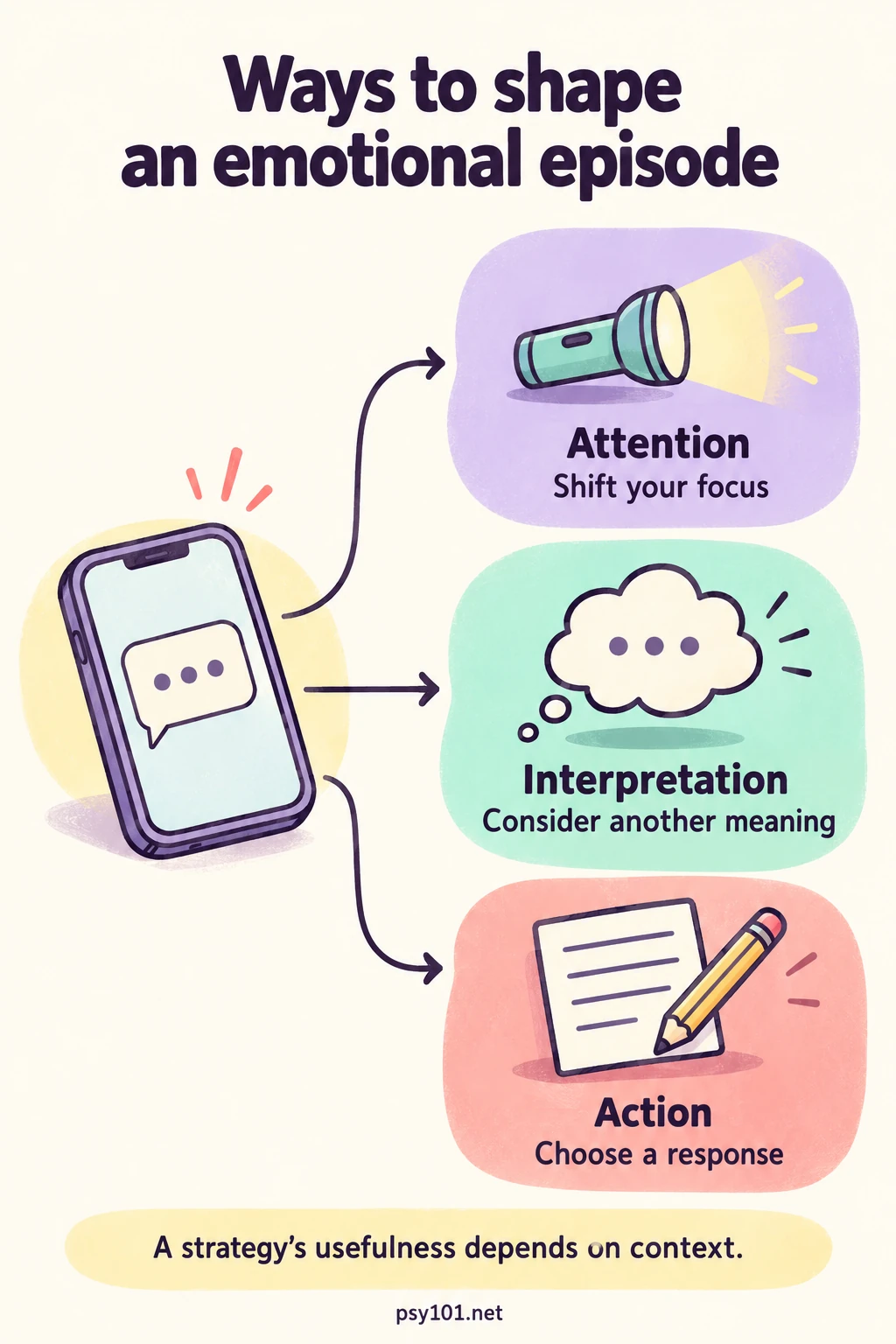
Ways to shape an emotional episode
Explore how changes in attention, interpretation and action can influence an emotional episode.
Read more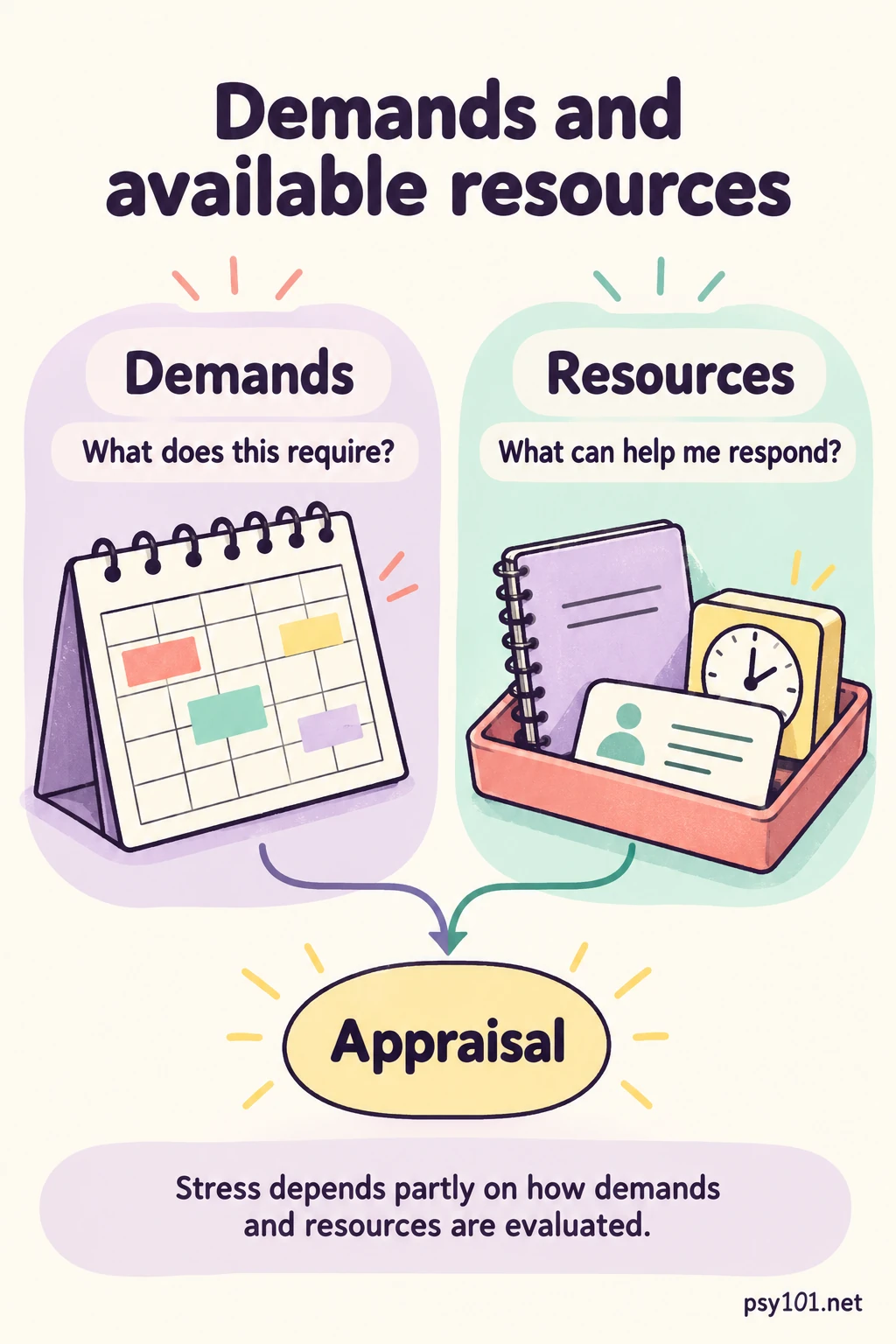
Demands and available resources
Consider how demands and perceived resources contribute to a stress appraisal.
Read more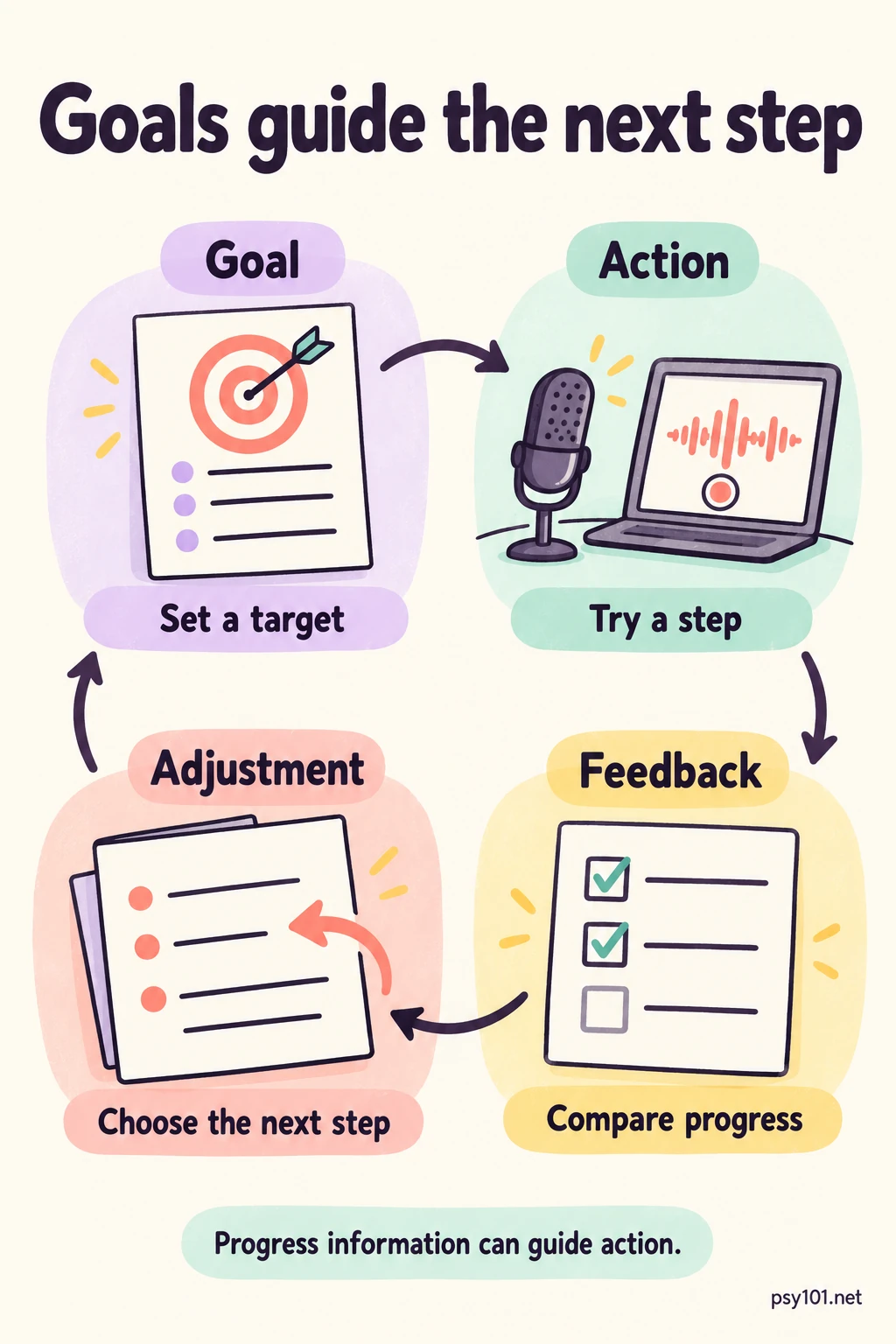
Goals guide the next step
Follow a practical cycle connecting a goal, an attempt and information about progress.
Read more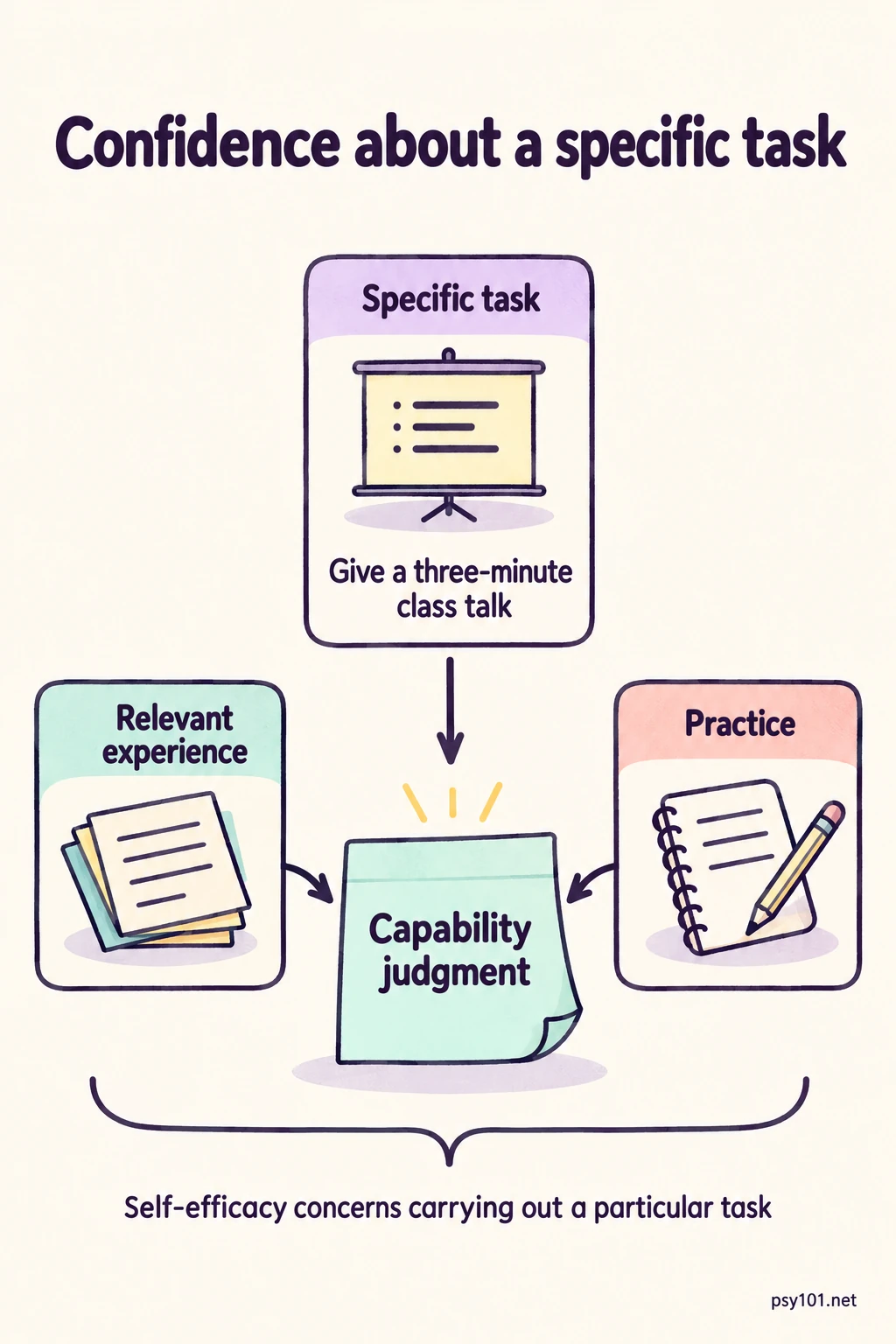
Confidence about a specific task
Distinguish a judgment about carrying out a particular task from a broad description of the self.
Read moreDevelopment
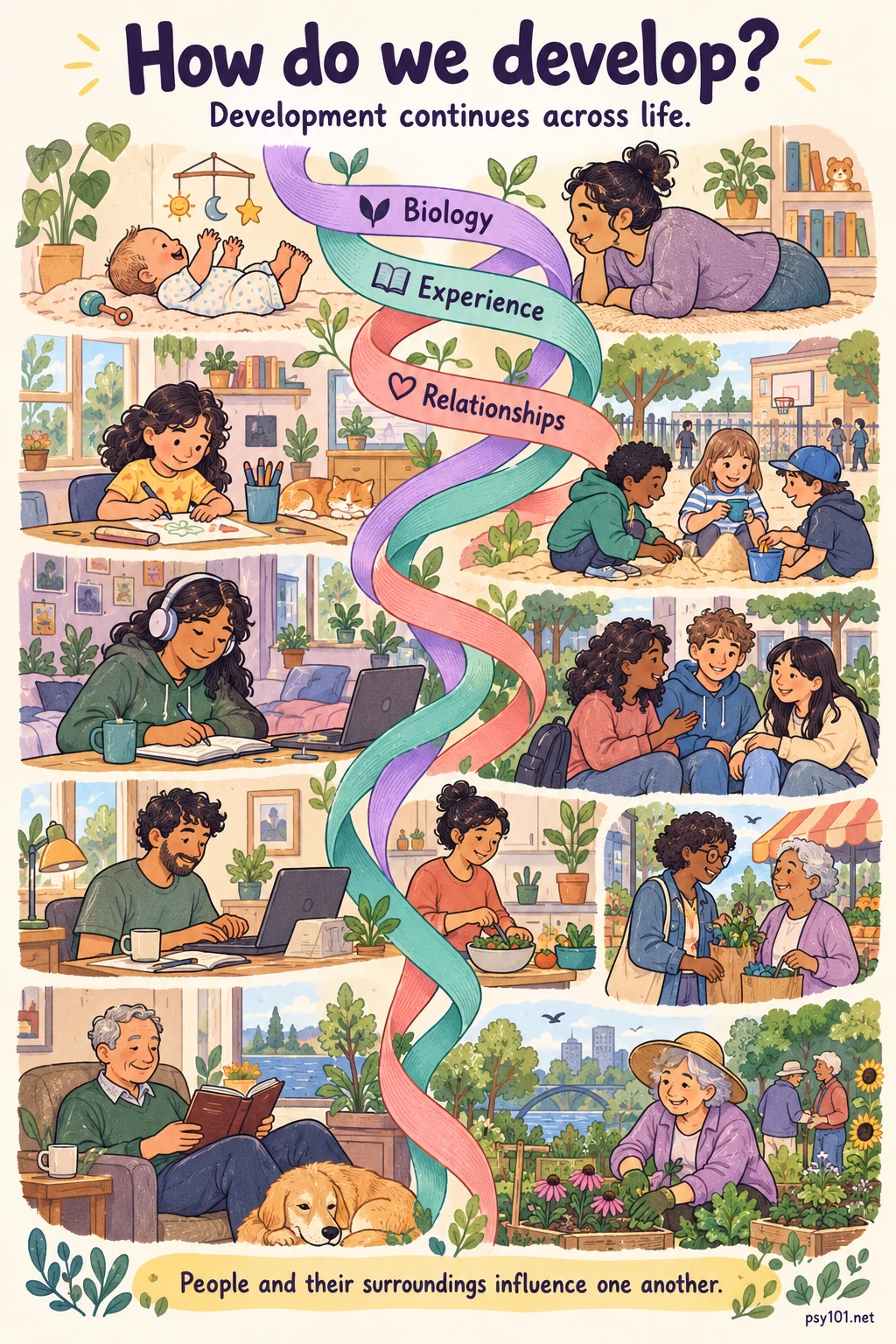
Read the short lessonExplore change and continuity in bodies, thinking and relationships.
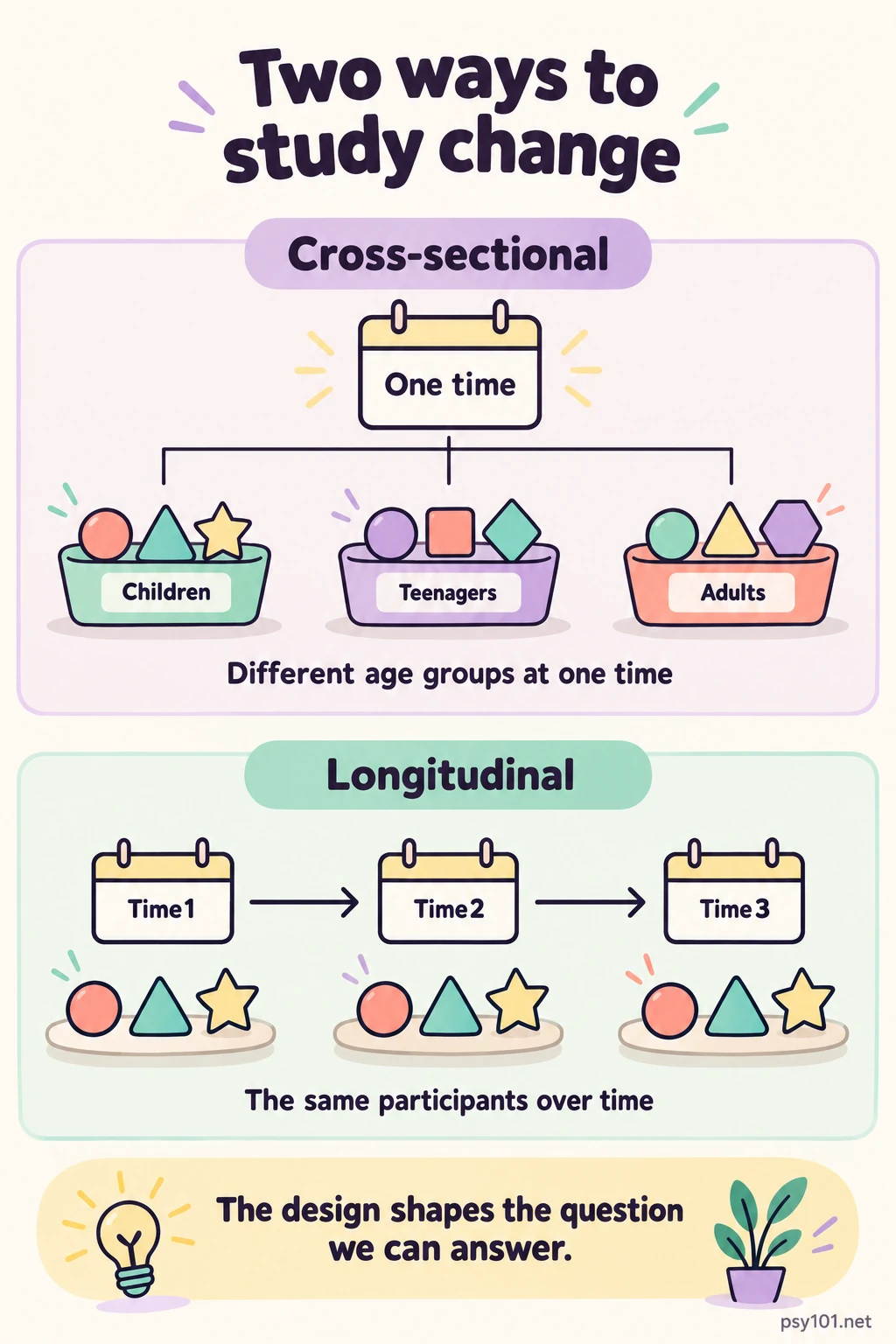
Two ways to study change
Compare different age groups or follow the same participants through time.
Read more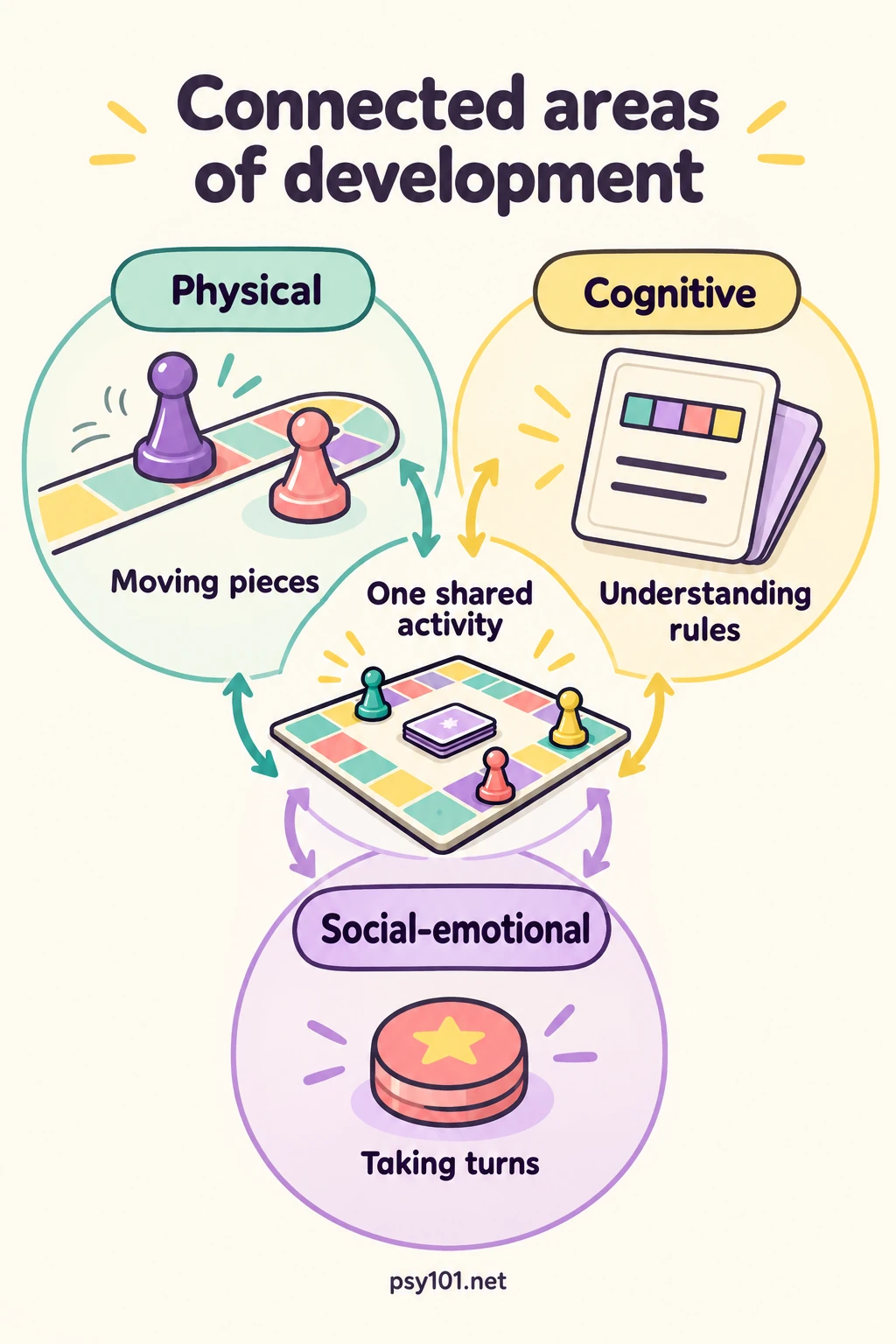
Connected areas of development
Examine physical, cognitive and social-emotional development together.
Read more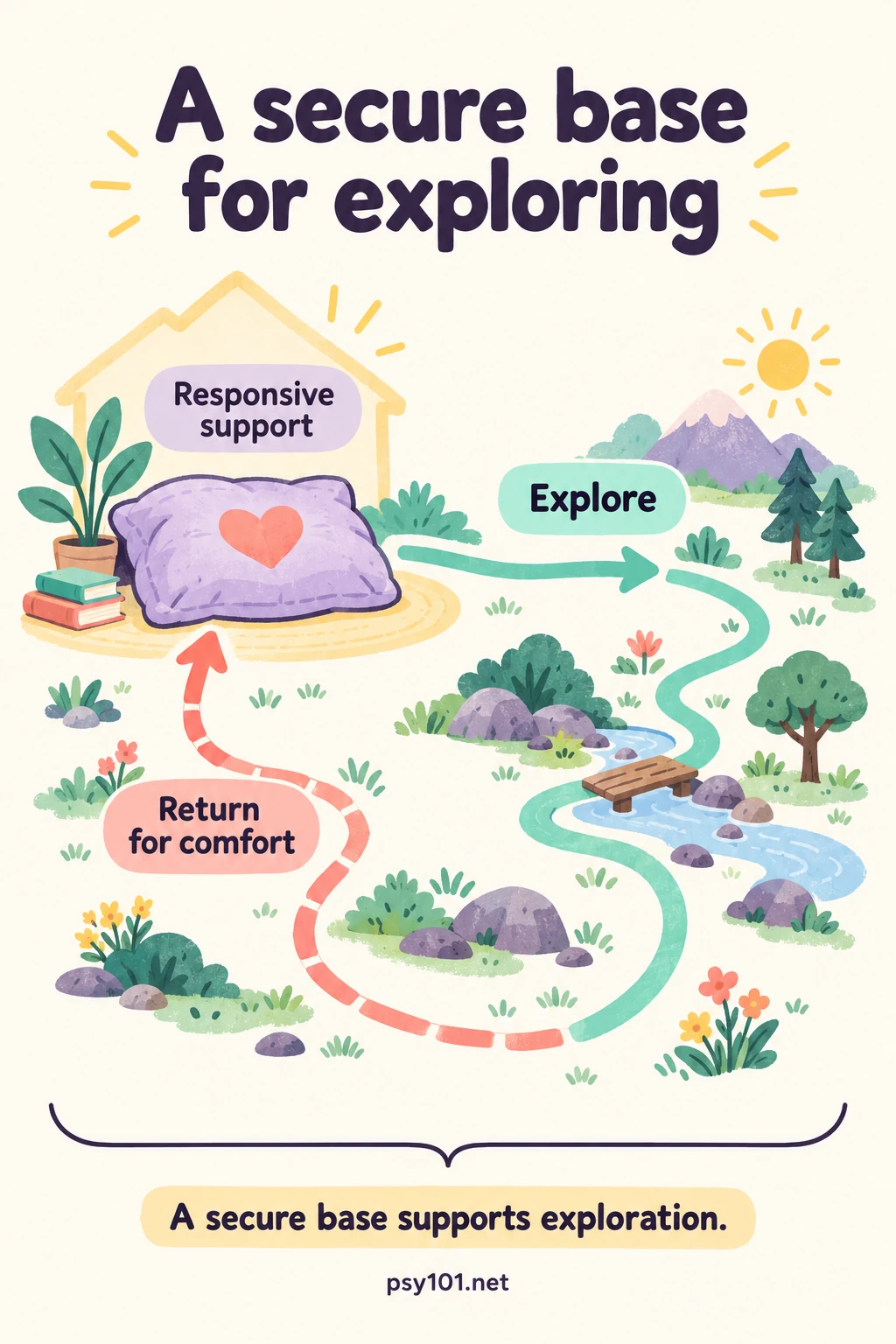
A secure base for exploring
Understand the relationship between access to a responsive caregiver and exploration.
Read more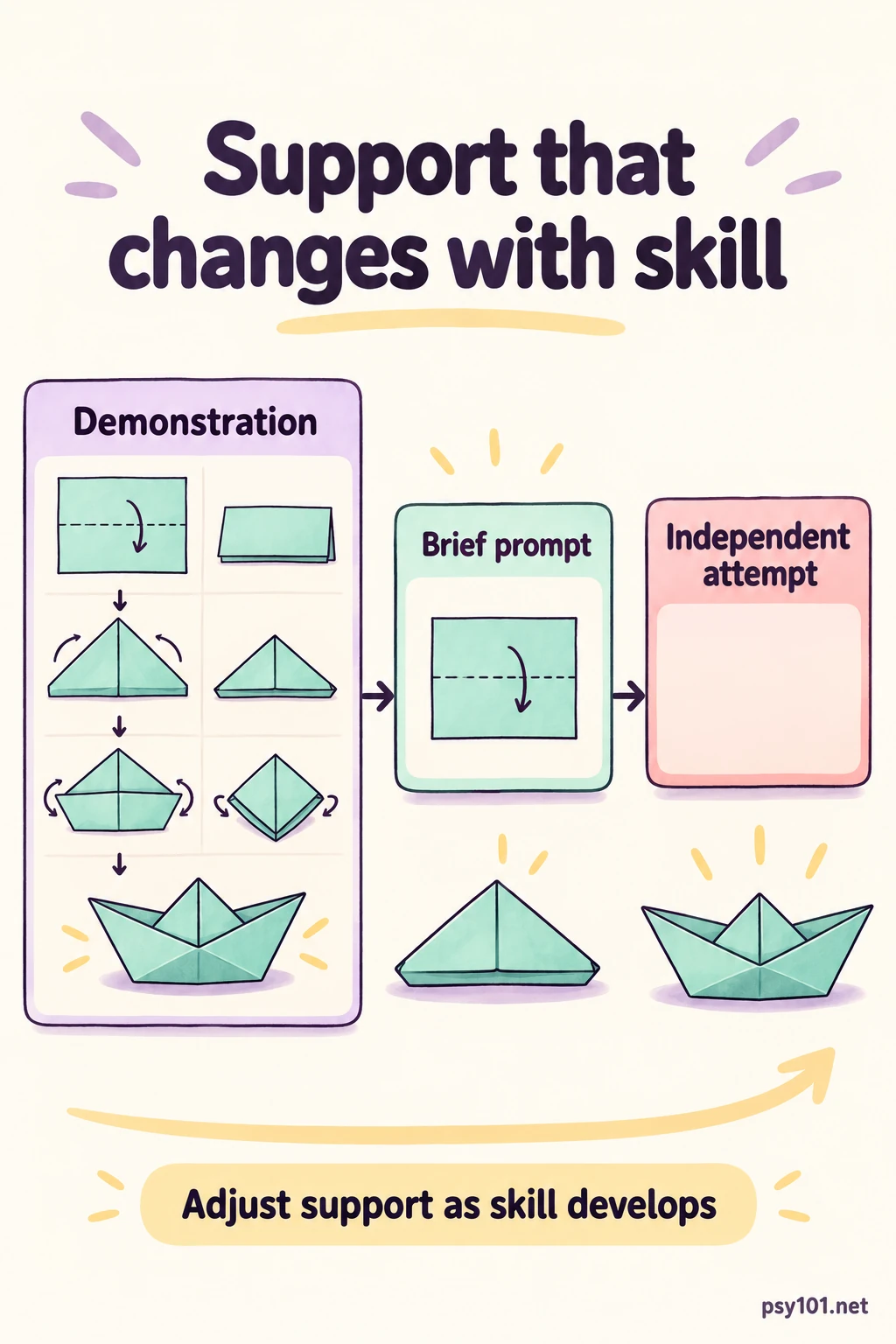
Support that changes with skill
See how task support can be adjusted as a learner becomes more able to work independently.
Read more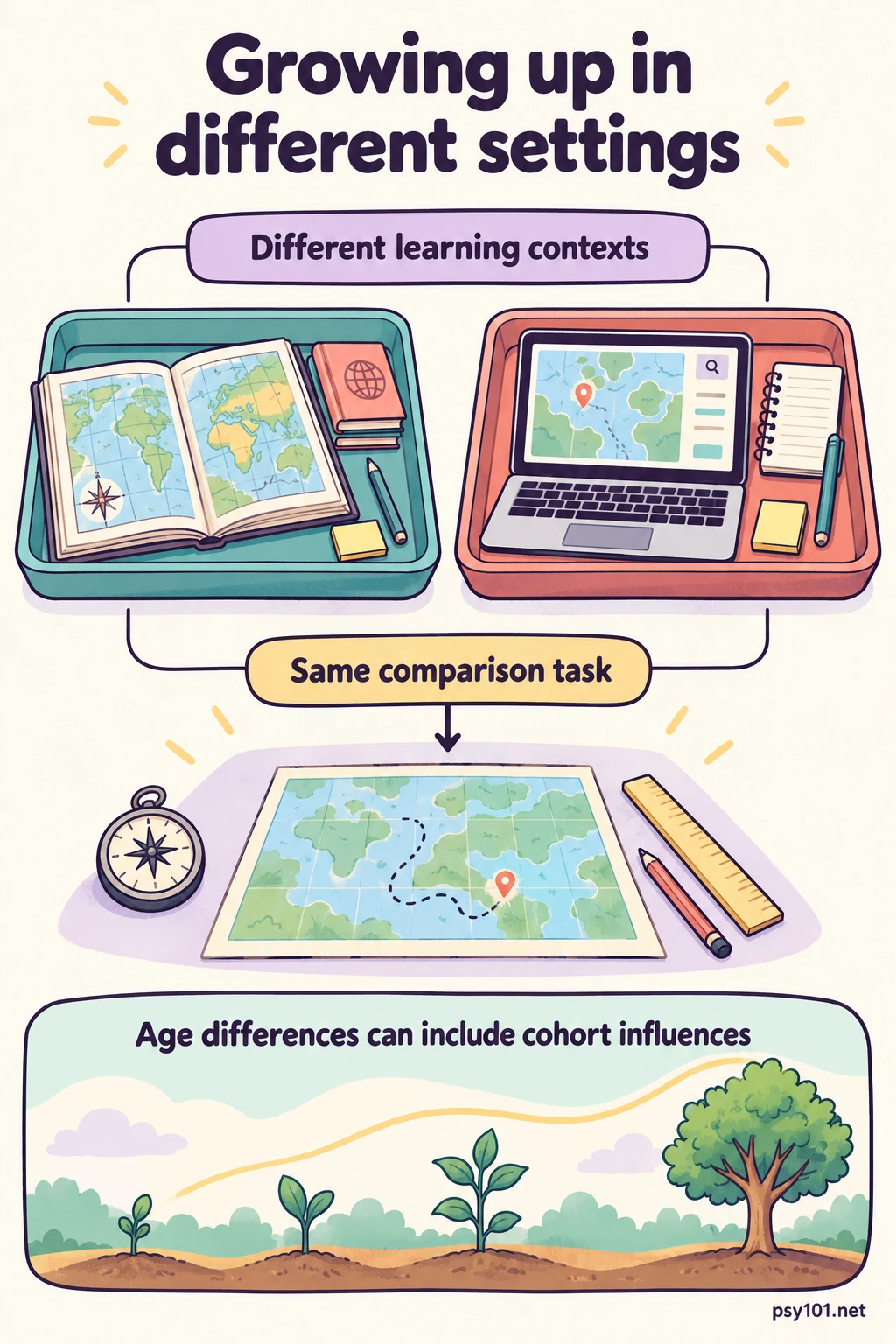
Growing up in different settings
Consider how shared historical circumstances can influence groups born around the same time.
Read more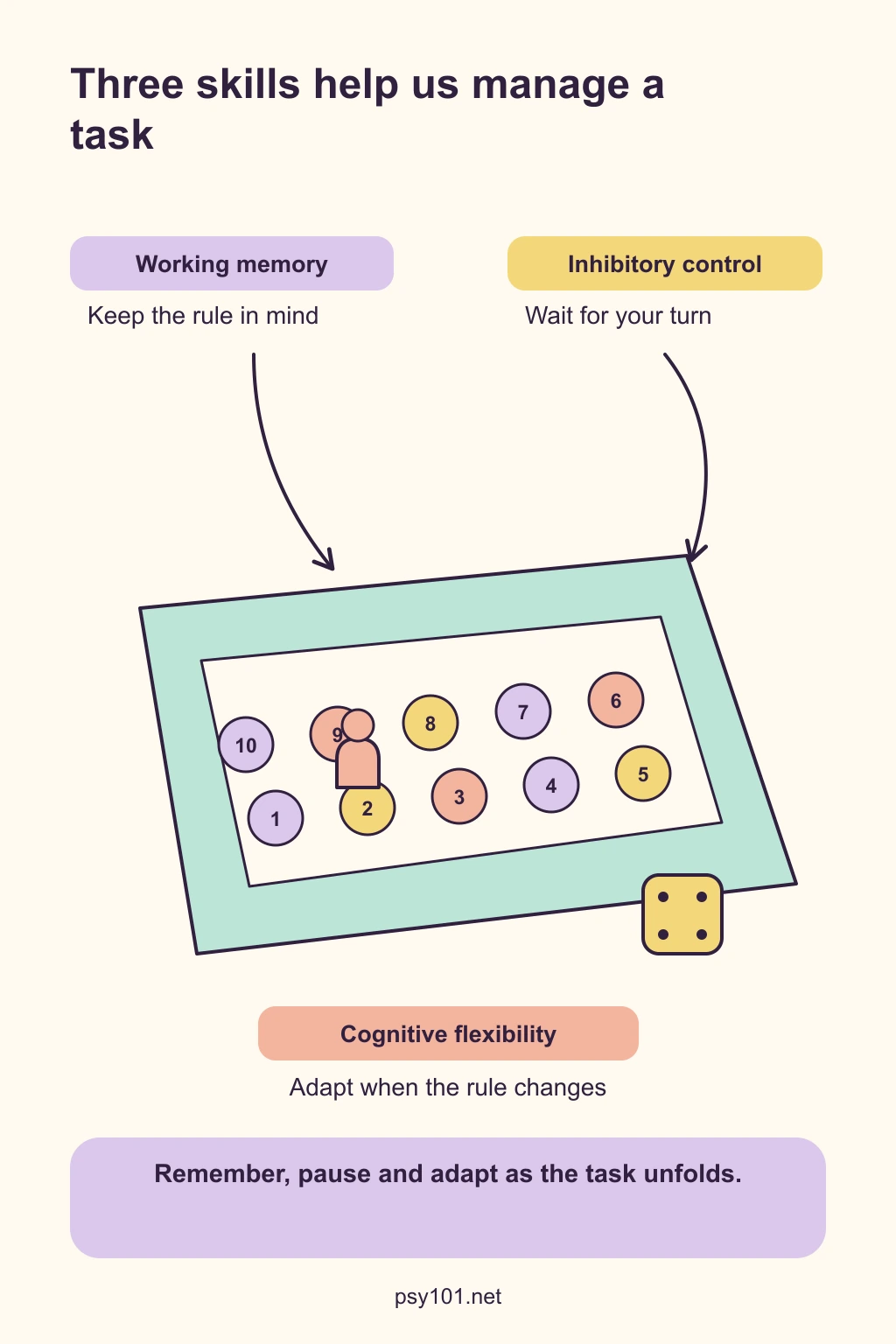
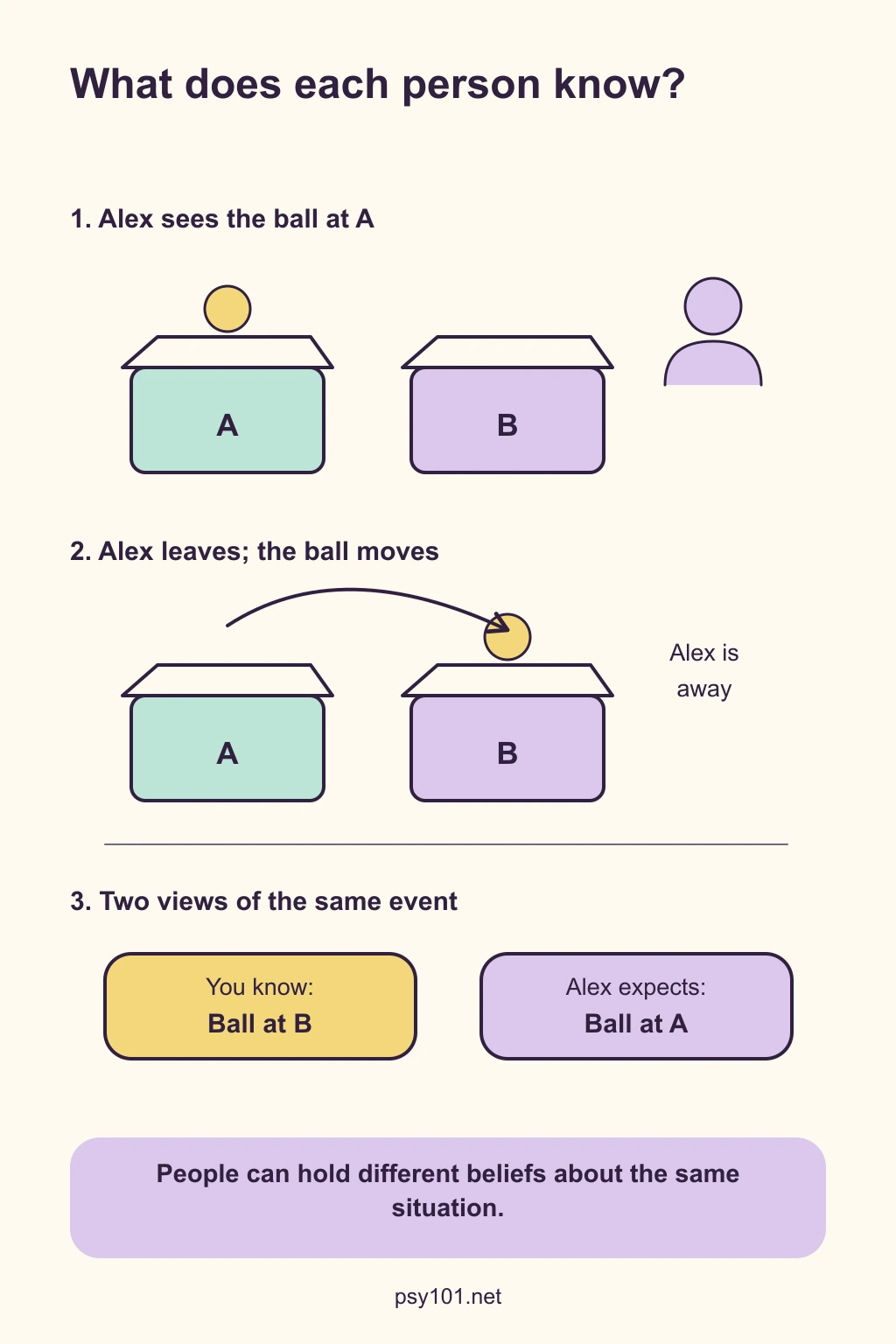
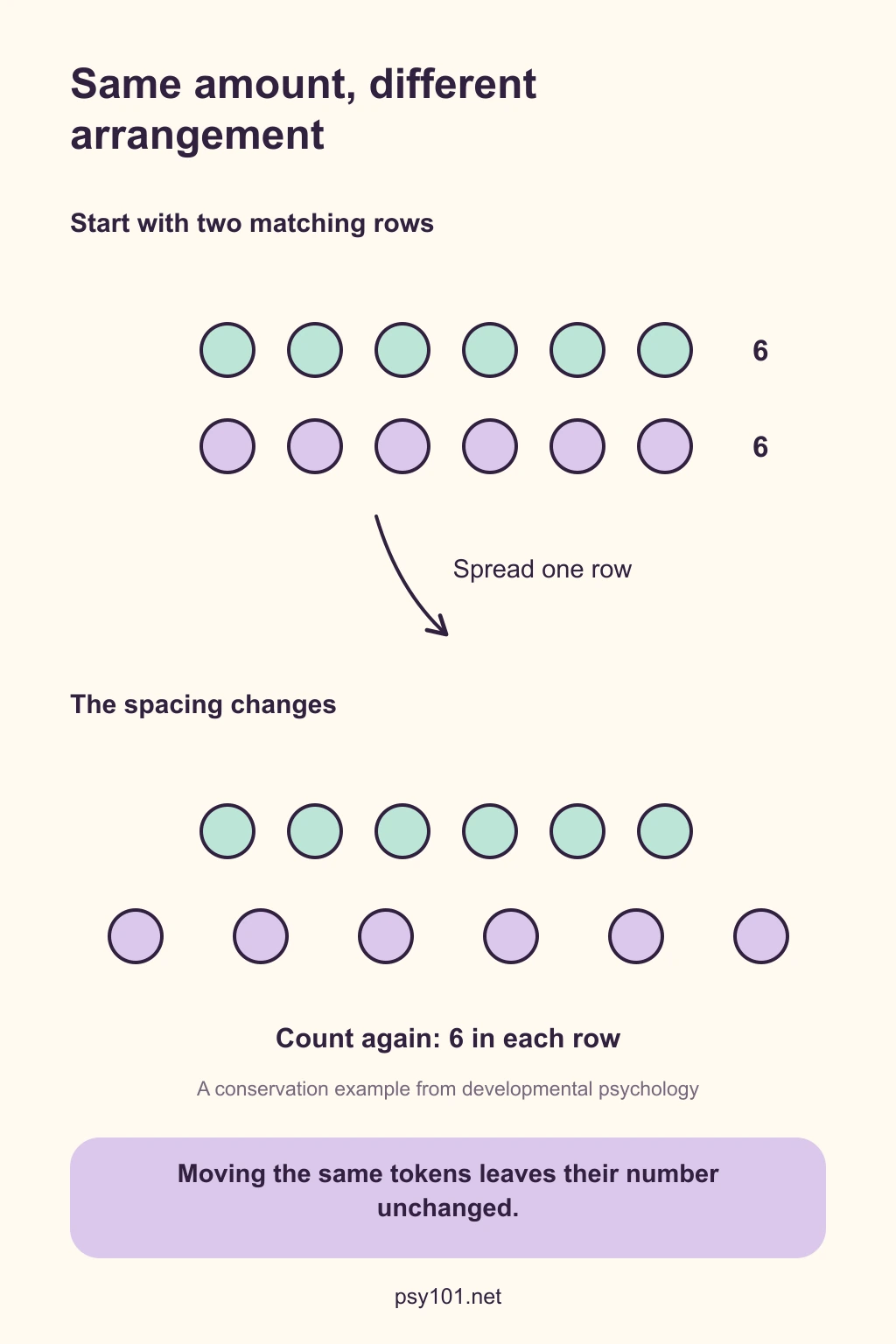
Same amount, different arrangement
Explore what remains constant when an arrangement changes.
Read morePersonality
Read the short lessonDescribe traits as dimensions that vary in degree.
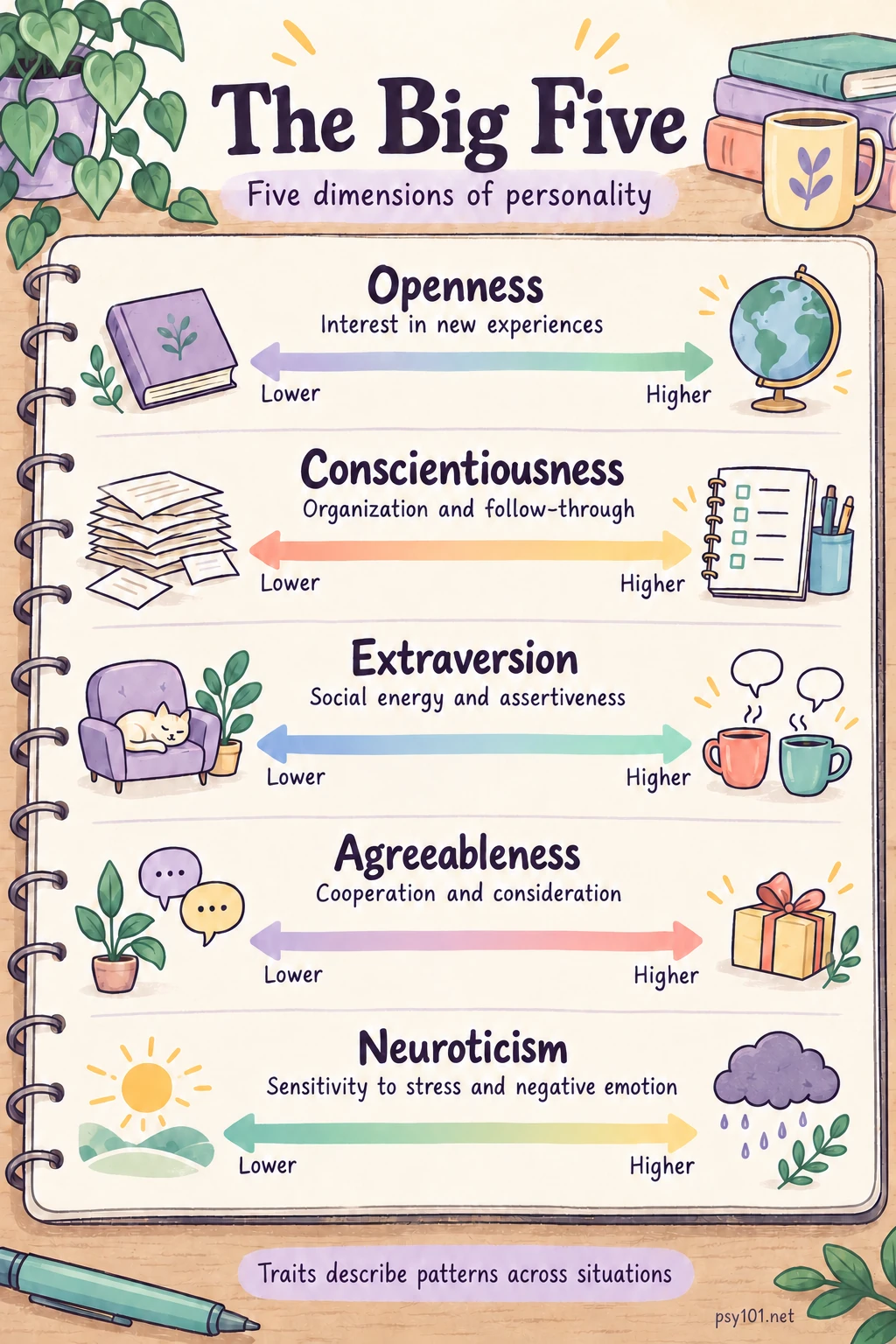
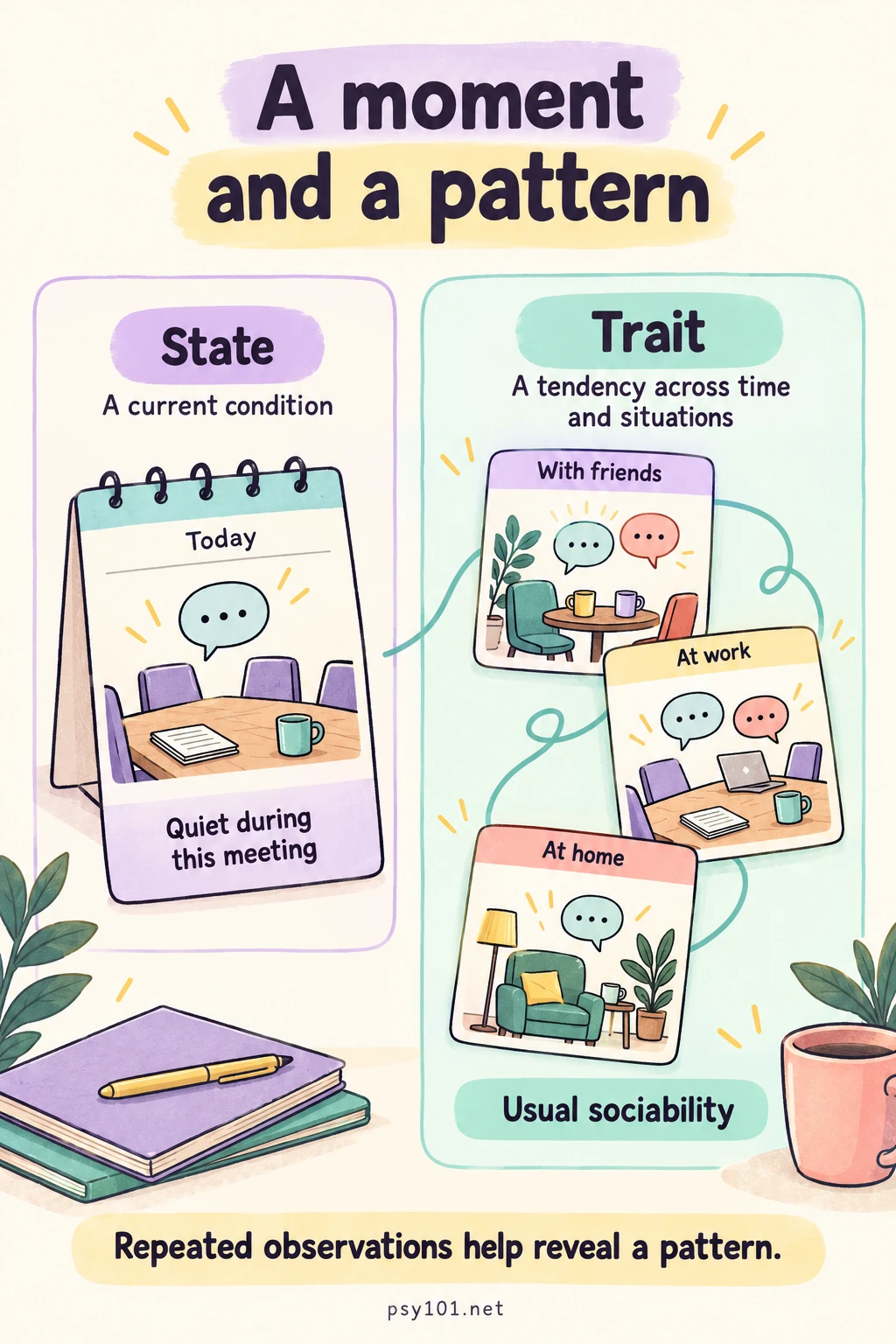
A moment and a pattern
Compare a current condition with a tendency observed across situations.
Read more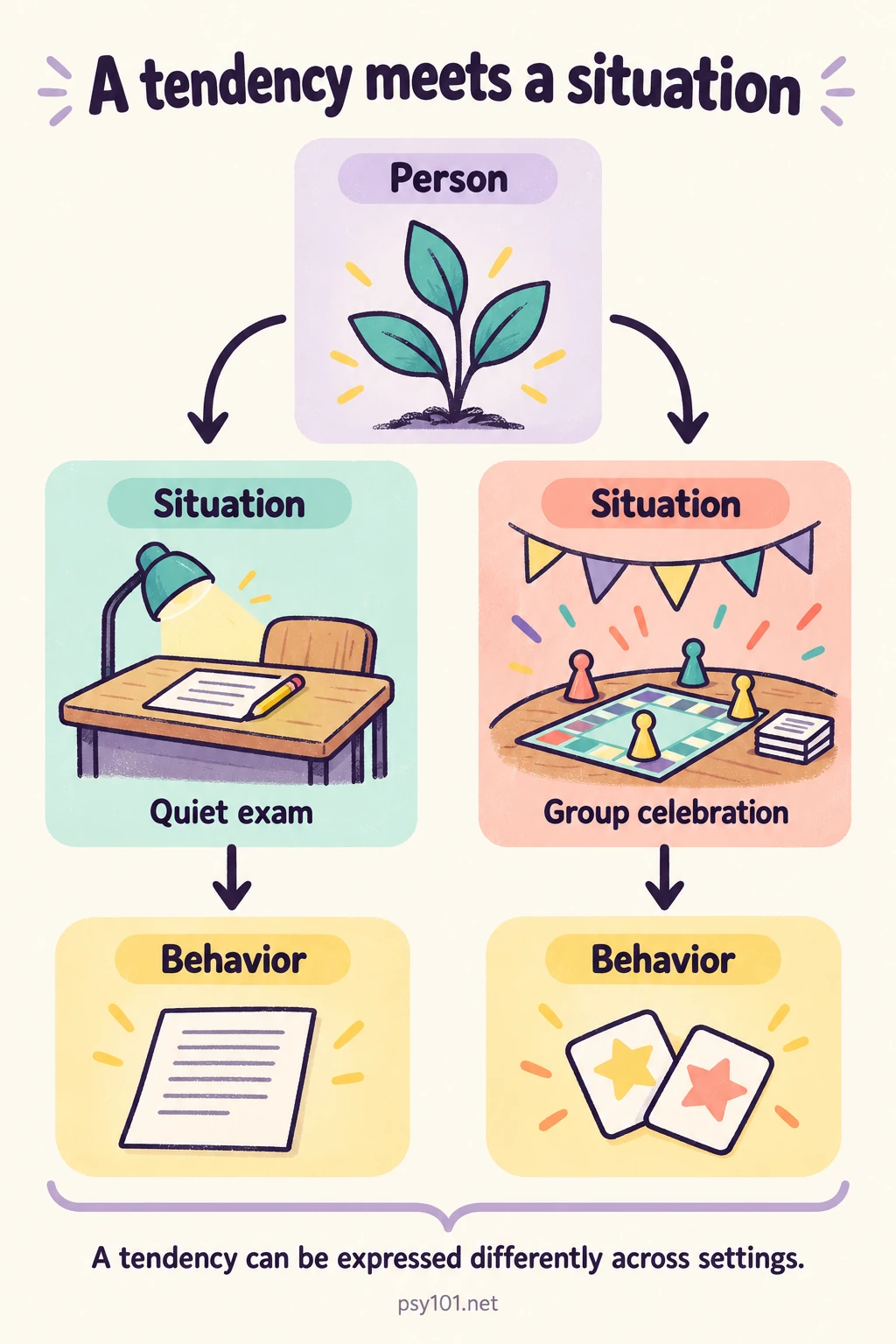
A tendency meets a situation
Consider both a relatively enduring tendency and the demands of a particular setting.
Read more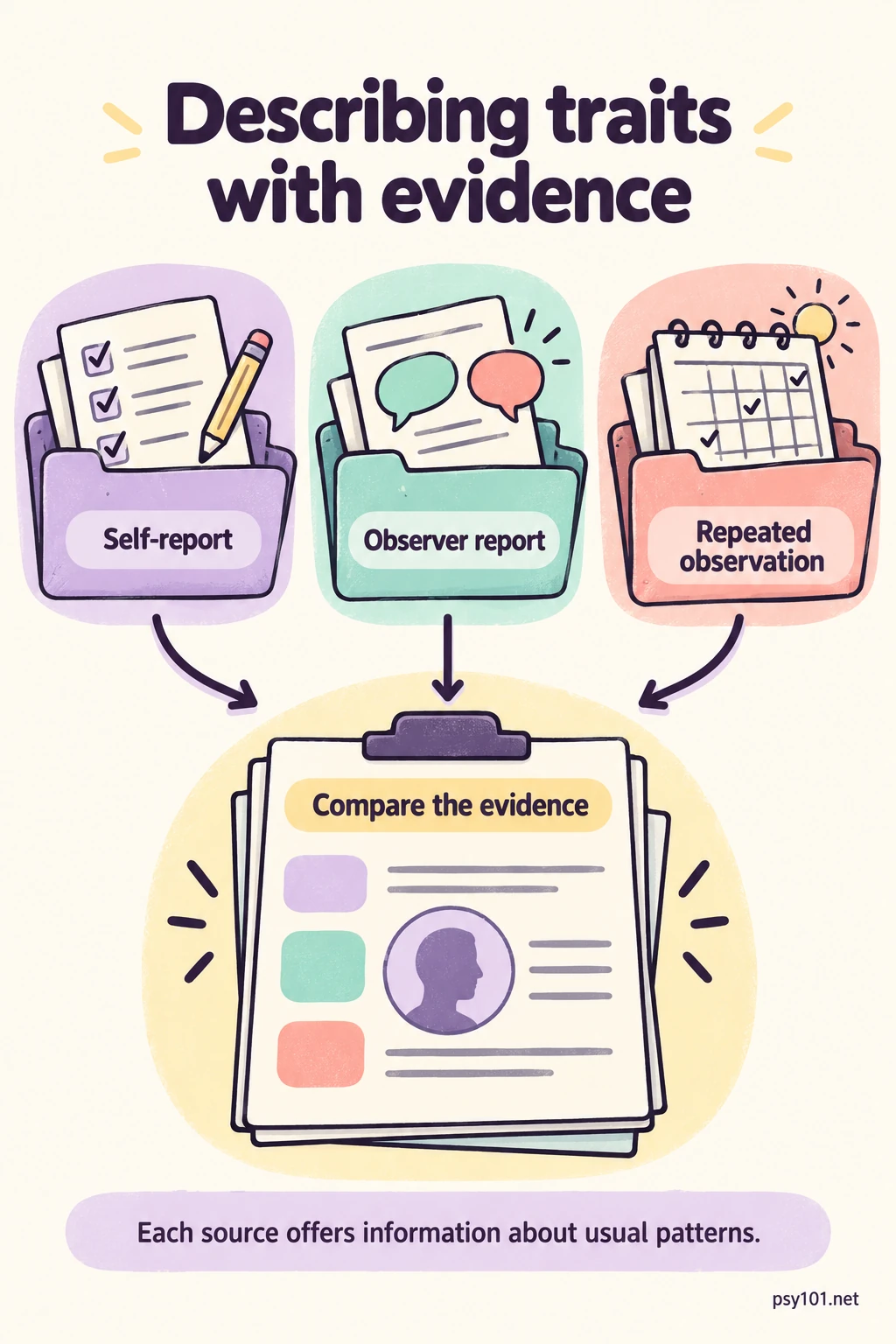
Describing traits with evidence
Compare self-reports, observer reports and repeated observations as sources of information about traits.
Read more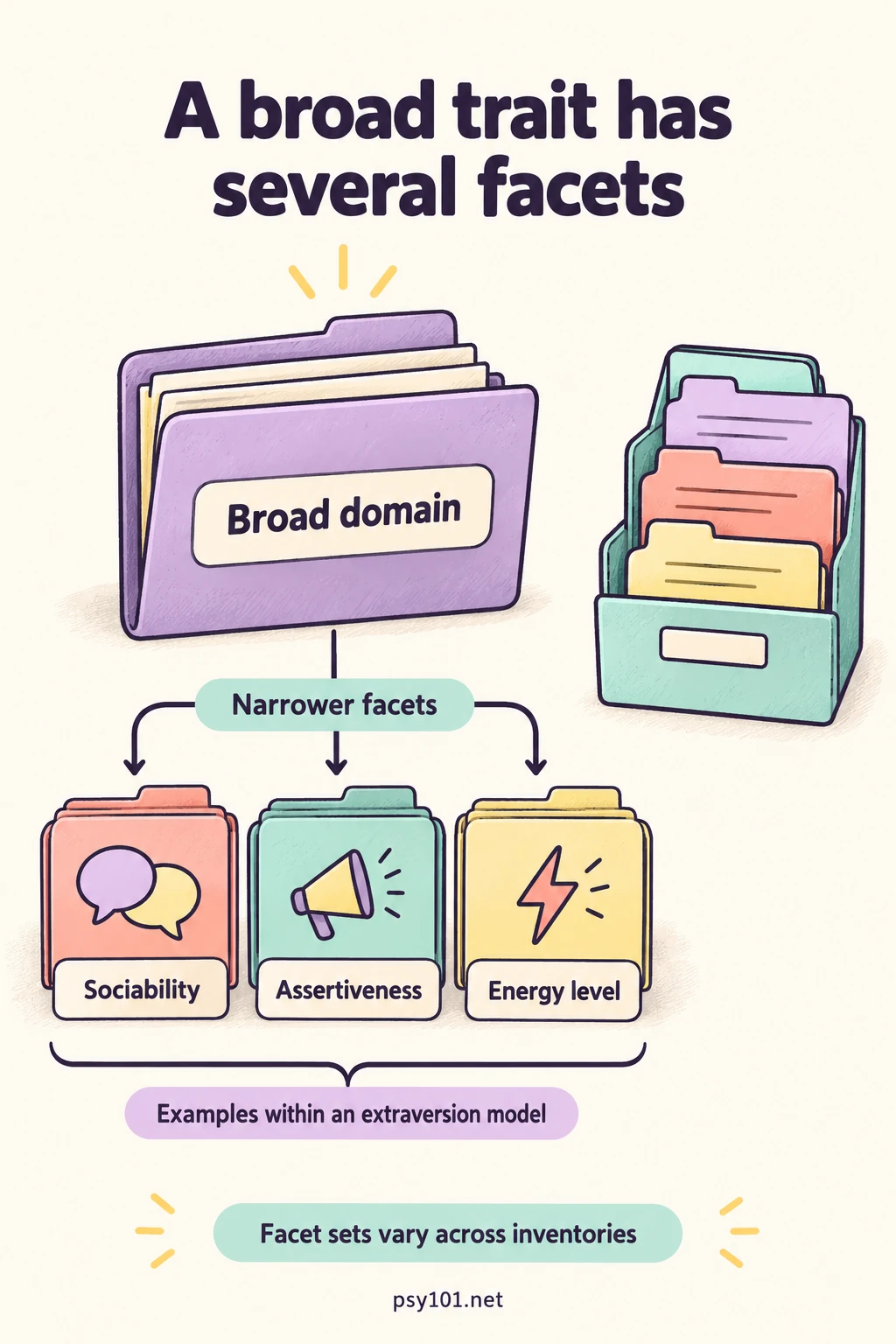
A broad trait has several facets
Explore how broad personality domains can contain more specific tendencies.
Read moreMental health
Read the short lessonConsider persistence, context and effects on everyday life.
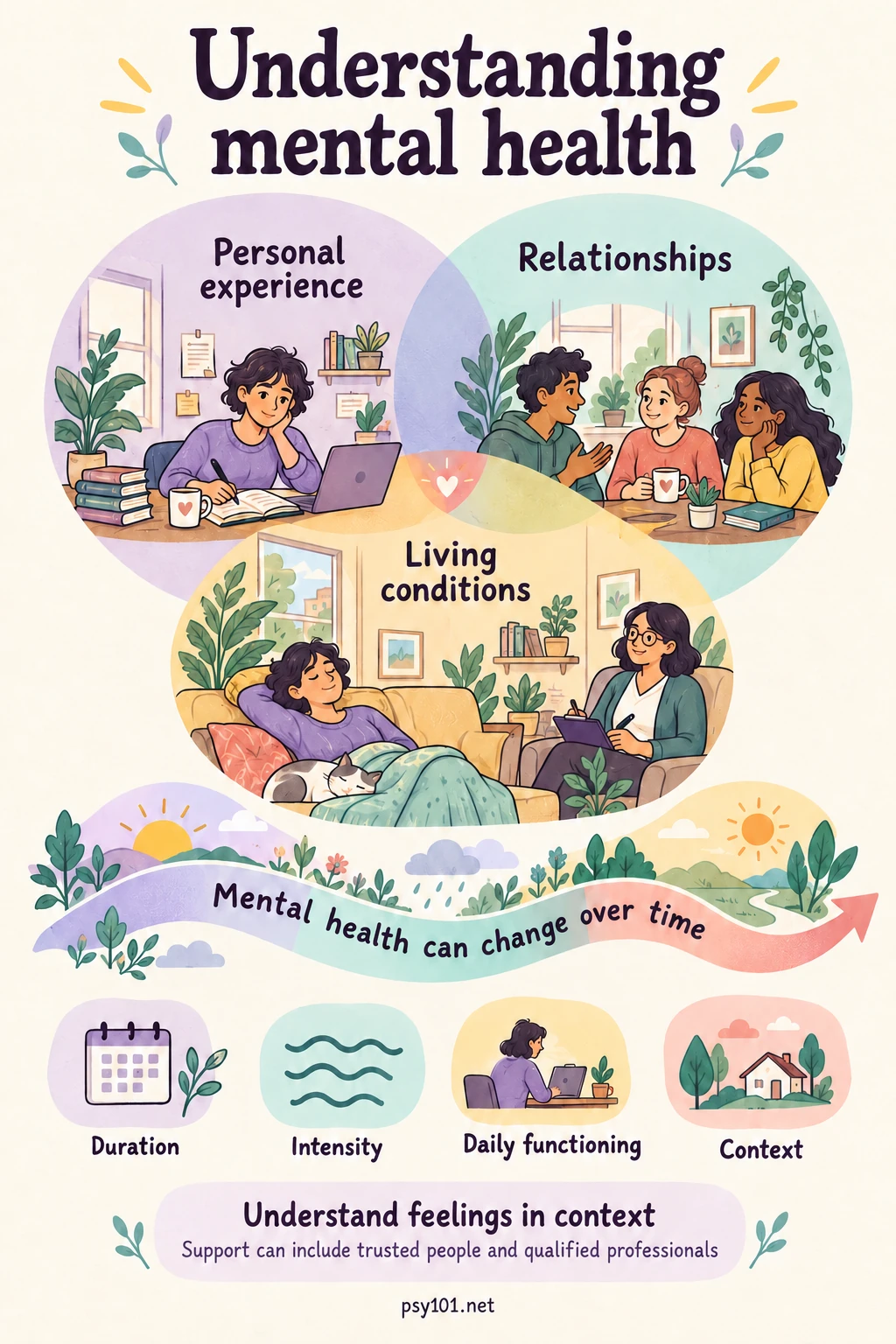
Understanding mental health
Look at experience, relationships and living conditions together.
Read more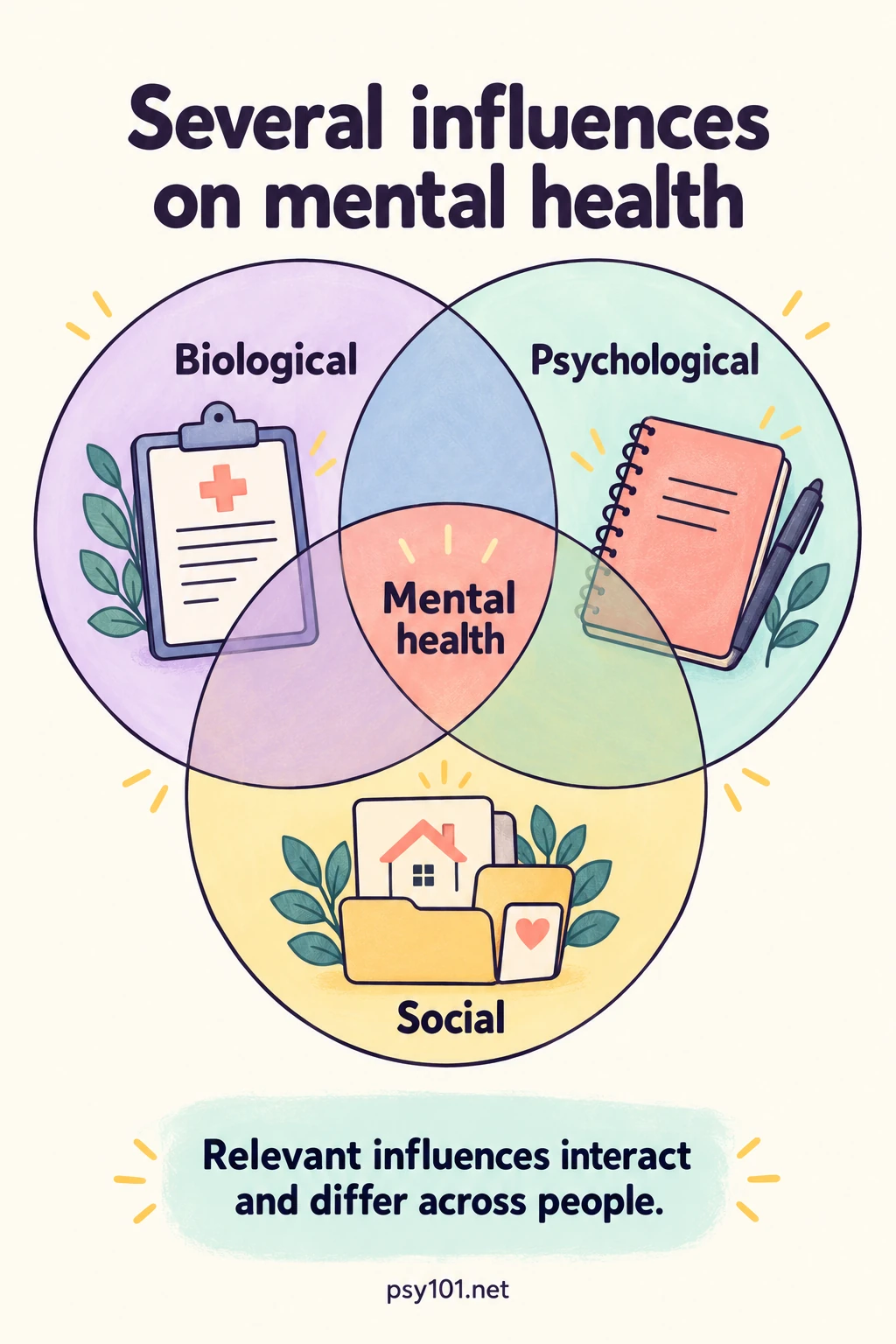
Several influences on mental health
Consider biological, psychological and social factors as interacting parts of a fuller account.
Read more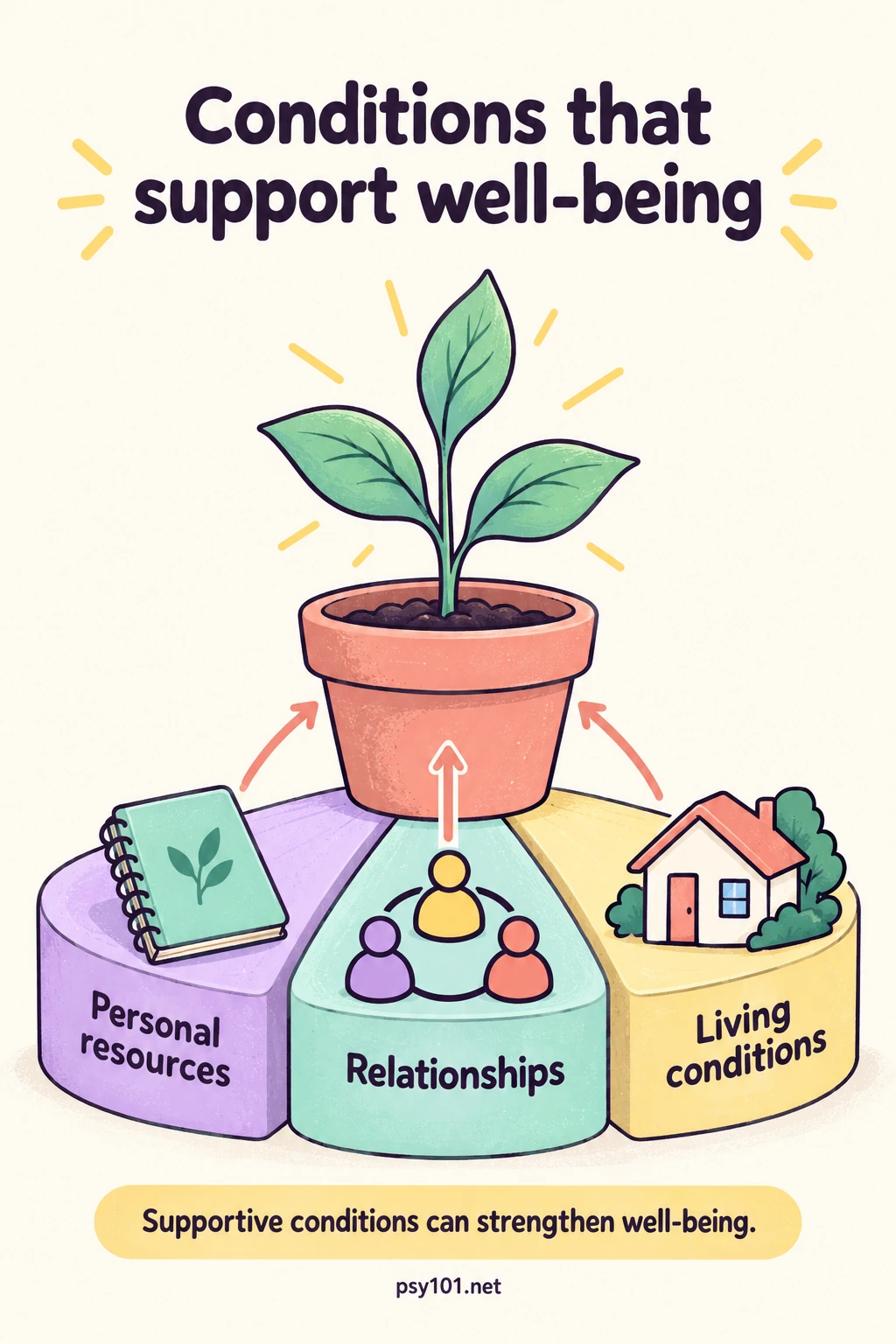
Conditions that support well-being
Identify personal, relational and wider conditions that can help support mental health.
Read more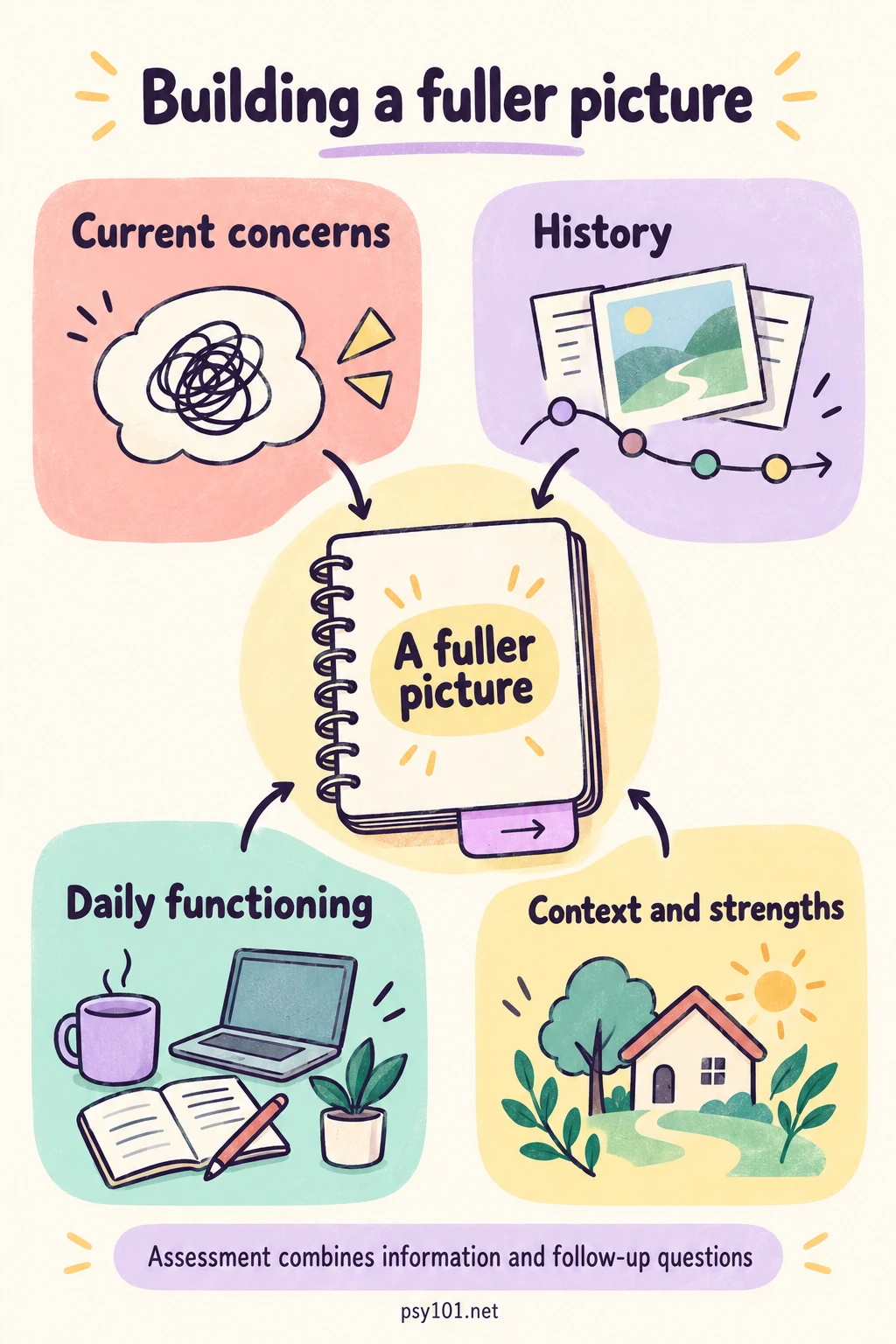
Building a fuller picture
See how a professional assessment can bring together current concerns, history, functioning and context.
Read more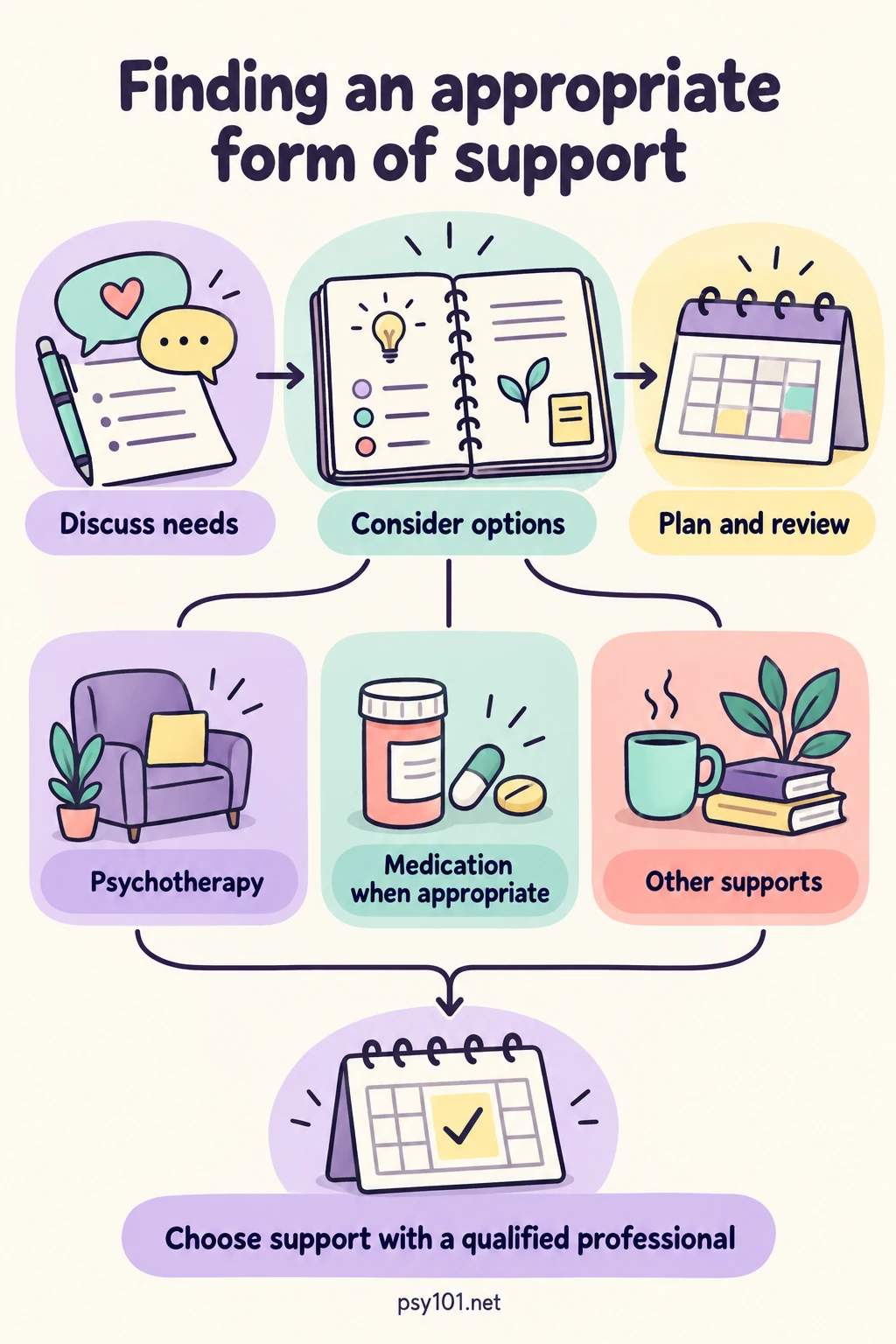
Finding an appropriate form of support
Understand how support choices can be discussed in relation to a person’s needs, preferences and circumstances.
Read more
Social life
Read the short lessonDistinguish stereotypes, prejudice and discrimination.
Three kinds of social influence
Compare the influence of a group, a request and an authority’s instruction.
Read moreLook at the person and the situation
Compare possible explanations for an everyday event.
Read moreBeliefs, feelings and action tendencies
Distinguish several aspects of an attitude toward the same object.
Read moreHow a helping decision unfolds
Use a simple teaching model to consider what can influence responding to someone who needs help.
Read moreShared expectations shape behavior
Compare perceptions of what people usually do with expectations about what they approve.
Read moreBelief, attitude and treatment
Separate a generalized group belief, an evaluative attitude and differential treatment.
Read moreWhen actions and beliefs pull apart
Explore the discomfort that can arise from relevant inconsistency and some possible ways people respond.
Read moreThe groups we belong to
Explore how several group memberships can be part of one person’s identity.
Read moreDiscussion can strengthen a shared view
Explore how discussion can strengthen a group’s initial leaning.
Read moreExpectations can shape an interaction
Follow one way an expectation can influence an interaction.
Read moreBack to the topics