How do we know?
When does a pattern support a claim?
The basic idea
Two things may vary together because one affects the other or because a third factor influences both. Researchers work out predictions for these possibilities. In an experiment, they change one factor and compare outcomes while keeping other relevant conditions as similar as possible.
- Notice a pattern
- Compare explanations
- Test a prediction
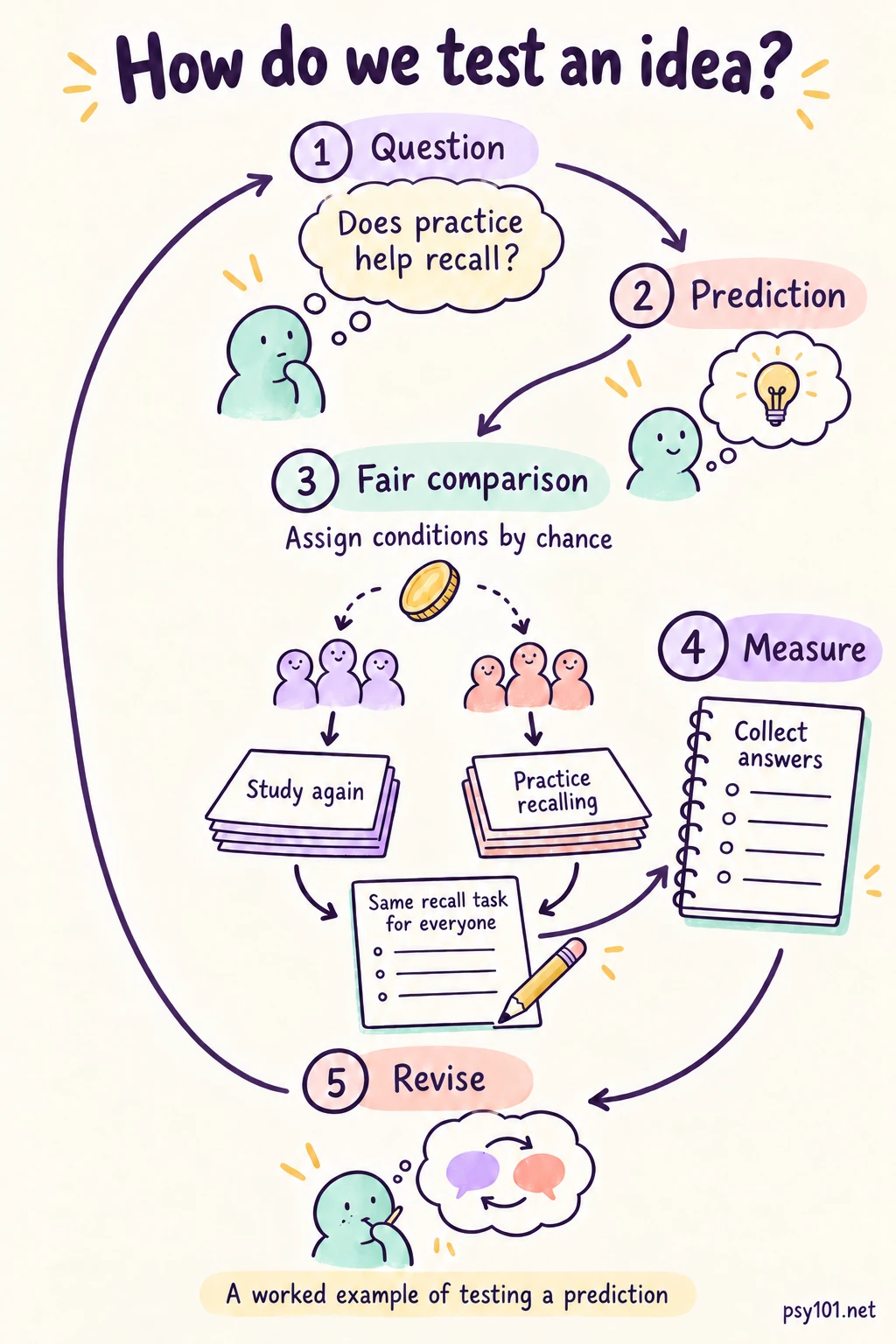
How do we test an idea?
Follow a prediction through a fair comparison, measurement and revision.
- Question
- Begin with something you want to explain.
- Prediction
- State the outcome your explanation leads you to expect.
- Fair comparison
- Assign conditions by chance and keep the final recall task the same.
Picture this
Original teaching example
In a fictional school survey, students who borrow more library books also receive higher grades. An interest in reading might encourage both borrowing and schoolwork. A researcher could measure that interest alongside borrowing and grades.
Your turn
How might an interest in reading help explain the pattern in the school survey?
Show the explanation
Students who enjoy reading may borrow more books and spend more time on schoolwork. Reading interest could therefore contribute to both measures. Researchers would need a design that distinguishes this possibility from the effect of borrowing itself.
Take the idea further
Assess a causal explanation by examining the comparison, the measures and the other factors that could affect the outcome.
Explore another angle
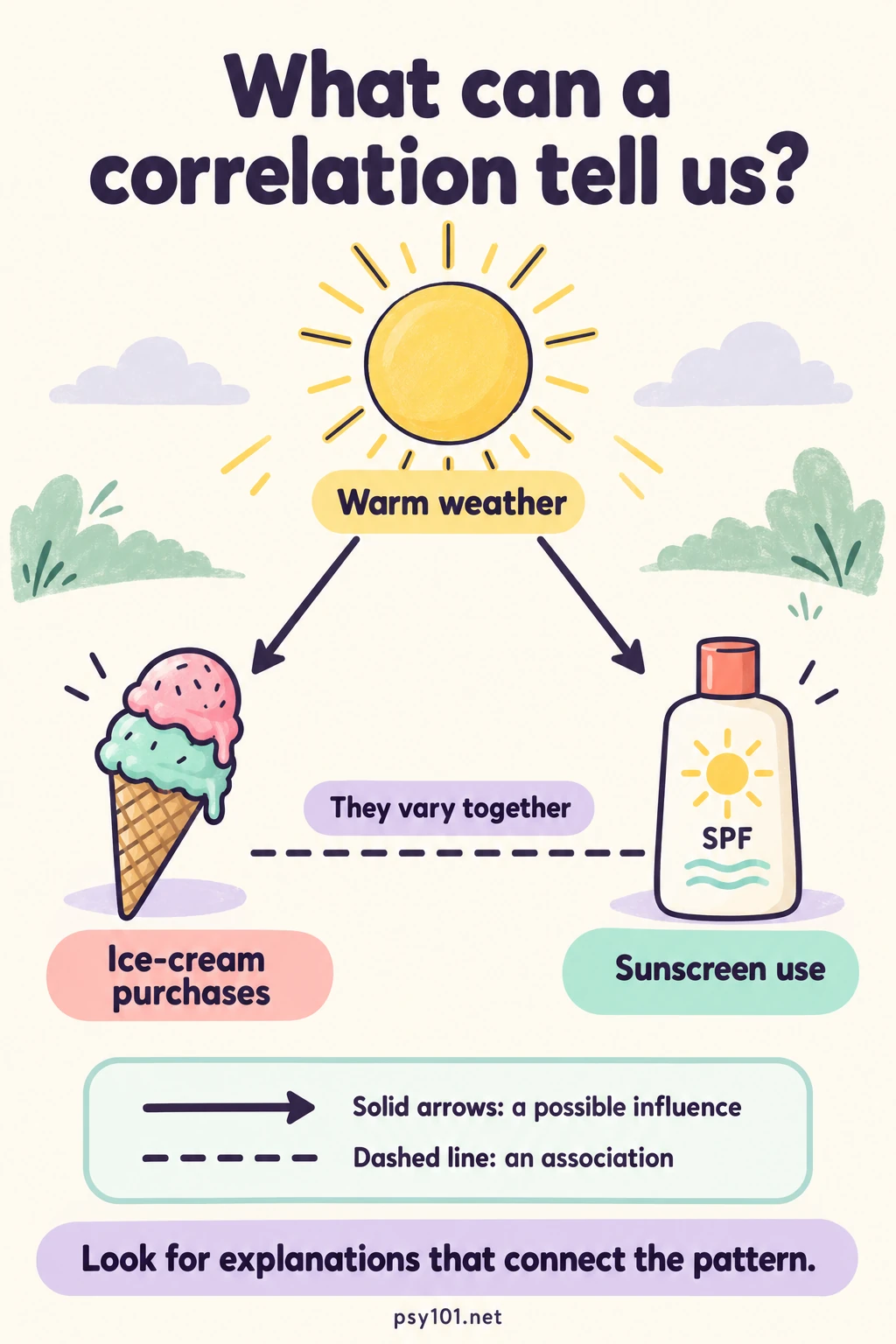 What can a correlation tell us?Look for an explanation connecting two things that vary together.Read the illustrated guide
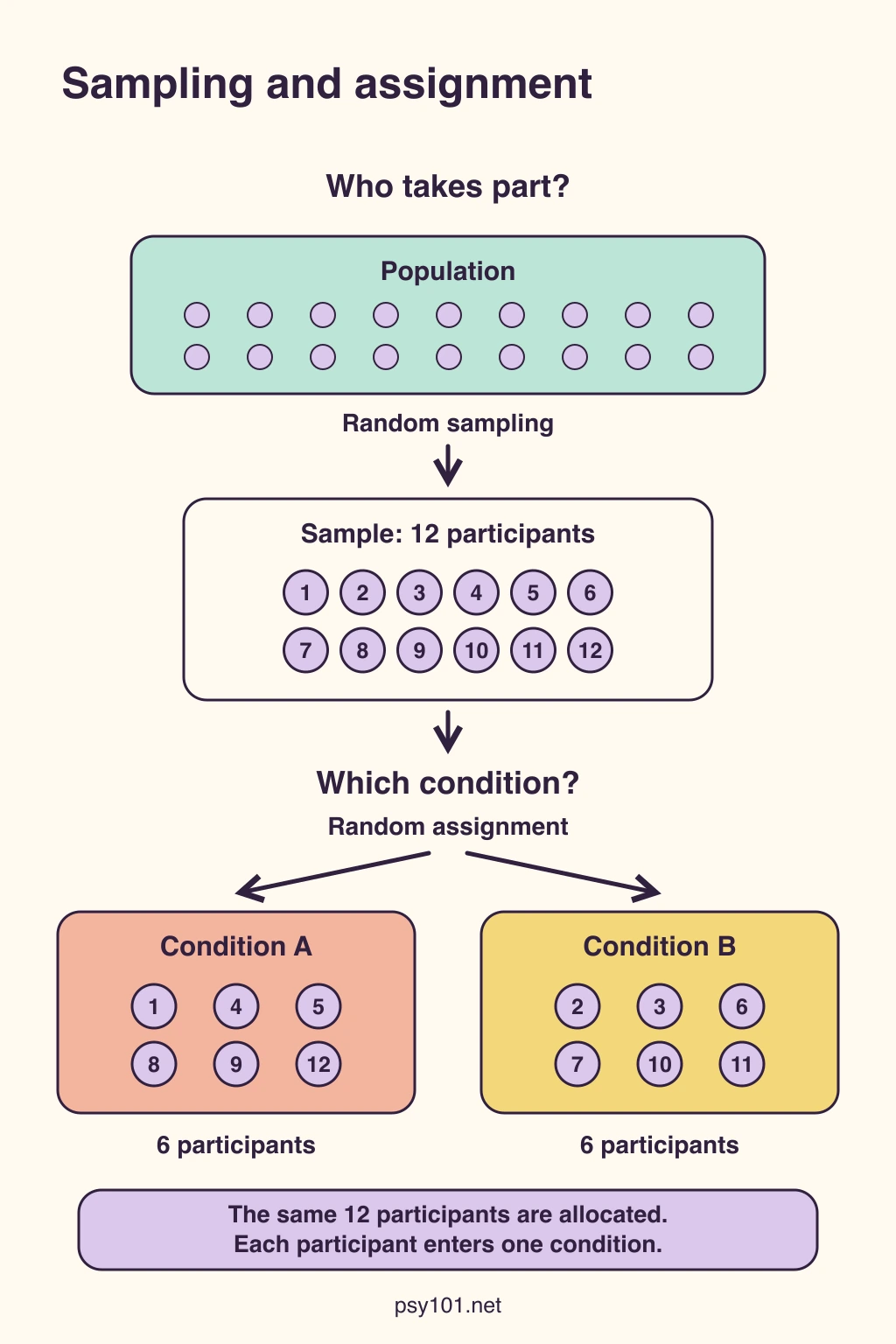 Sampling and assignmentFollow participant selection and allocation as two steps in a study.Read the illustrated guide
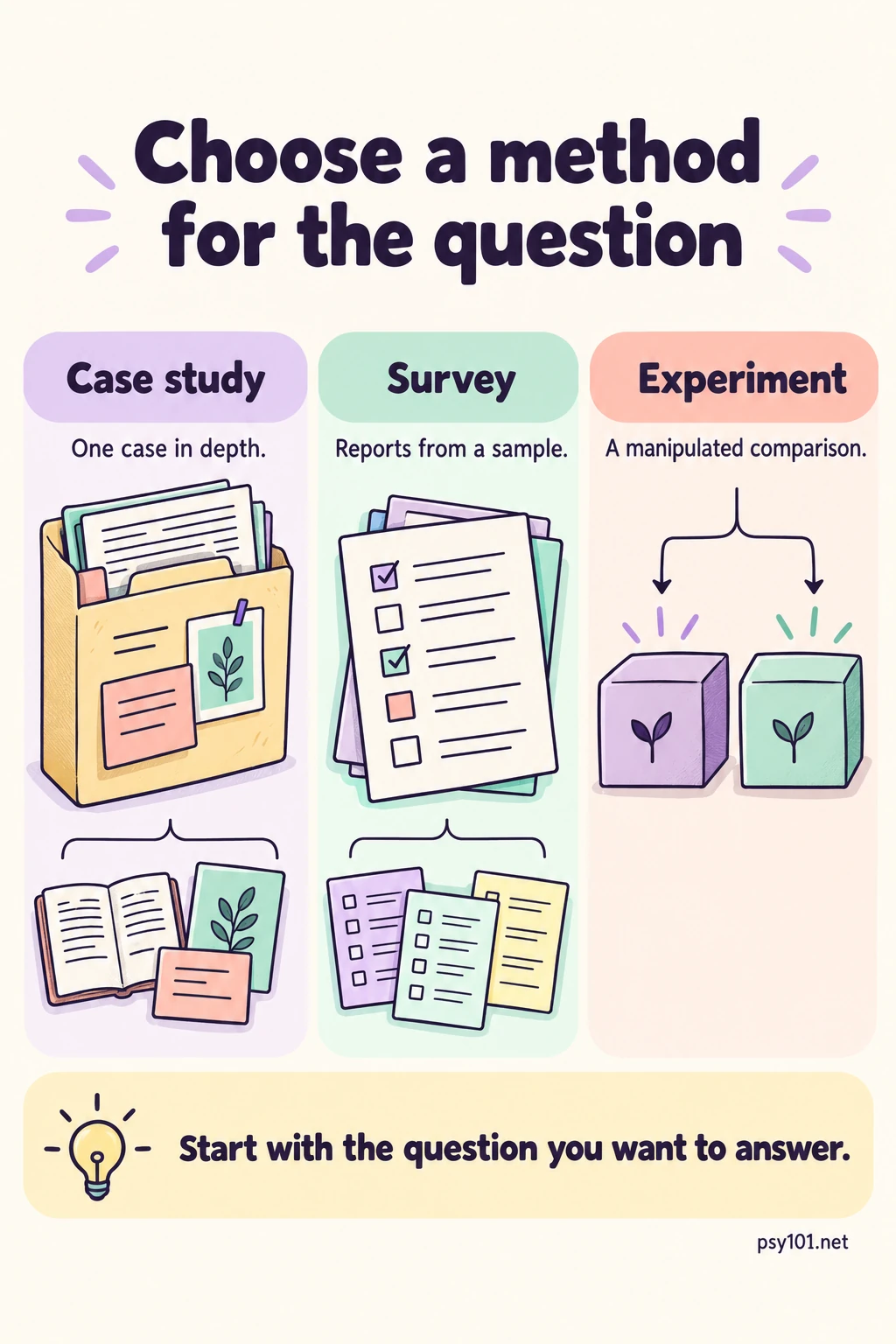 Choose a method for the questionMatch a research question with a suitable way of gathering evidence.Read the illustrated guide
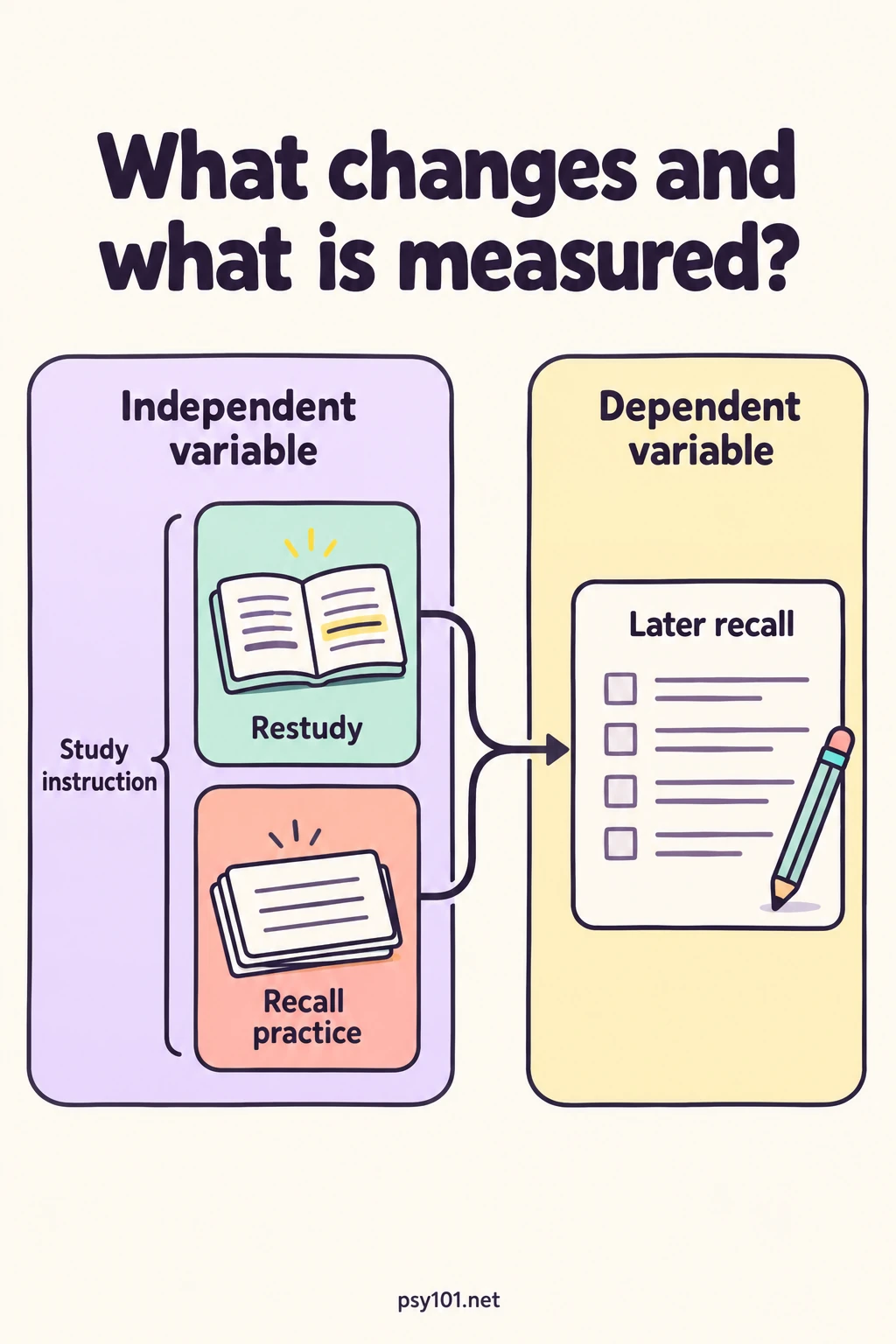 What changes and what is measured?Separate the experimental condition from the outcome recorded.Read the illustrated guide
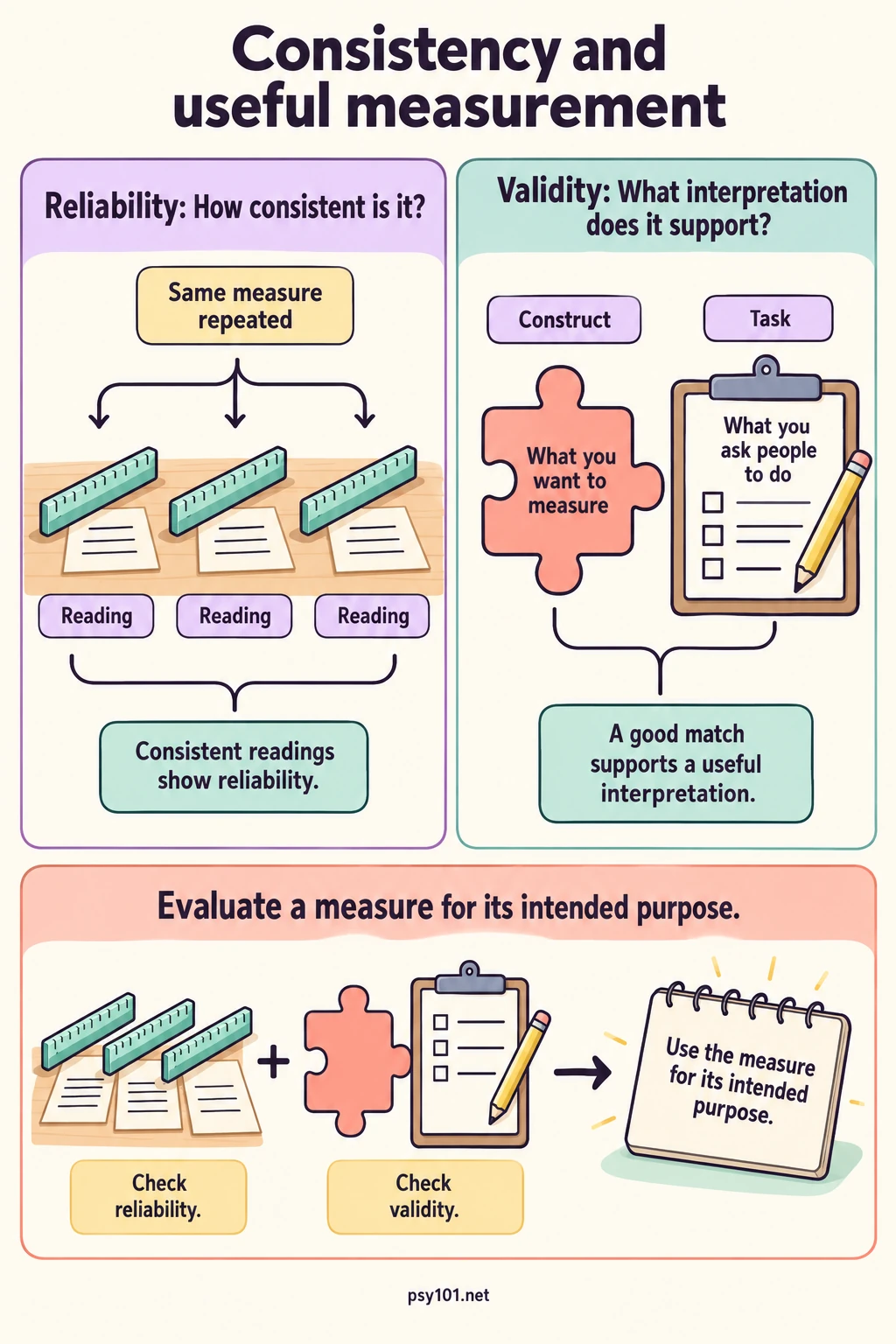 Consistency and useful measurementAsk whether a measure is consistent and supports its intended interpretation.Read the illustrated guide
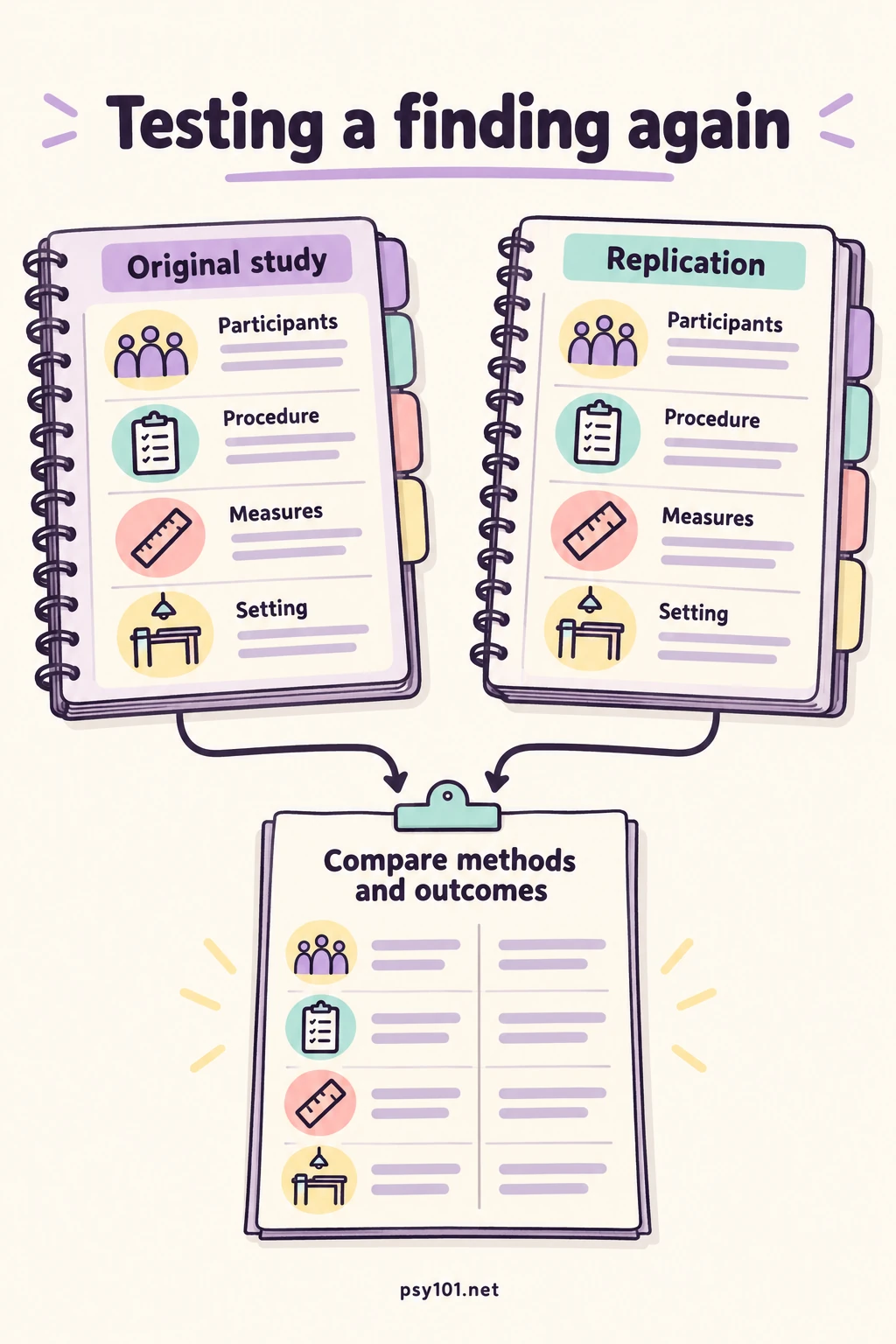 Testing a finding againSee what another study can contribute to a research finding.Read the illustrated guide
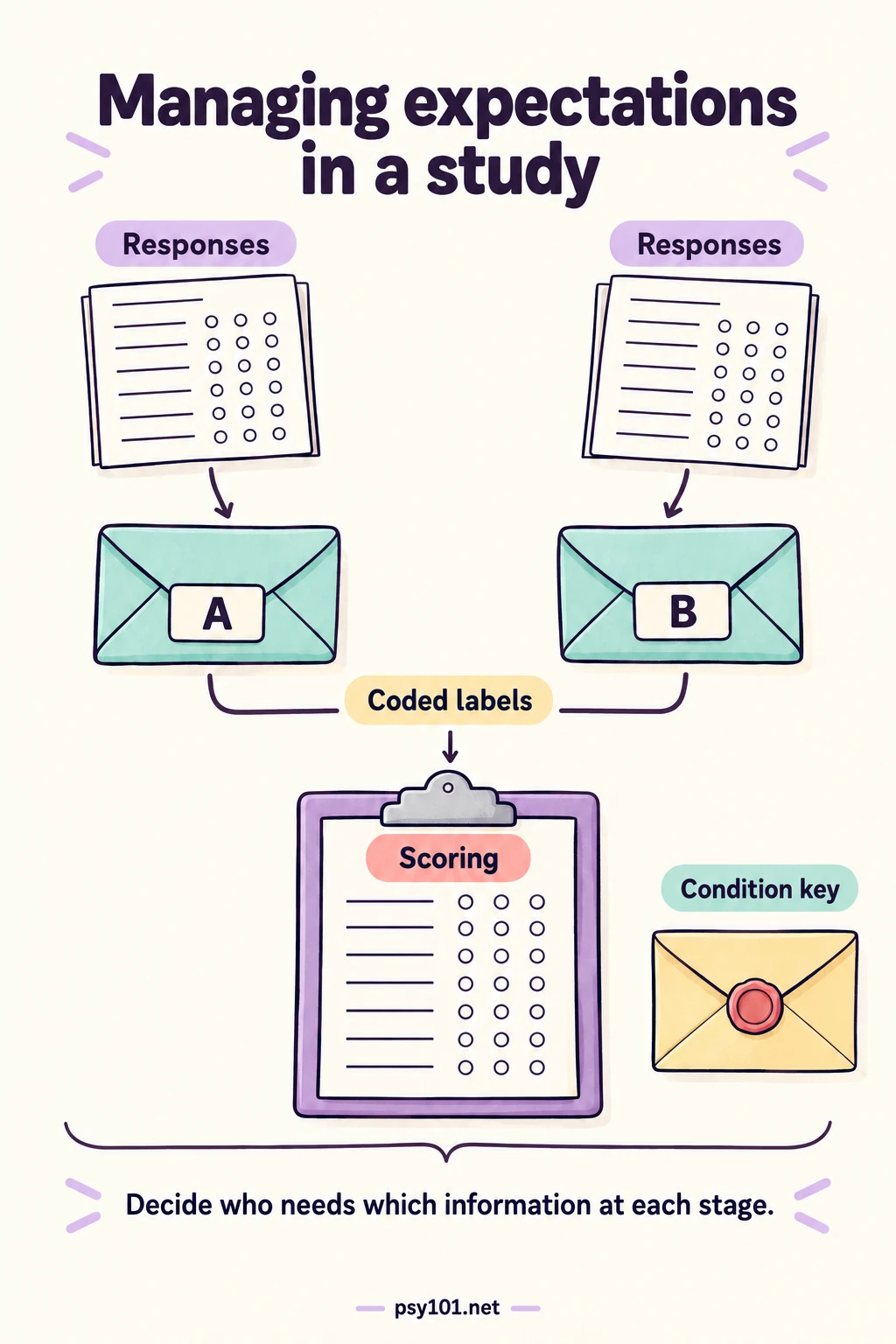 Managing expectations in a studyConsider how information about a condition can influence a study.Read the illustrated guide
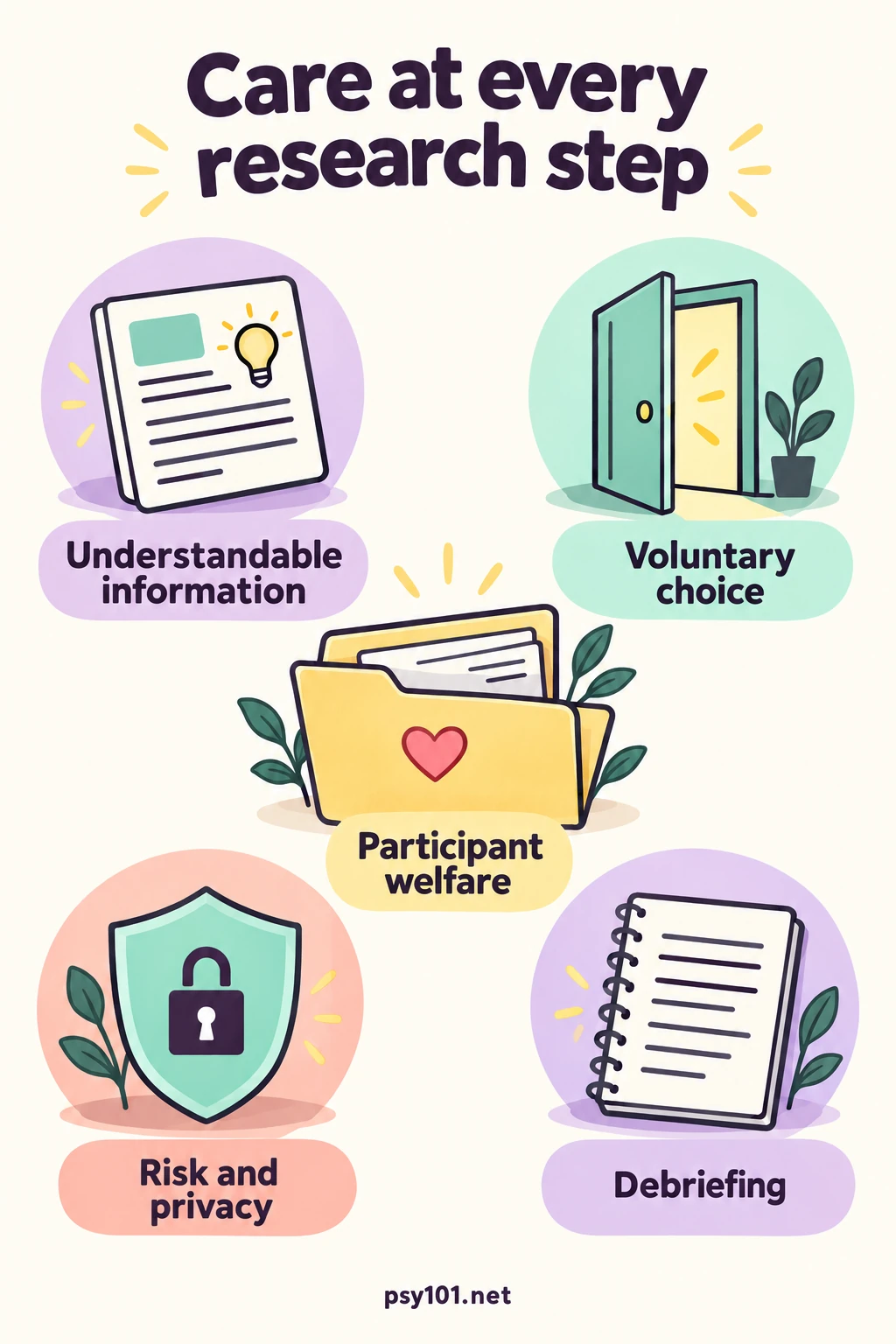 Care at every research stepConnect a study’s question with the rights and welfare of its participants.Read the illustrated guide
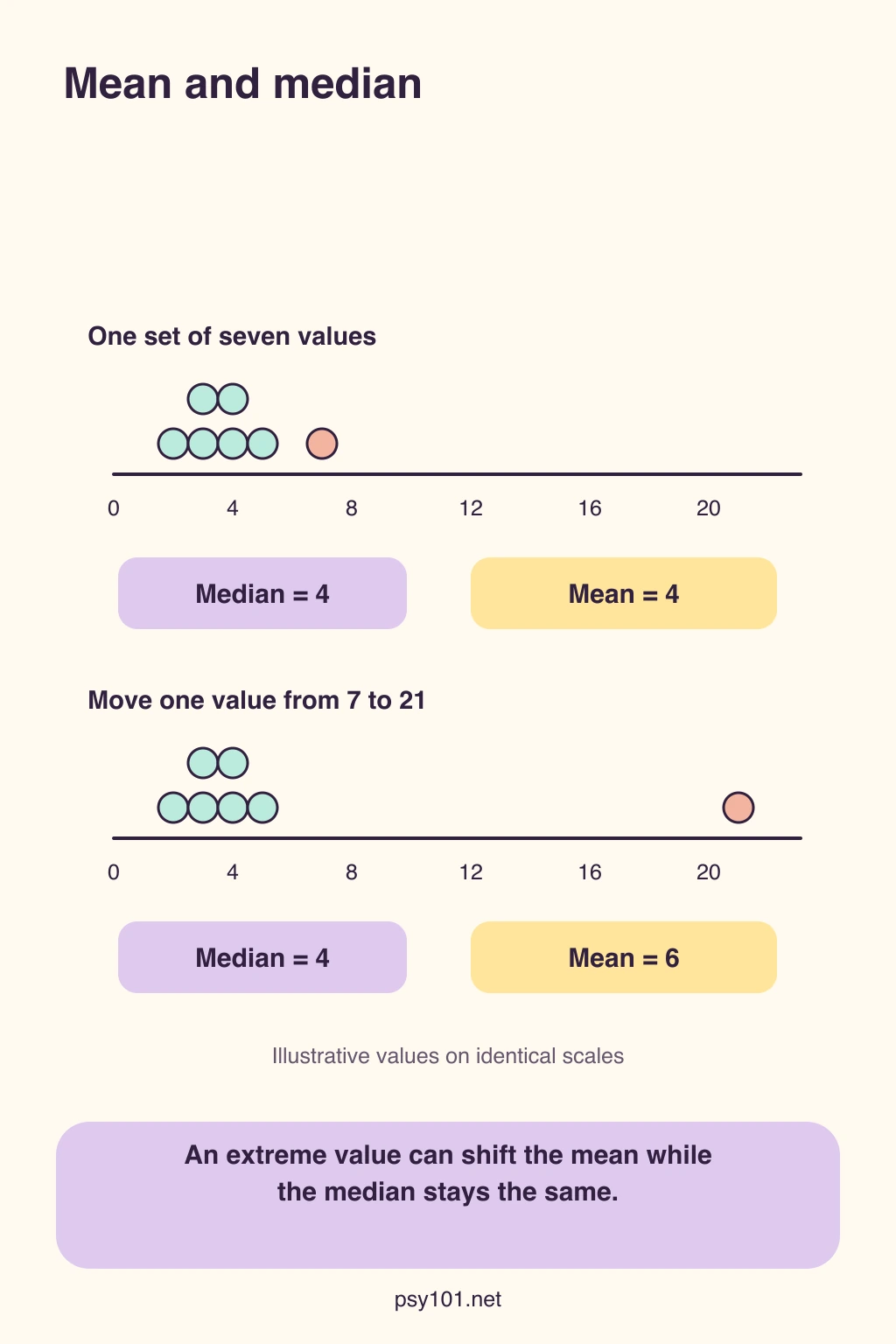 Mean and medianSee what happens when one high value changes.Read the illustrated guide
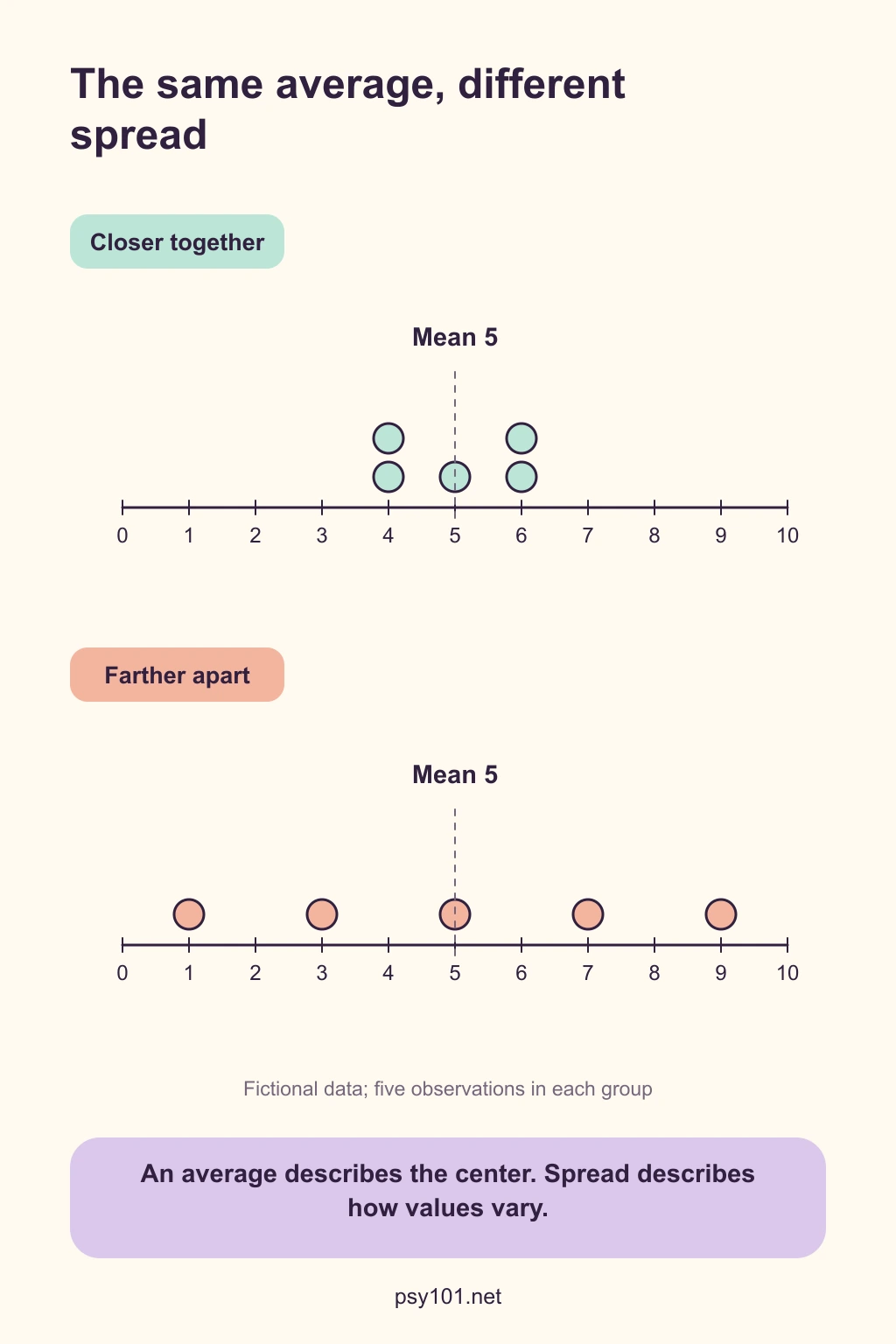 The same average, different spreadCompare the variability hidden behind an average.Read the illustrated guide
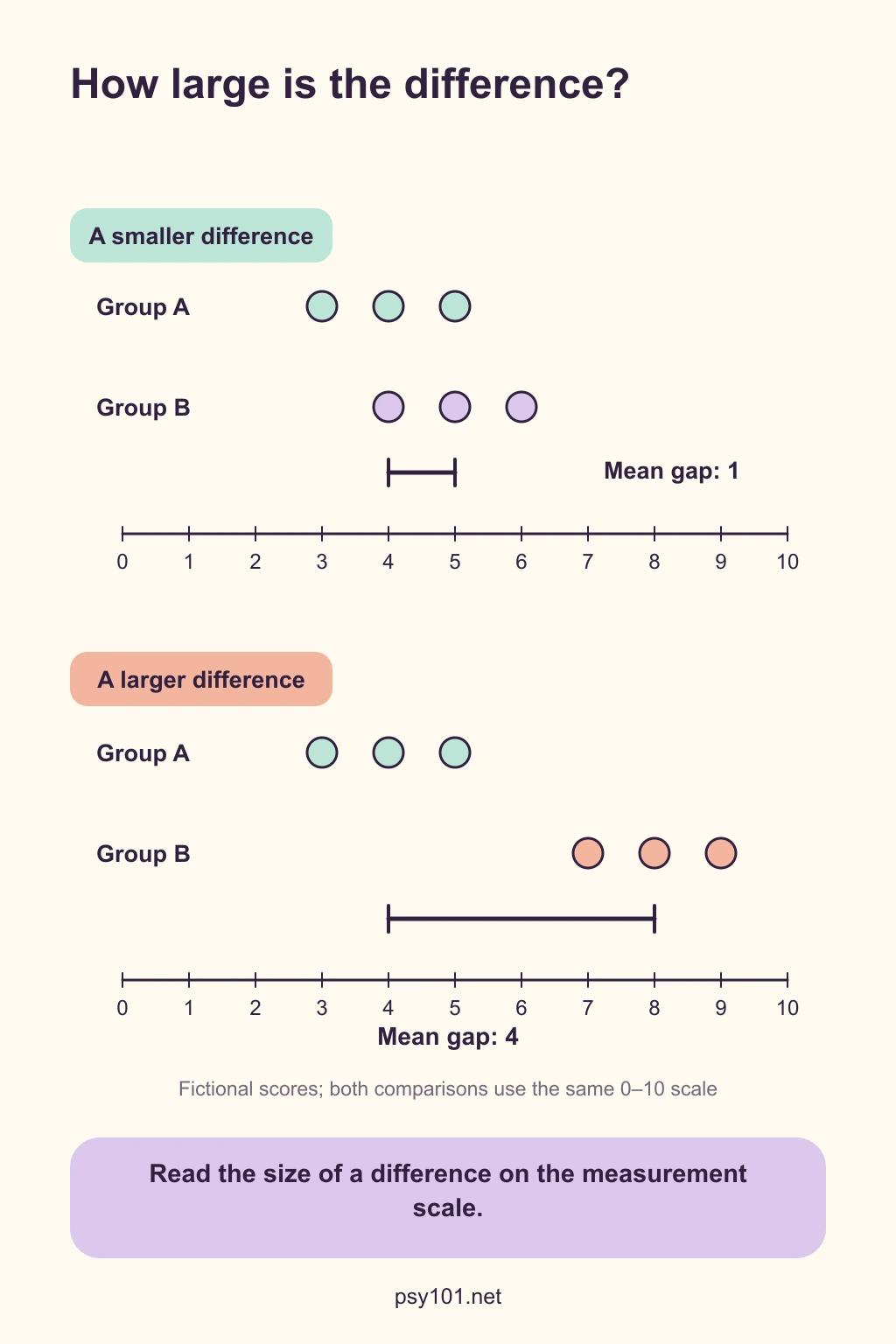 How large is the difference?Read the magnitude of a group difference on a common scale.Read the illustrated guide
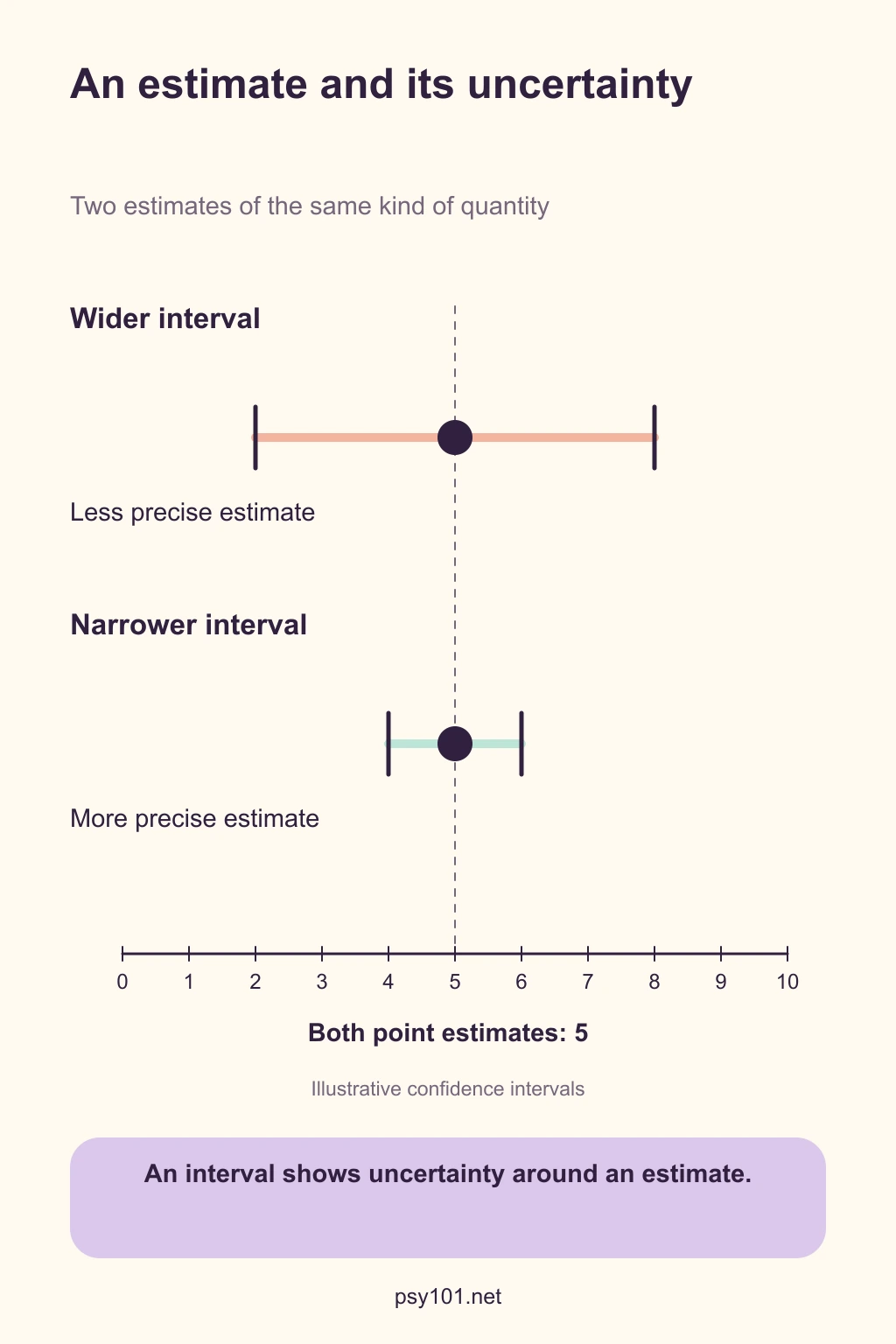 An estimate and its uncertaintyCompare a point estimate with the uncertainty around it.Read the illustrated guide