Personality
How can we describe a person’s patterns across situations?
The basic idea
Trait approaches describe relatively consistent patterns in how people think, feel and act. A dimension allows different degrees of a characteristic. Observations across time and settings help reveal a broader tendency while also showing how behavior responds to a particular situation.
- Observe repeated patterns
- Describe a dimension
- Consider the situation
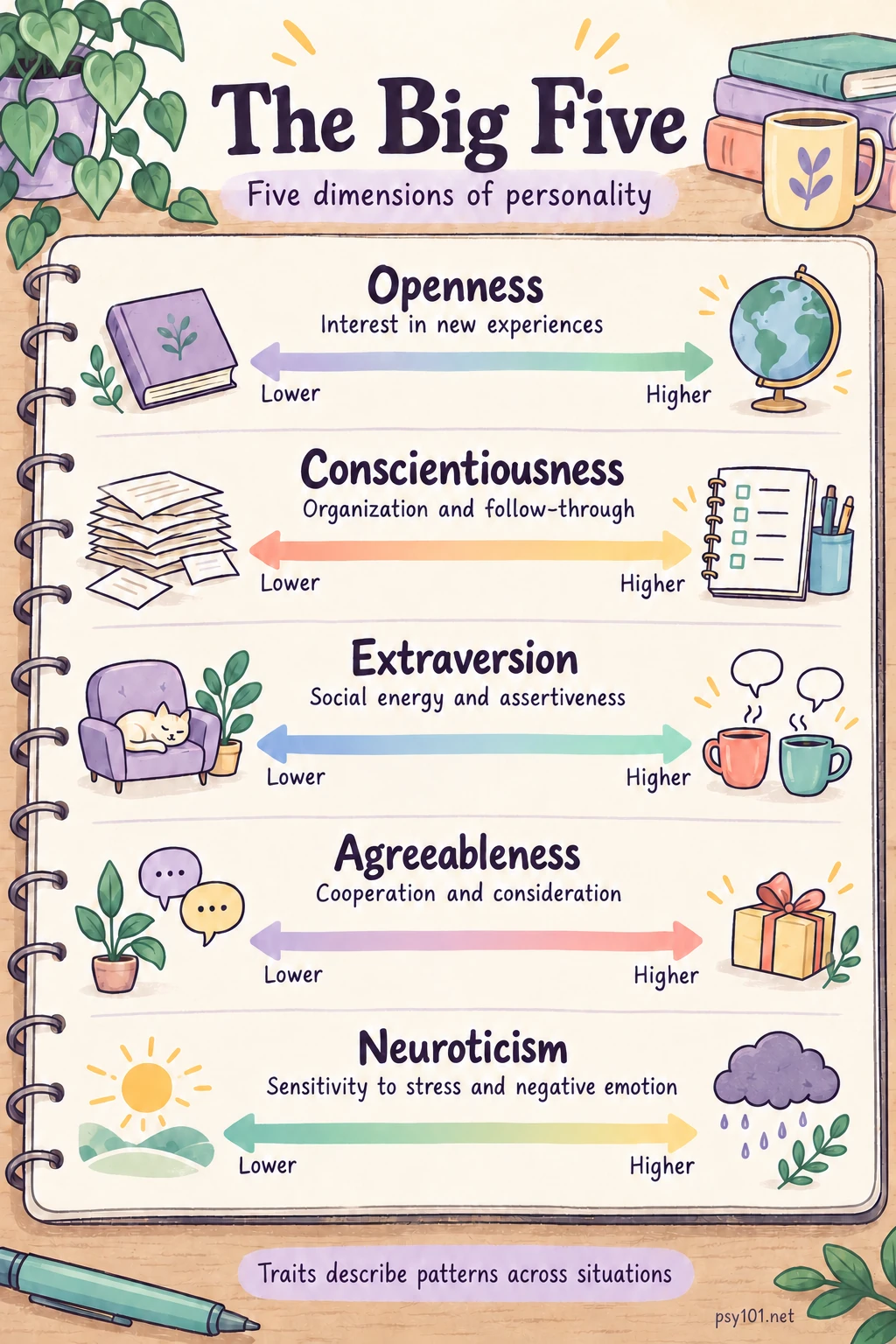
The Big Five
Read five broad dimensions used to describe personality patterns.
- Openness
- Interest in new experiences.
- Conscientiousness
- Organization and follow-through.
- Extraversion
- Social energy and assertiveness.
Picture this
Original teaching example
Sam enjoys talking with familiar friends and is quiet at a new workplace. Familiarity, the people present and the demands of the setting could all contribute to how much Sam talks.
Your turn
What observations would help you describe Sam’s sociability across different situations?
Show the explanation
Observe Sam with familiar and unfamiliar people over several occasions. Look for recurring tendencies and the circumstances in which they change. That combination gives a more useful description of sociability than a single encounter.
Take the idea further
Trait descriptions summarize tendencies. Their meaning becomes clearer alongside observations of the person’s behavior and circumstances.
Explore another angle
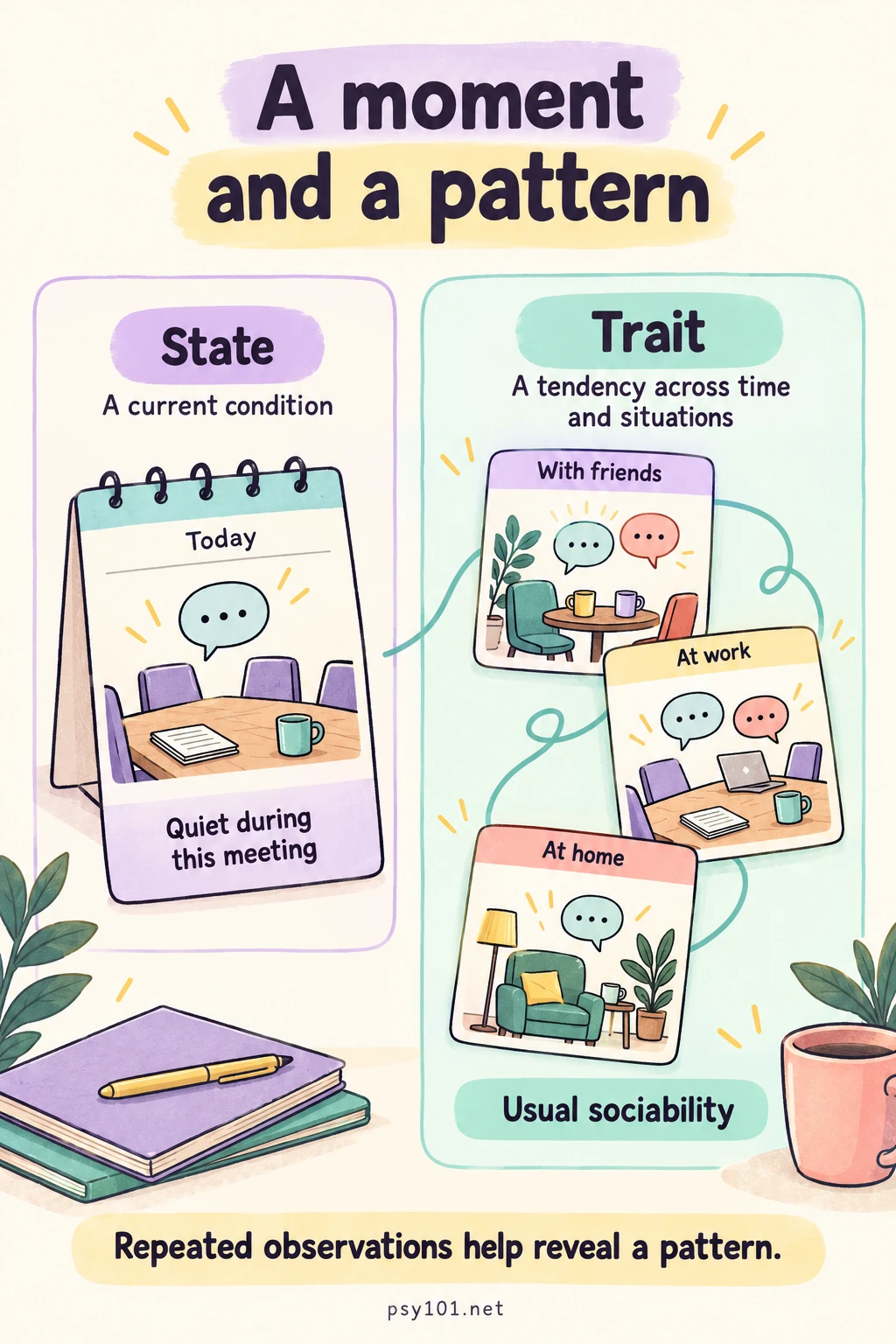 A moment and a patternCompare a current condition with a tendency observed across situations.Read the illustrated guide
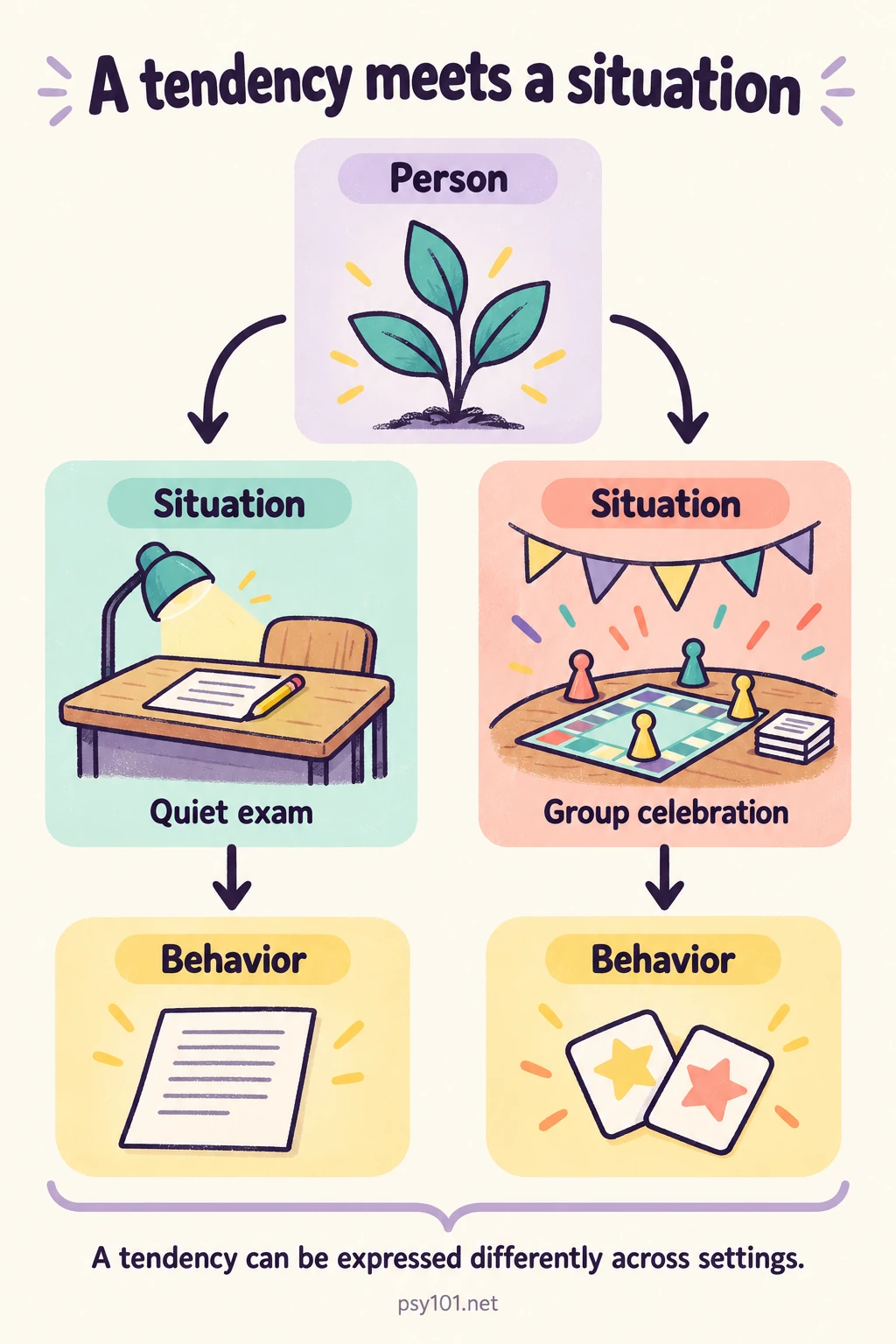 A tendency meets a situationConsider both a relatively enduring tendency and the demands of a particular setting.Read the illustrated guide
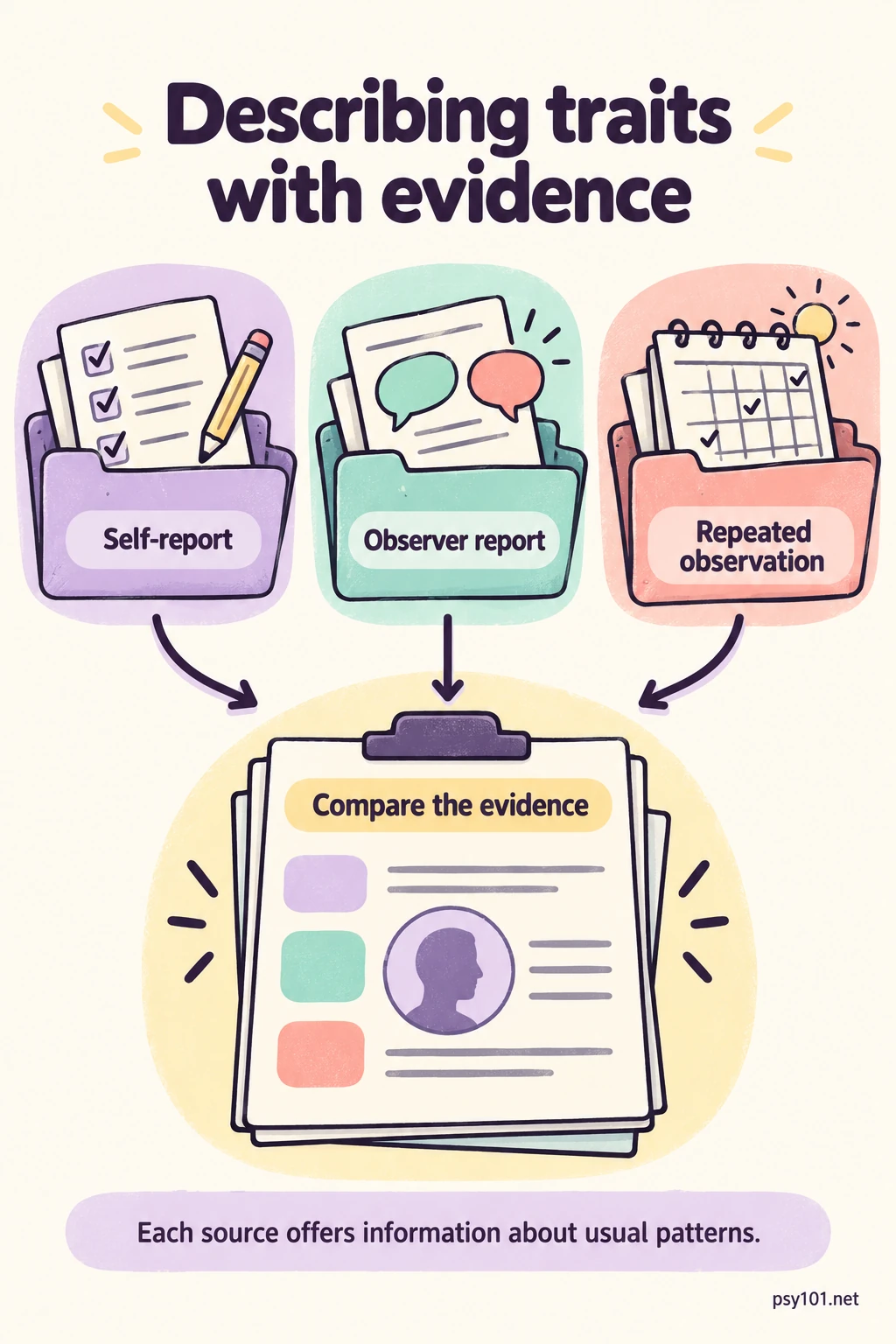 Describing traits with evidenceCompare self-reports, observer reports and repeated observations as sources of information about traits.Read the illustrated guide
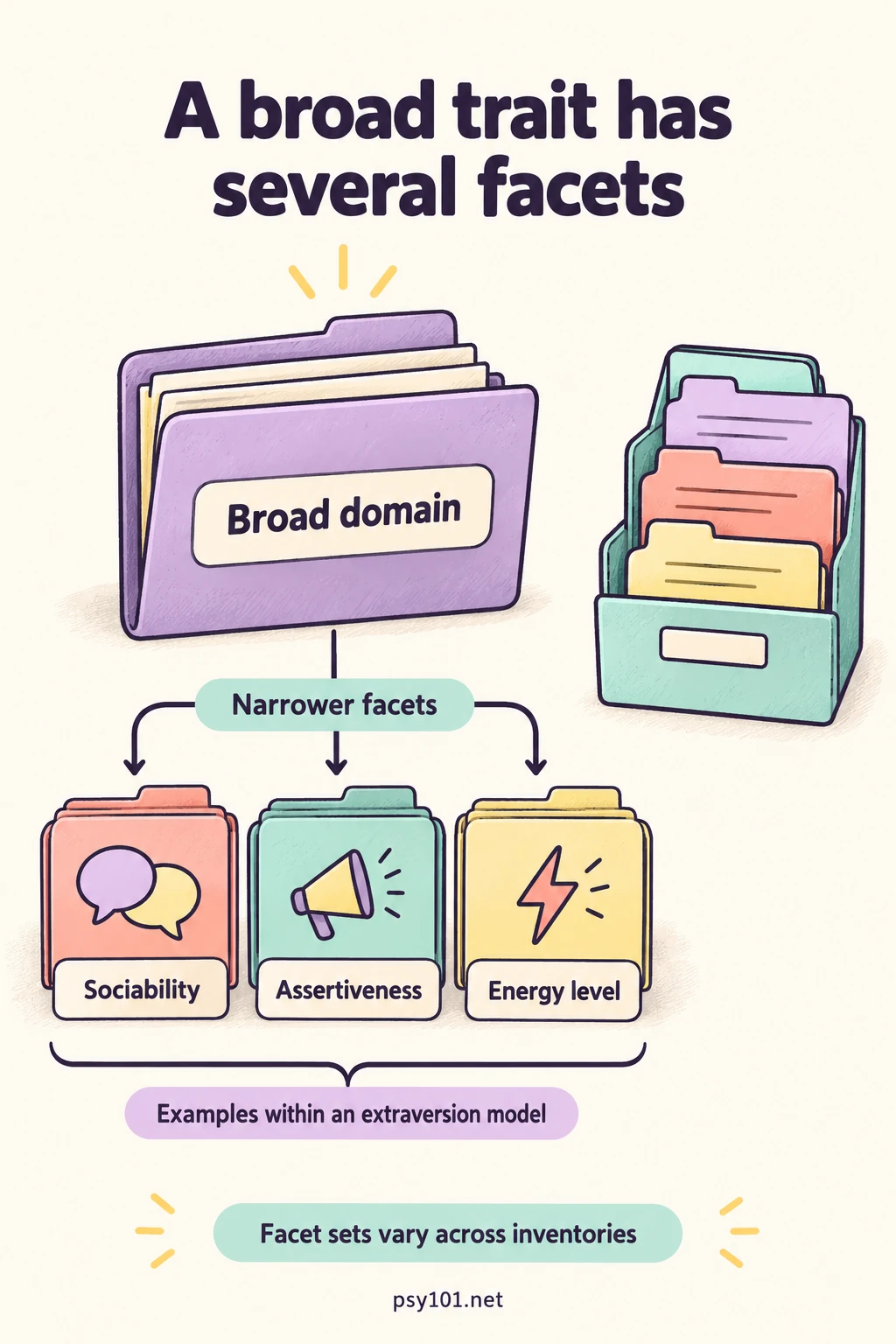 A broad trait has several facetsExplore how broad personality domains can contain more specific tendencies.Read the illustrated guide