Memory
How can a useful cue bring a memory to mind?
The basic idea
Encoding takes information into memory, storage keeps it over time and retrieval brings it into use. These distinctions help us ask where a difficulty may arise. Remembering reconstructs an experience using retained information, available cues and interpretation.
- Encode
- Store
- Retrieve
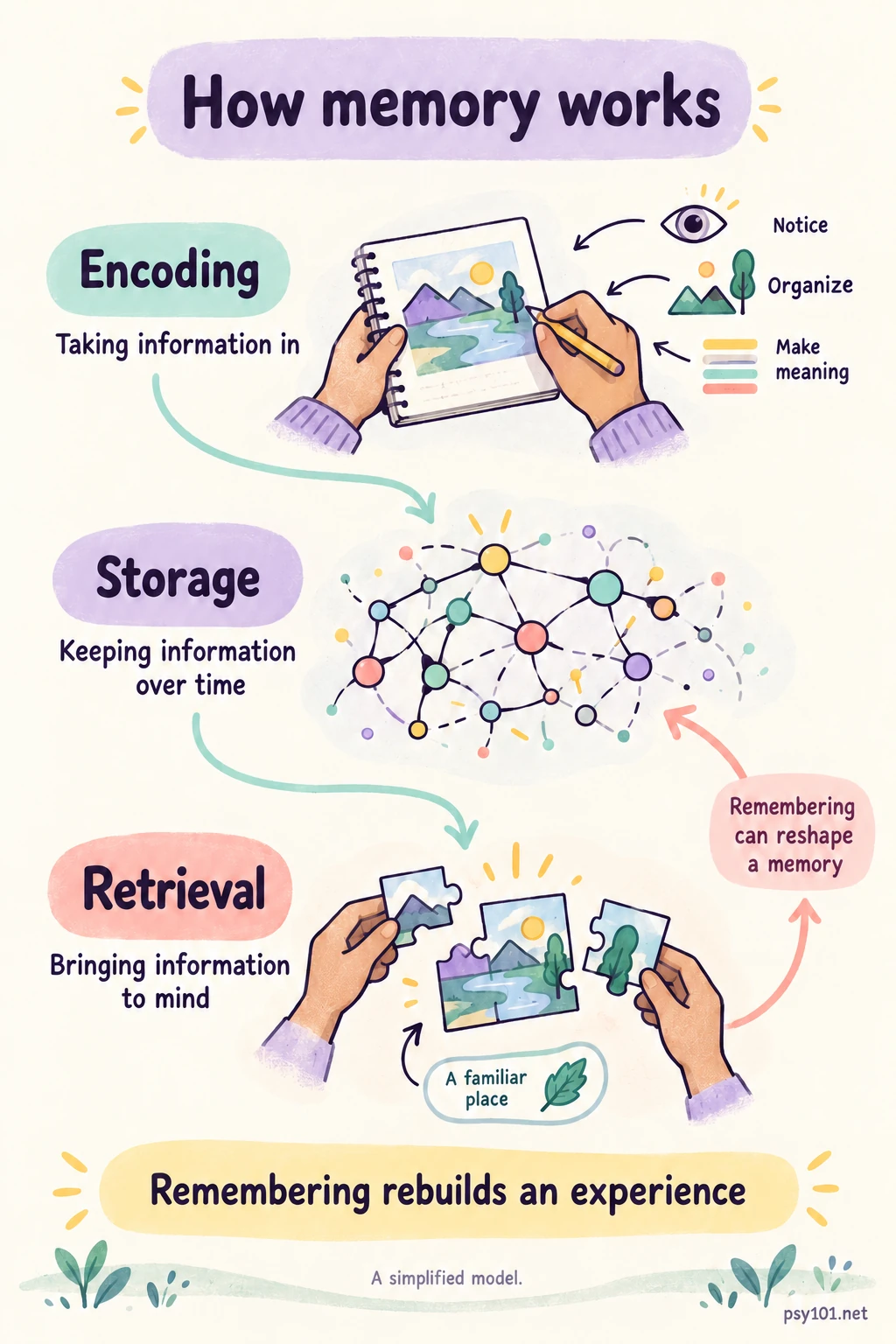
How memory works
Explore encoding, storage and retrieval through a picture that is rebuilt.
- Encoding
- Information is taken in and connected with meaning.
- Storage
- Information is retained over time.
- Retrieval
- A cue can help bring information back into use.
Picture this
Original teaching example
You recognize a classmate and pause while trying to recall their name. Later, seeing the classroom brings it to mind. The classroom supplies a cue associated with the person and the earlier encounters.
Your turn
What does the classroom add that could help the name come to mind?
Show the explanation
It provides a familiar context linked to the classmate. That association can help access the name. The example shows why researchers distinguish information being retained from the cues that make it available at a particular moment.
Take the idea further
Different patterns of remembering can reflect encoding, retention or retrieval. Comparing those possibilities takes more information about the task and its conditions.
Explore another angle
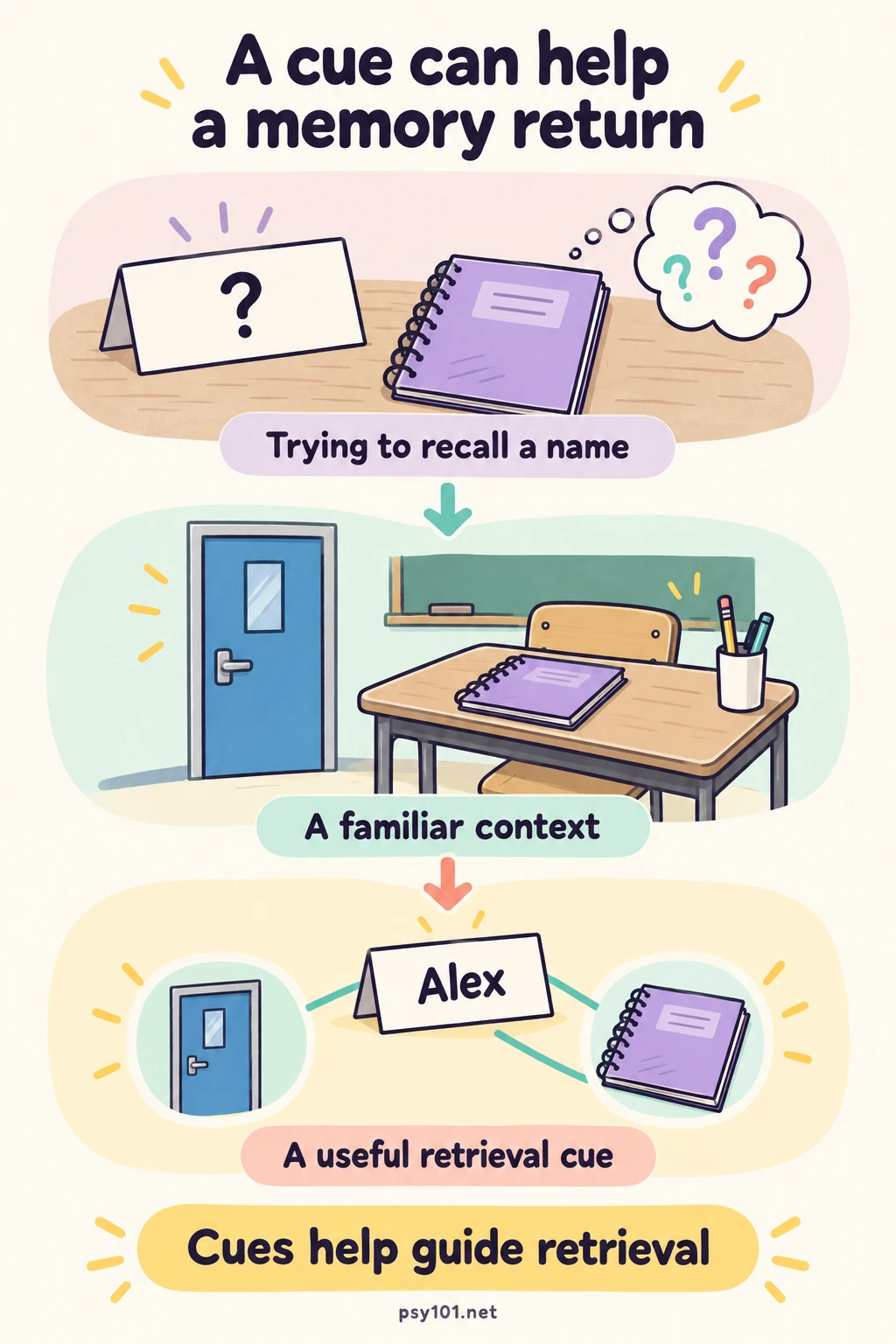 A cue can help a memory returnUse a familiar setting to explore how retrieval cues work.Read the illustrated guide
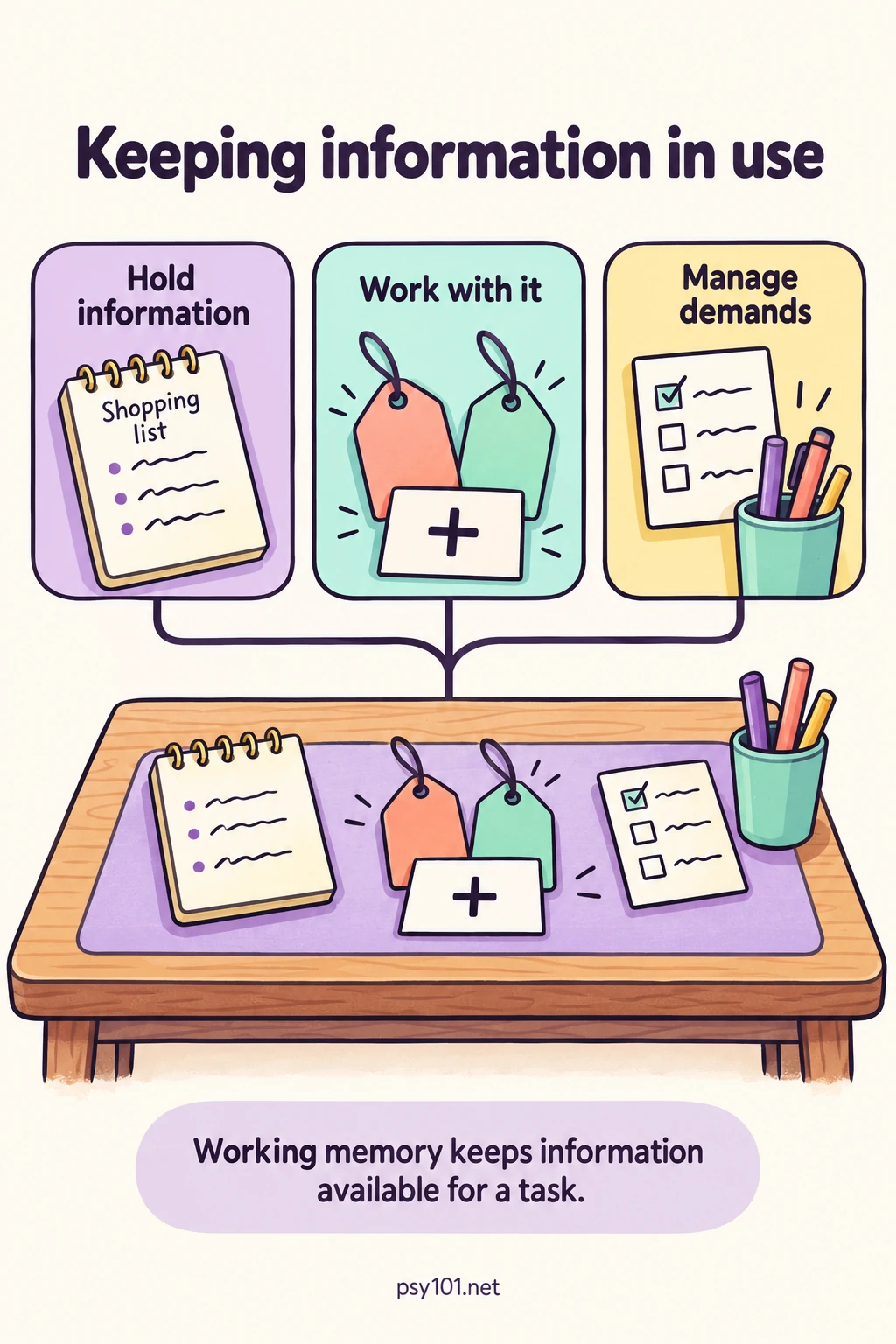 Keeping information in useExplore how information can be held and worked with during a task.Read the illustrated guide
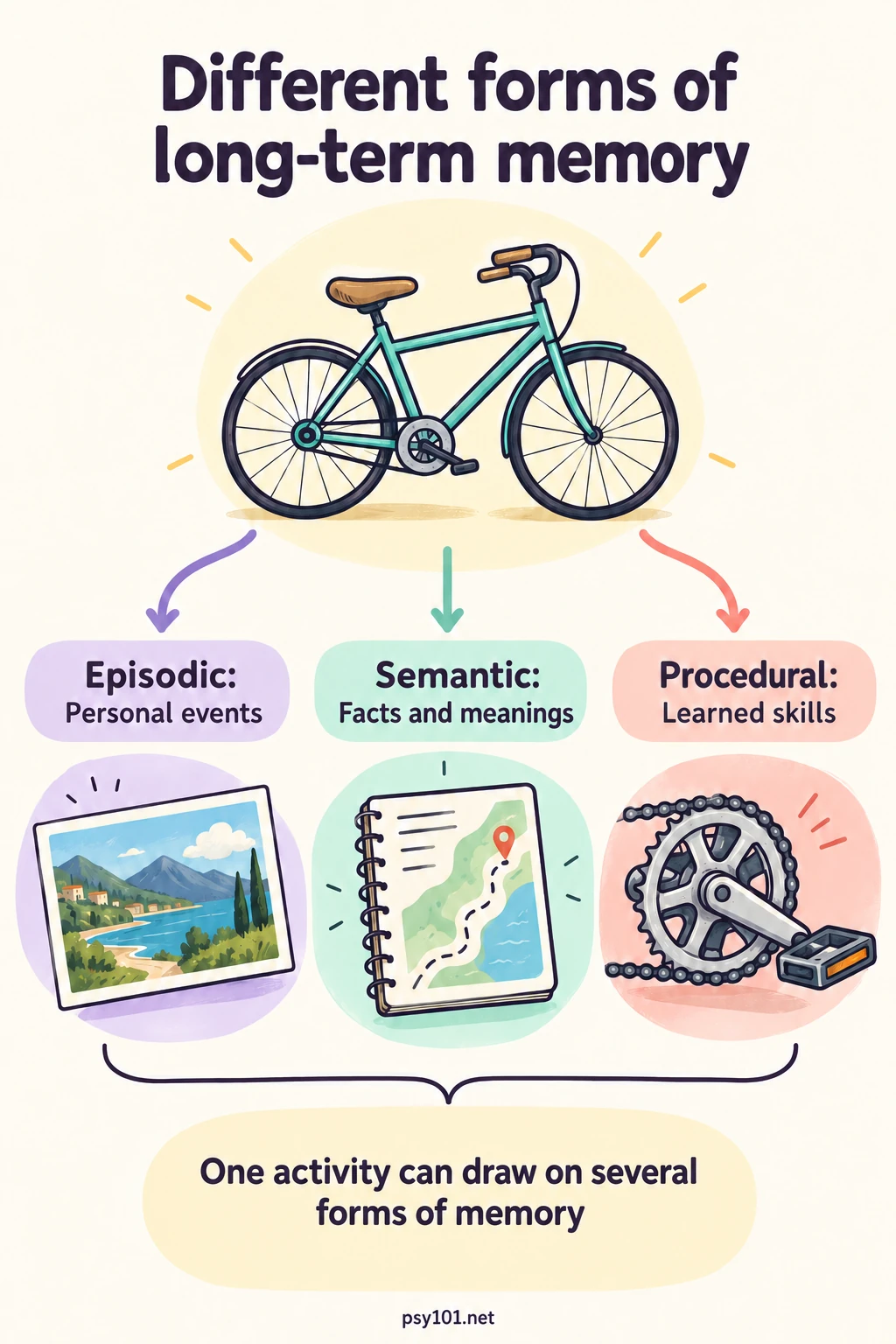 Different forms of long-term memoryOrganize memories by the kinds of information and performance they support.Read the illustrated guide
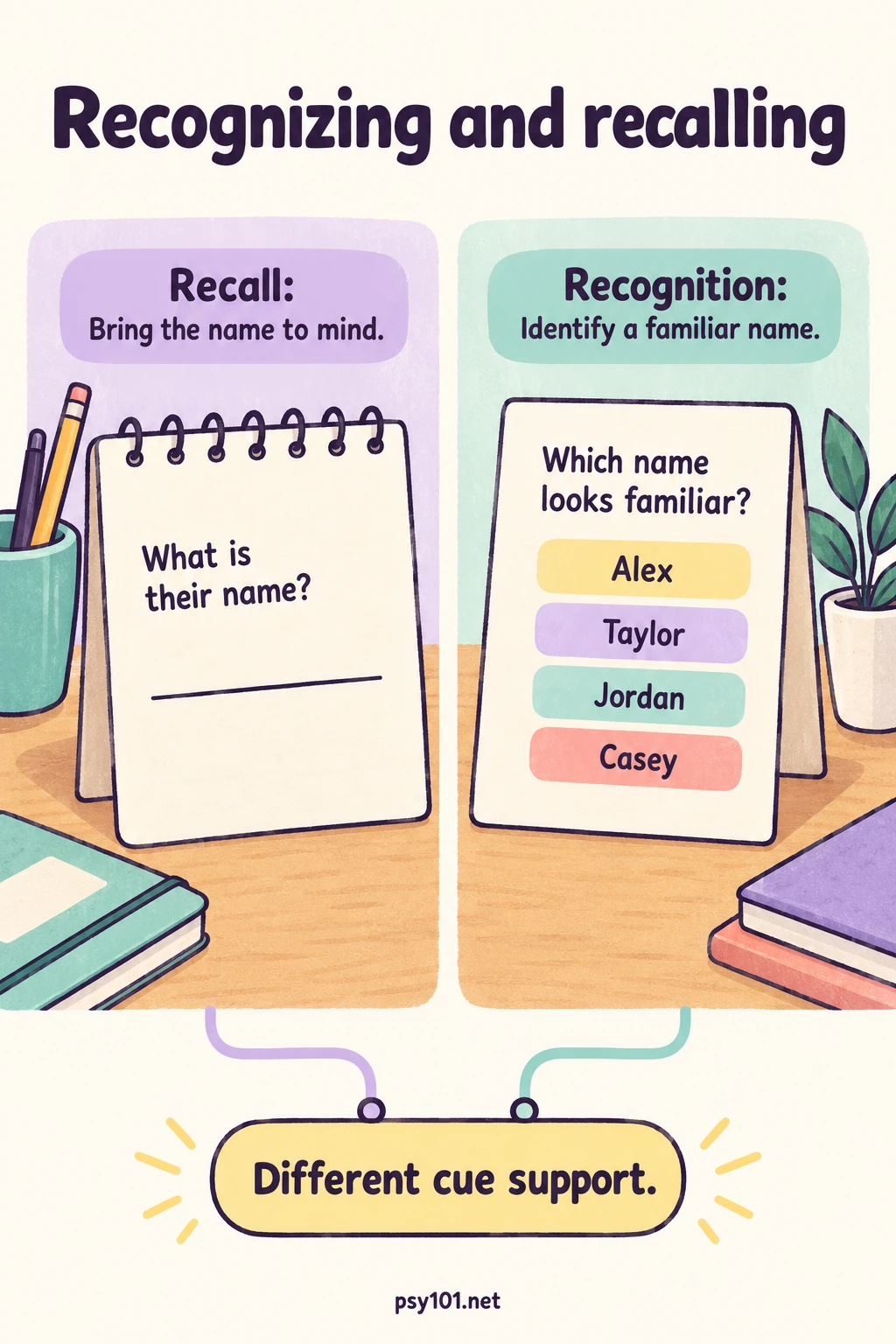 Recognizing and recallingCompare bringing information to mind with identifying it among options.Read the illustrated guide
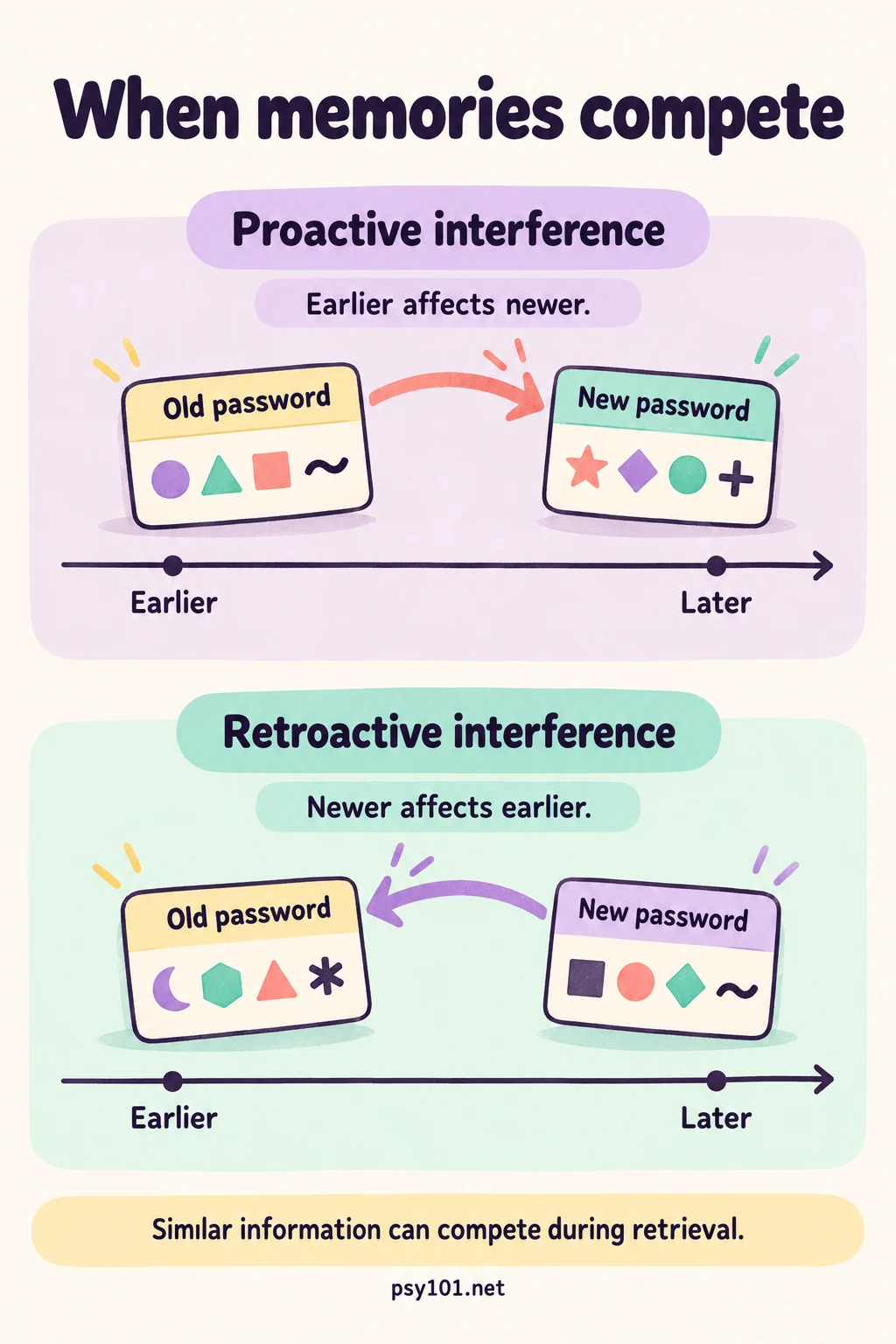 When memories competeCompare how earlier and later learning can affect retrieval.Read the illustrated guide
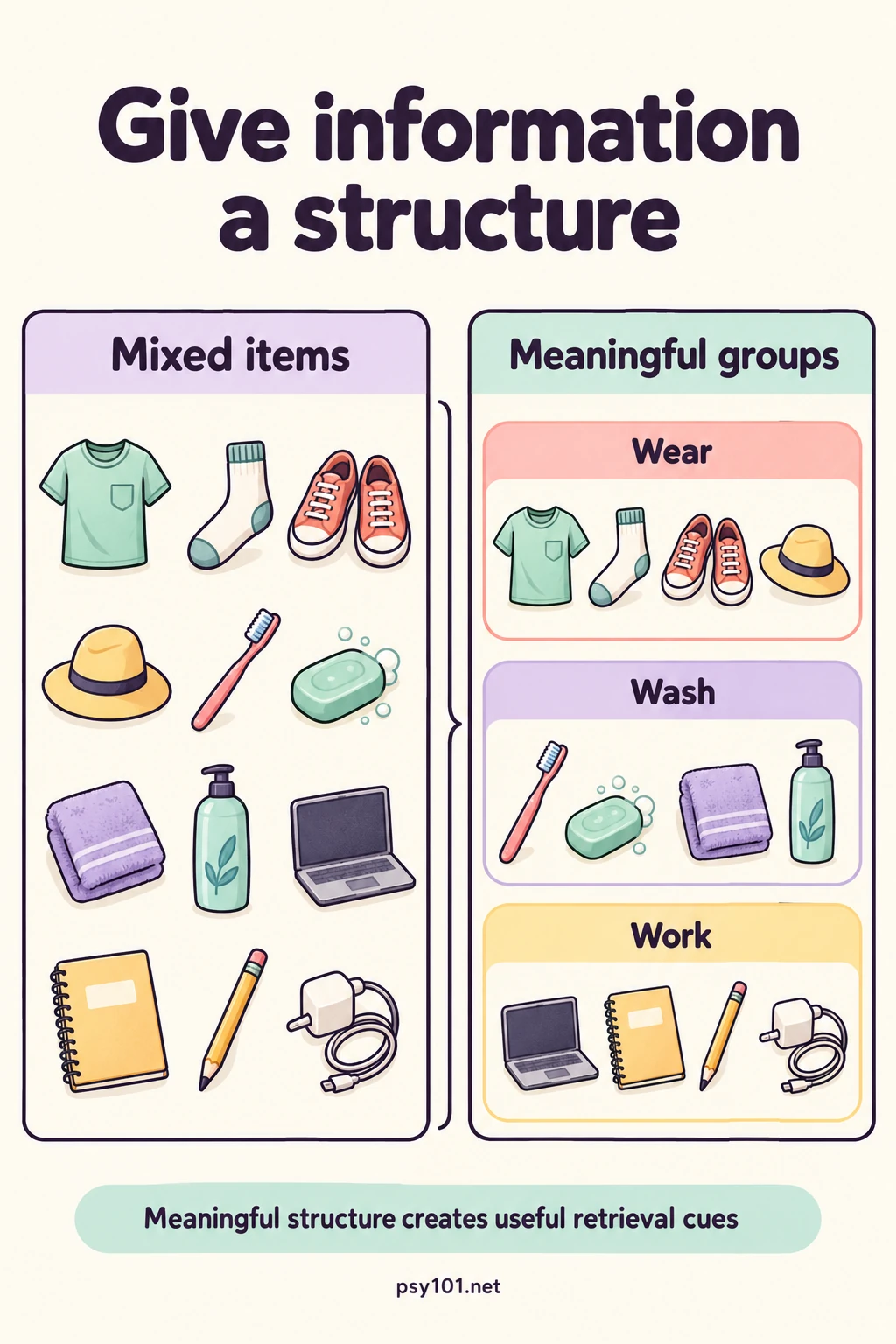 Give information a structureConnect meaningful grouping with how information is encoded and retrieved.Read the illustrated guide
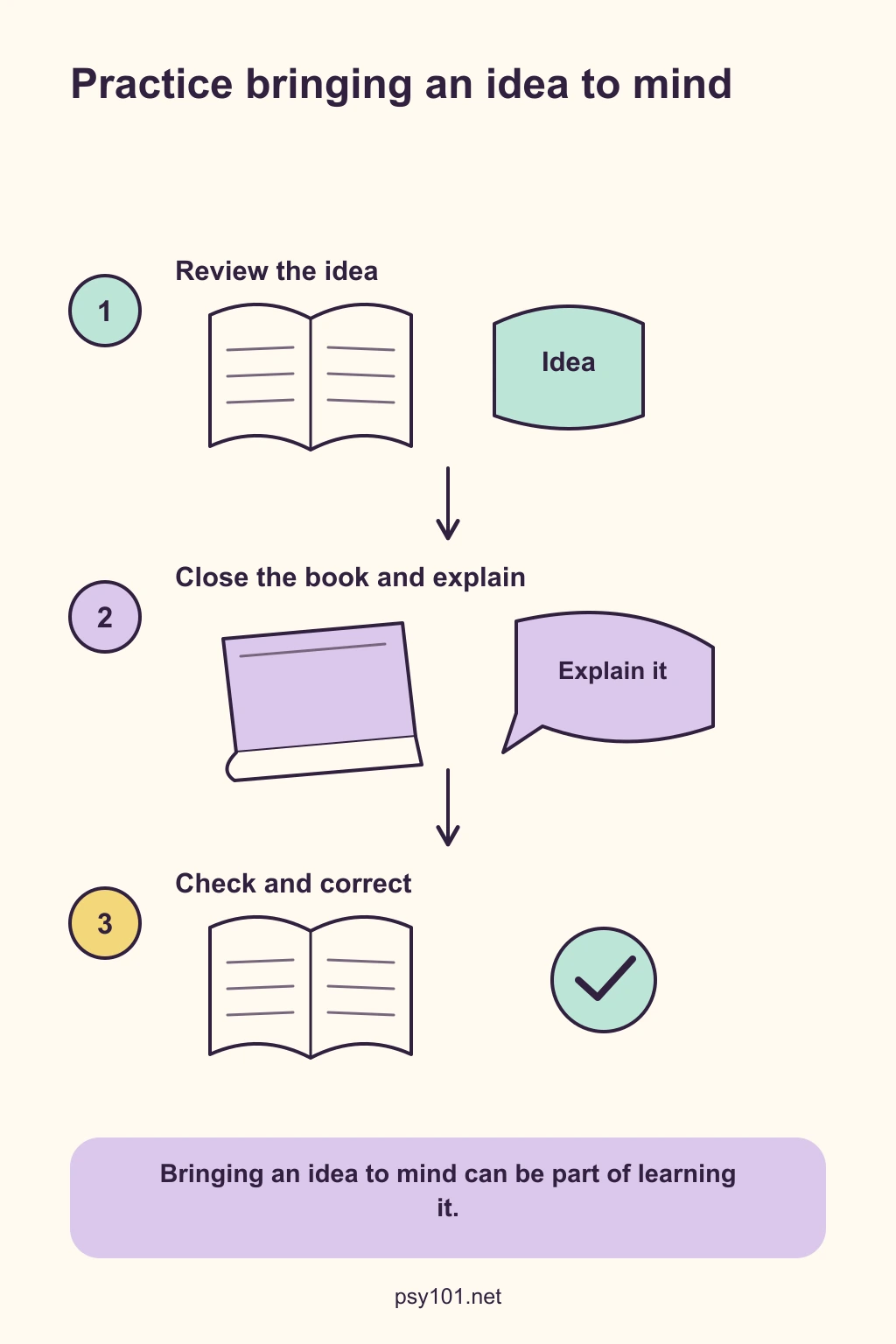 Practice bringing an idea to mindUse bringing information to mind as part of studying.Read the illustrated guide
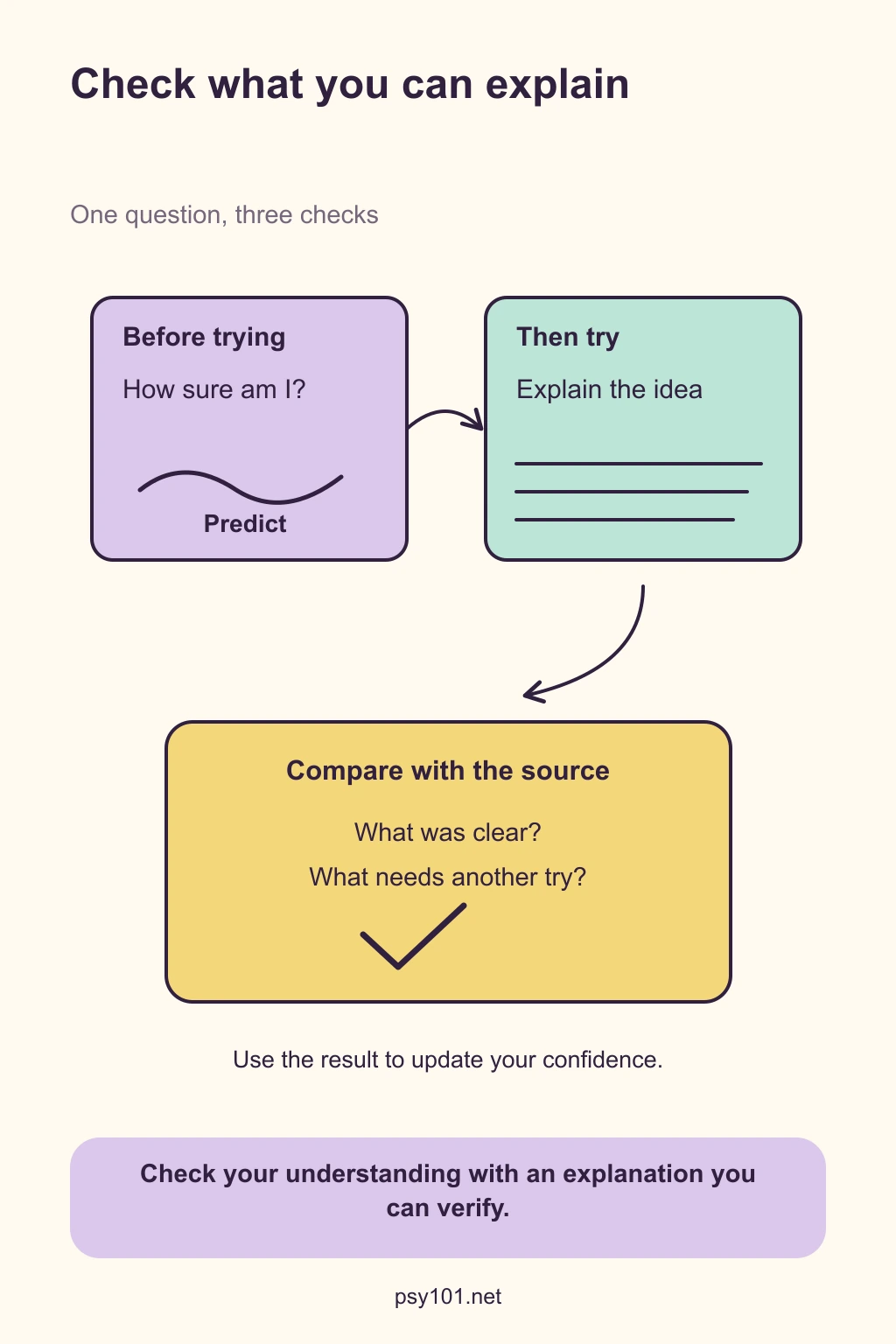 Check what you can explainCompare your expectation of remembering with an explanation attempt.Read the illustrated guide
Follow the question
Read the related OpenStax Psychology 2e section