Emotion
How can a racing heart become part of different emotions?
The basic idea
An emotional episode can involve bodily responses, an interpretation of events, a subjective feeling and expression. These components influence one another. Researchers compare theories about their timing and relationships, including how an interpretation helps give bodily changes meaning.
- Bodily response
- Interpretation
- Experienced feeling
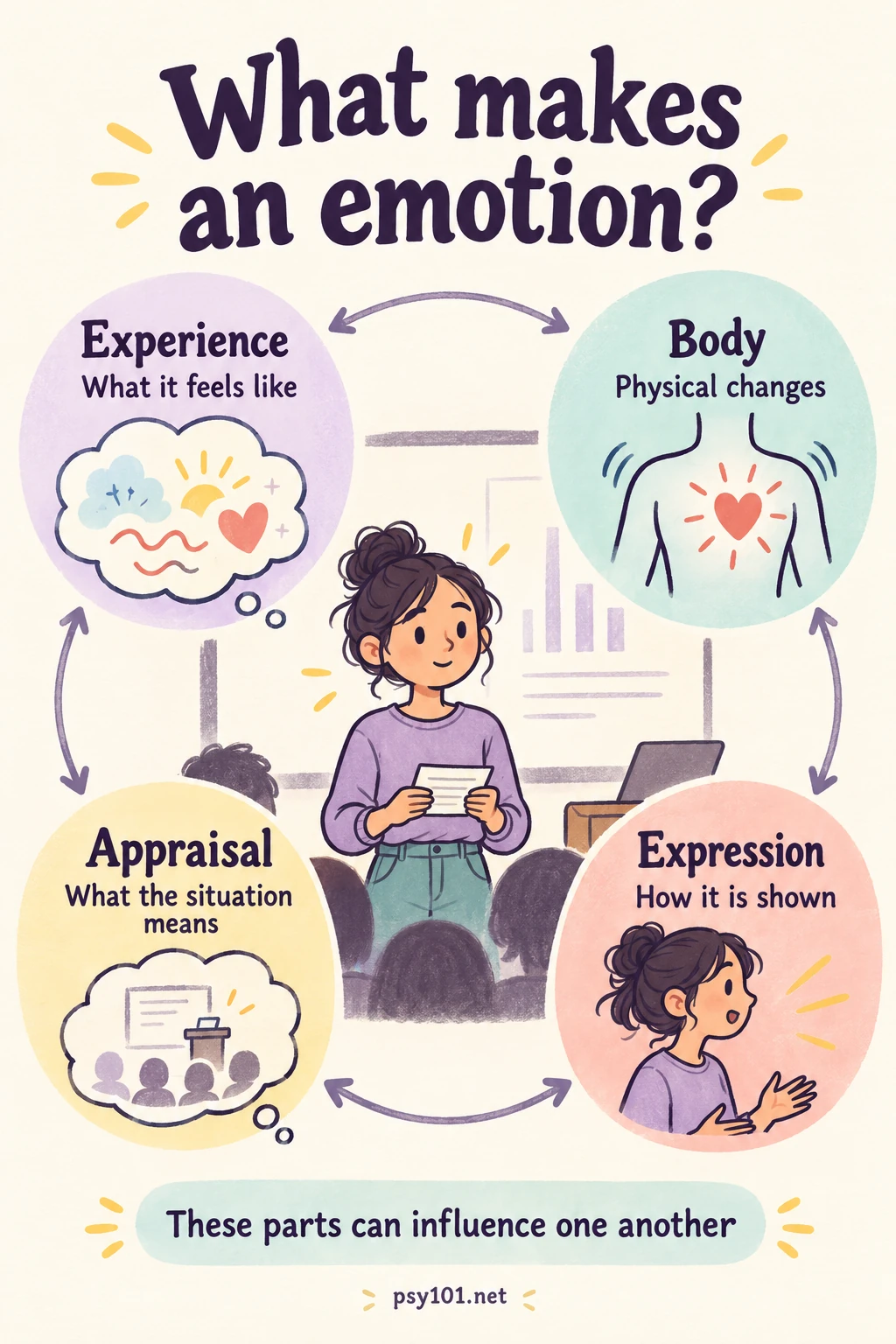
What makes an emotion?
Connect bodily changes, felt experience, appraisal and expression.
- Experience
- The subjective feeling of the emotional episode.
- Body
- Physical responses such as changes in heart rate.
- Appraisal
- The meaning a situation has for the person.
Picture this
Original teaching example
Before a performance, one person interprets a racing heart as excitement and another as fear. They describe a similar bodily change and give it different meanings in relation to the situation.
Your turn
What information would help you understand how each performer experiences the racing heart?
Show the explanation
Ask how they interpret the performance, what they expect to happen and how they describe their feeling. Their accounts and the situation add meaning to the bodily measure. Together, these observations give a fuller picture of the emotional episode.
Take the idea further
The components can occur together and influence one another. Different theories make different predictions about how an episode unfolds.
Explore another angle
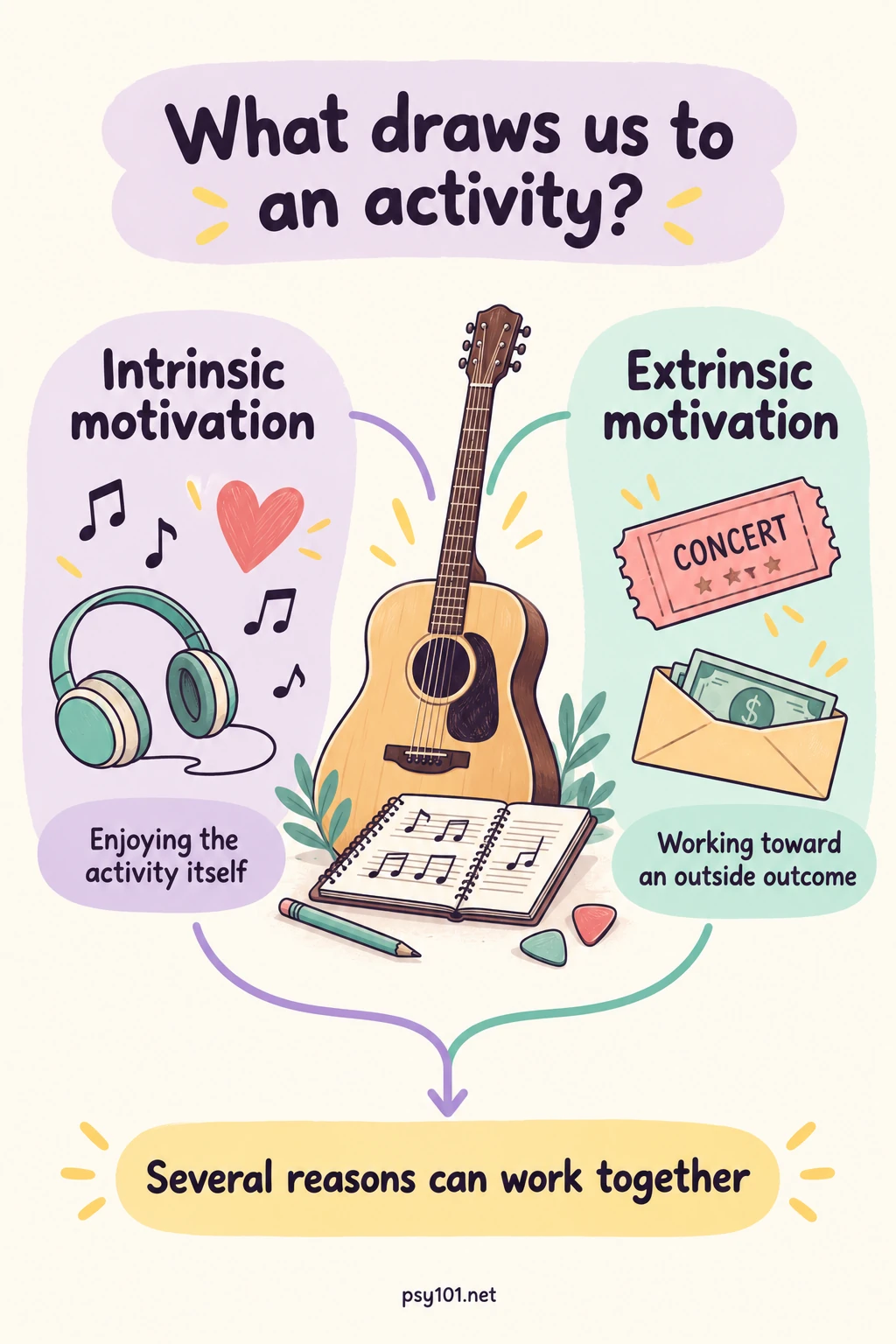 What draws us to an activity?Explore enjoyment of an activity alongside the outcomes it can bring.Read the illustrated guide
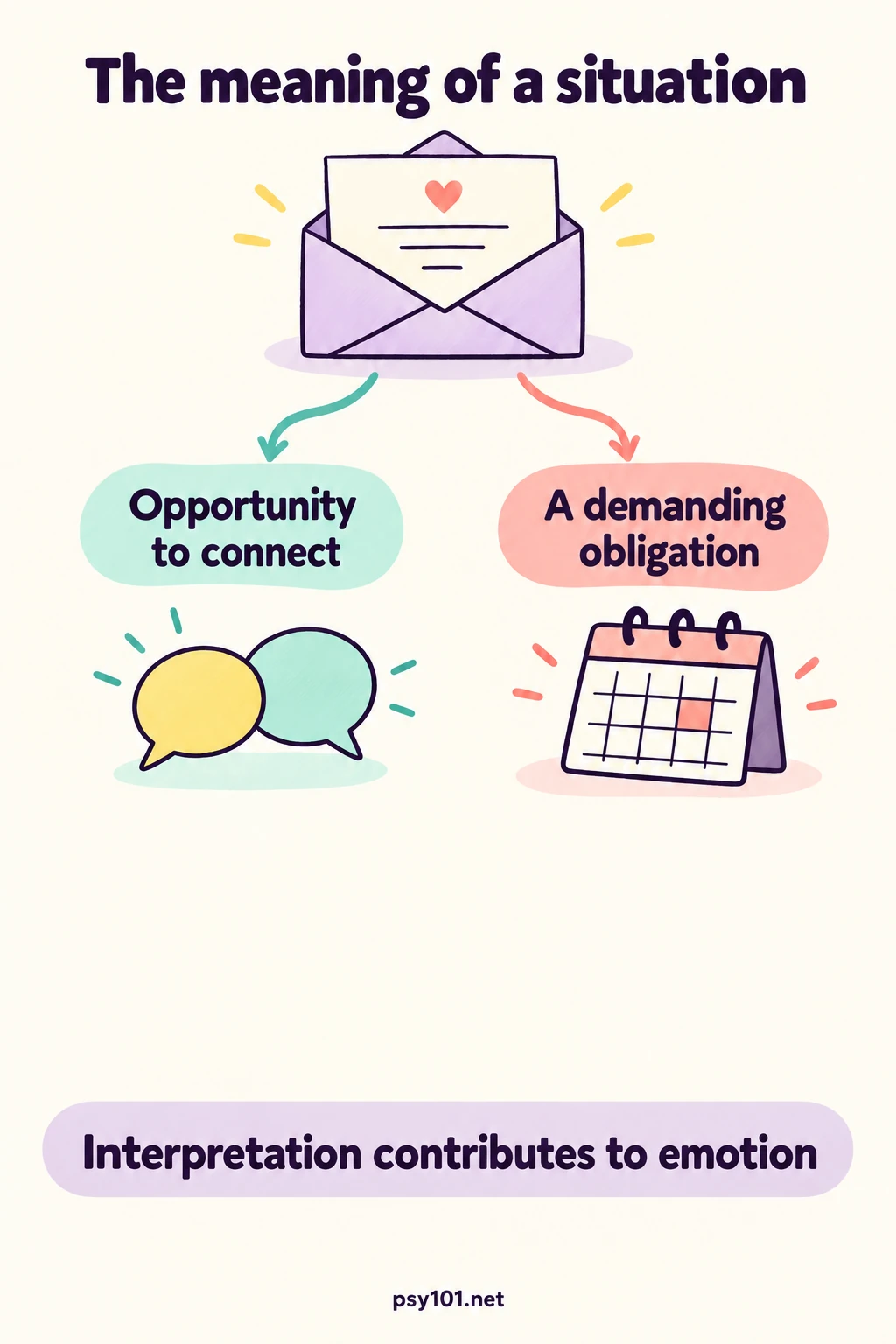 The meaning of a situationExplore how interpreting an event contributes to an emotional episode.Read the illustrated guide
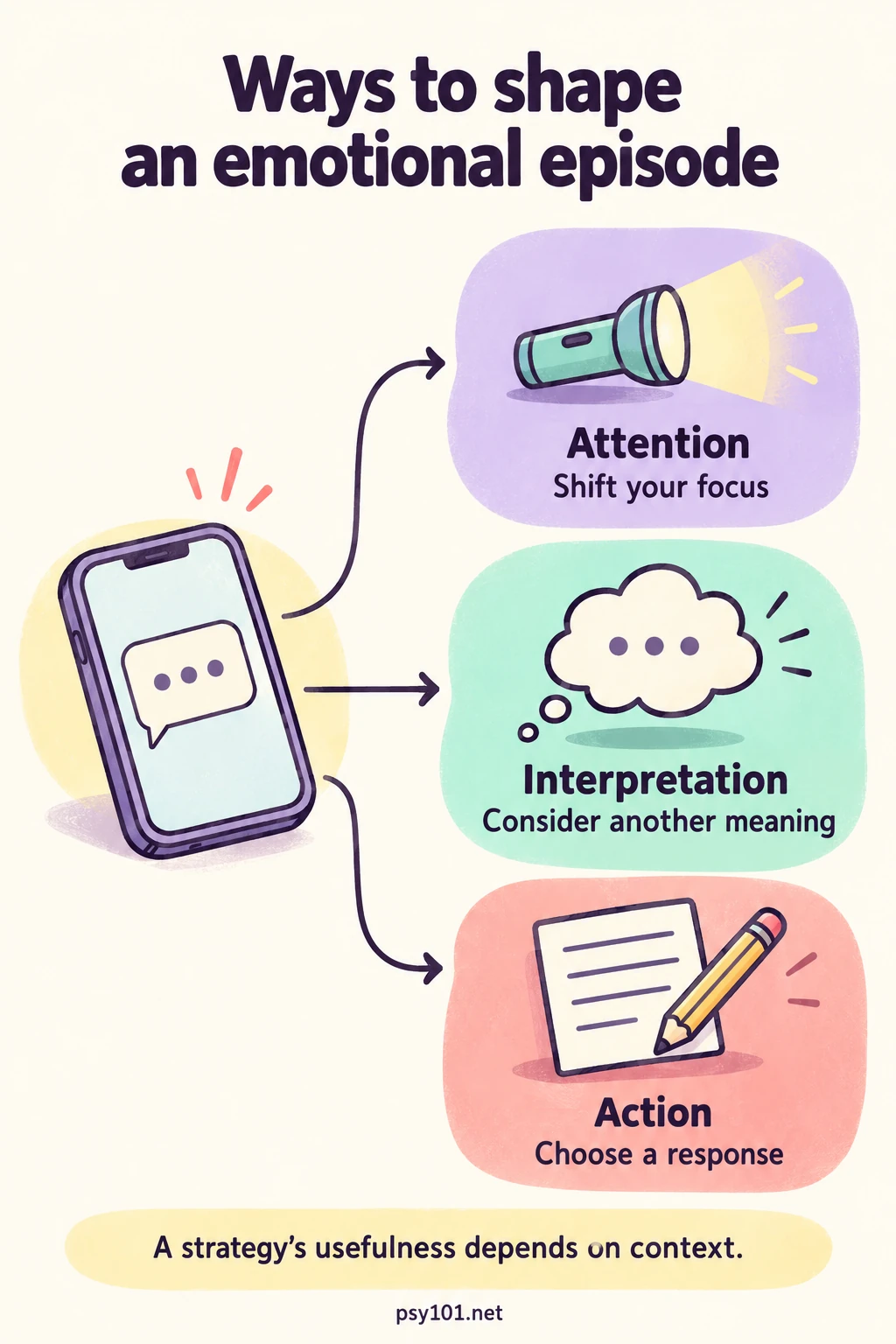 Ways to shape an emotional episodeExplore how changes in attention, interpretation and action can influence an emotional episode.Read the illustrated guide
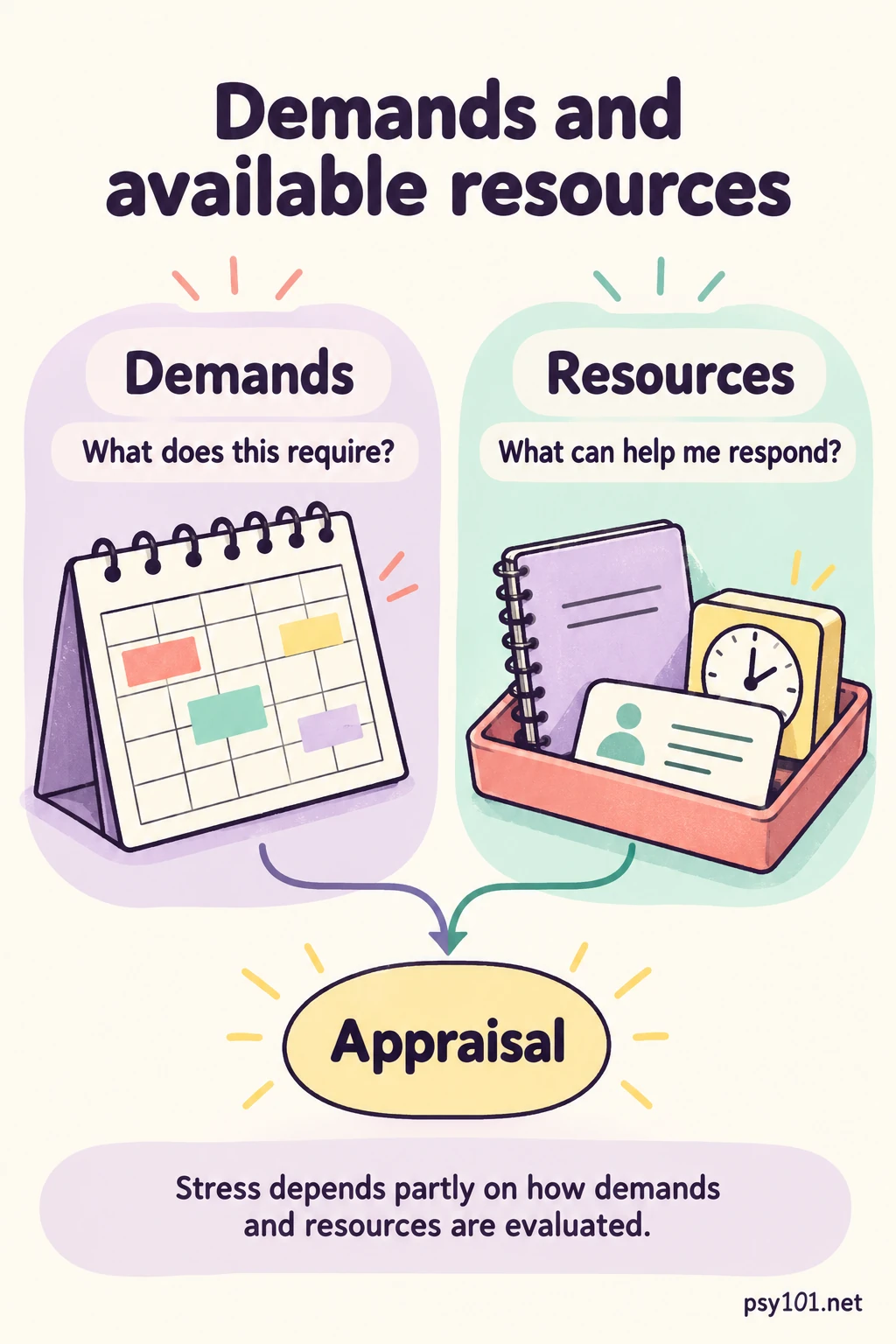 Demands and available resourcesConsider how demands and perceived resources contribute to a stress appraisal.Read the illustrated guide
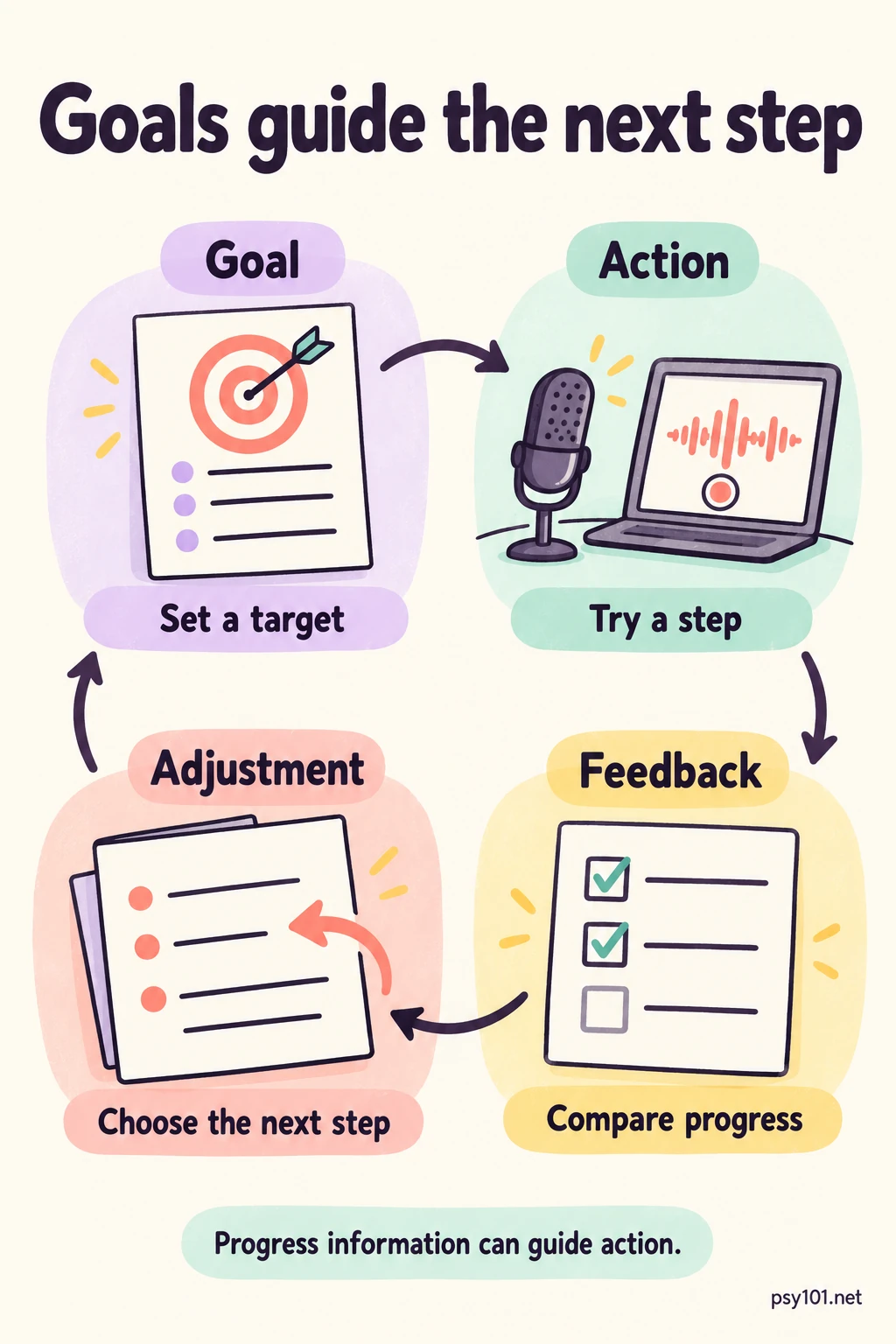 Goals guide the next stepFollow a practical cycle connecting a goal, an attempt and information about progress.Read the illustrated guide
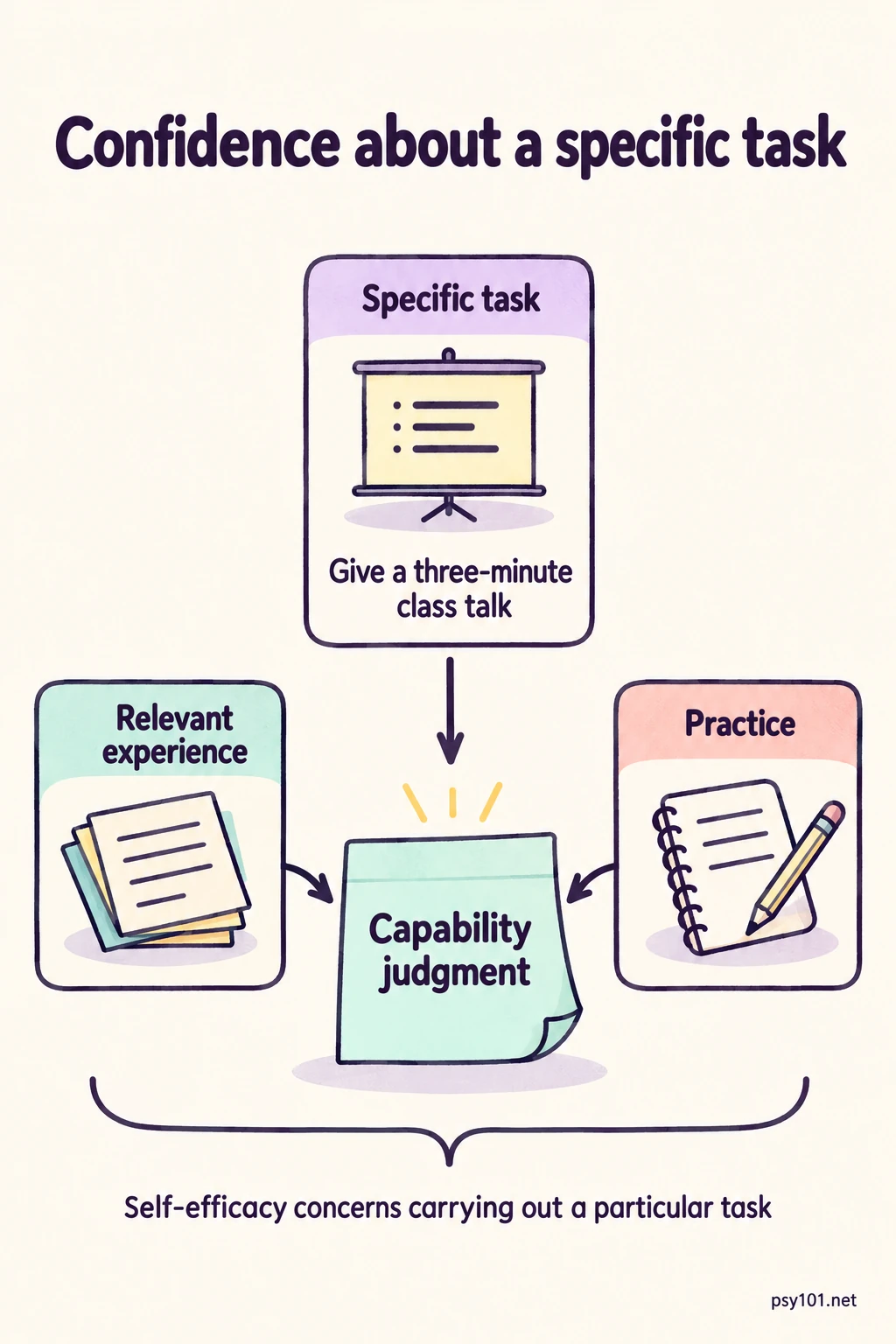 Confidence about a specific taskDistinguish a judgment about carrying out a particular task from a broad description of the self.Read the illustrated guide