Brain and body
How does a signal travel through the nervous system?
The basic idea
Neurons receive and transmit signals. Electrical changes carry a signal along an axon. At a chemical synapse, messengers called neurotransmitters cross a small gap and affect the next cell. Neurons work in networks, with glial cells contributing to the system’s functioning.
- Receive signals
- Transmit along an axon
- Communicate across a synapse
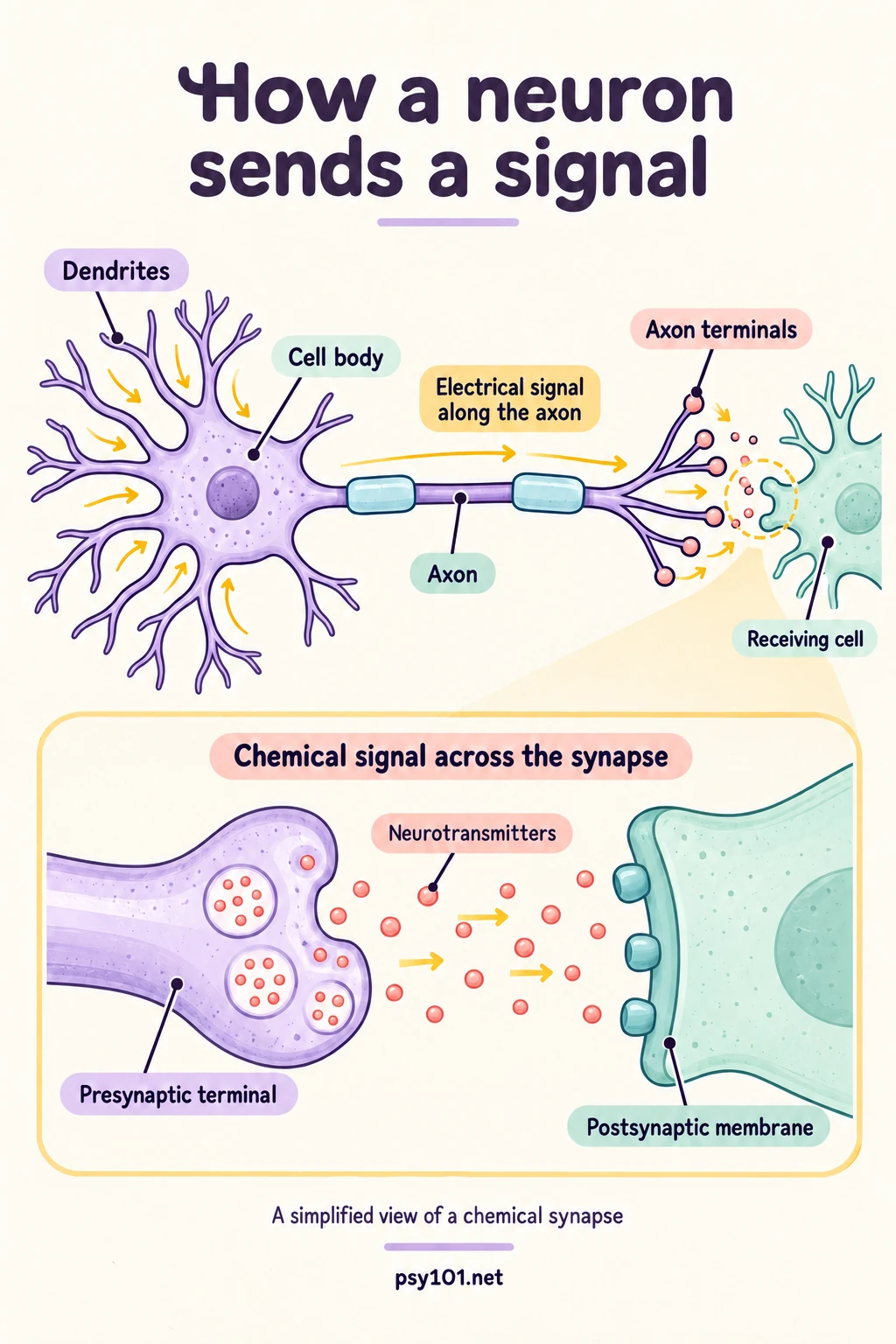
How a neuron sends a signal
Follow a signal along an axon and across a chemical synapse.
- Dendrites and cell body
- Incoming signals contribute to the activity of the neuron.
- Axon
- Electrical changes can carry a signal toward the axon terminals.
- Chemical synapse
- Neurotransmitters released by a terminal cross a small gap and act on receptors.
Picture this
Original teaching example
Imagine hearing a bicycle bell and moving aside. Signals from the ears contribute to identifying the sound and its location. Other pathways help coordinate the movement, bringing several parts of the nervous system into the response.
Your turn
Which parts of the bicycle-bell response involve receiving information, interpreting it and acting?
Show the explanation
Hearing begins with receiving sensory information. Interpreting the sound involves recognizing it and relating it to the surroundings. Moving aside requires coordinated signals to muscles. These processes draw on activity across connected cells and pathways.
Take the idea further
The illustrated sequence follows a chemical synapse. At the scale of the whole nervous system, many pathways communicate at the same time.
Explore another angle
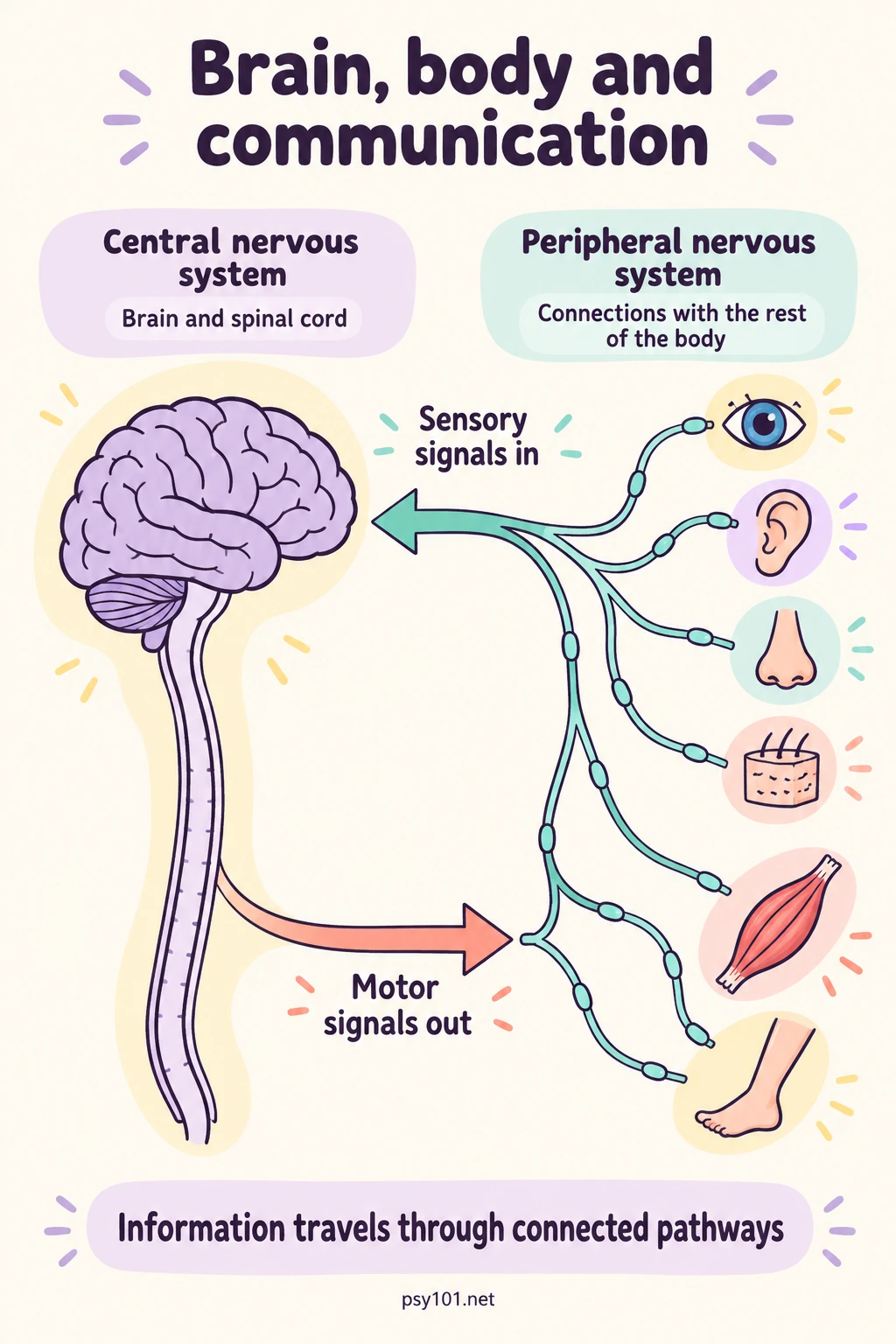 Brain, body and communicationConnect the central nervous system with pathways throughout the body.Read the illustrated guide
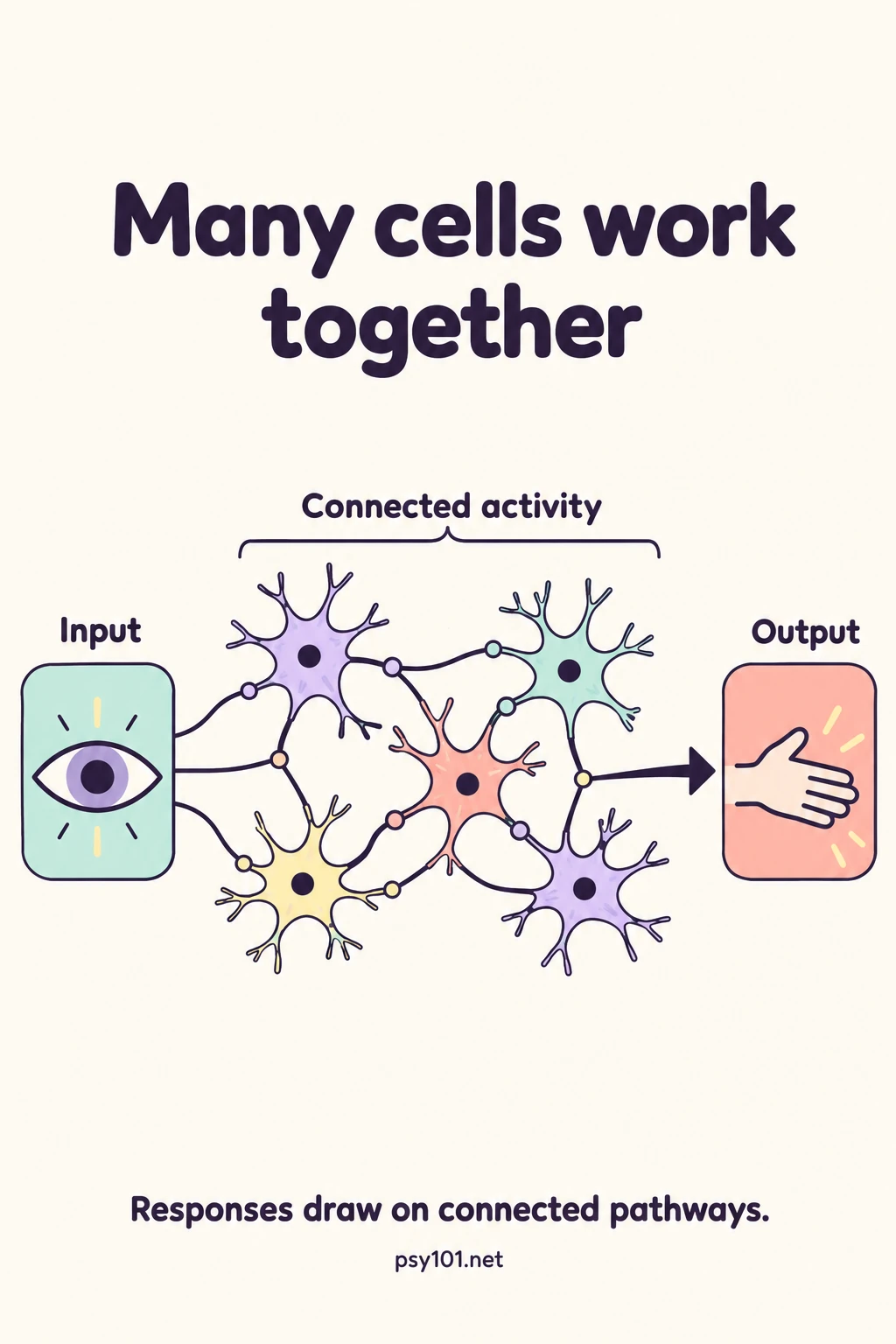 Many cells work togetherSee how connected neurons contribute to a response.Read the illustrated guide
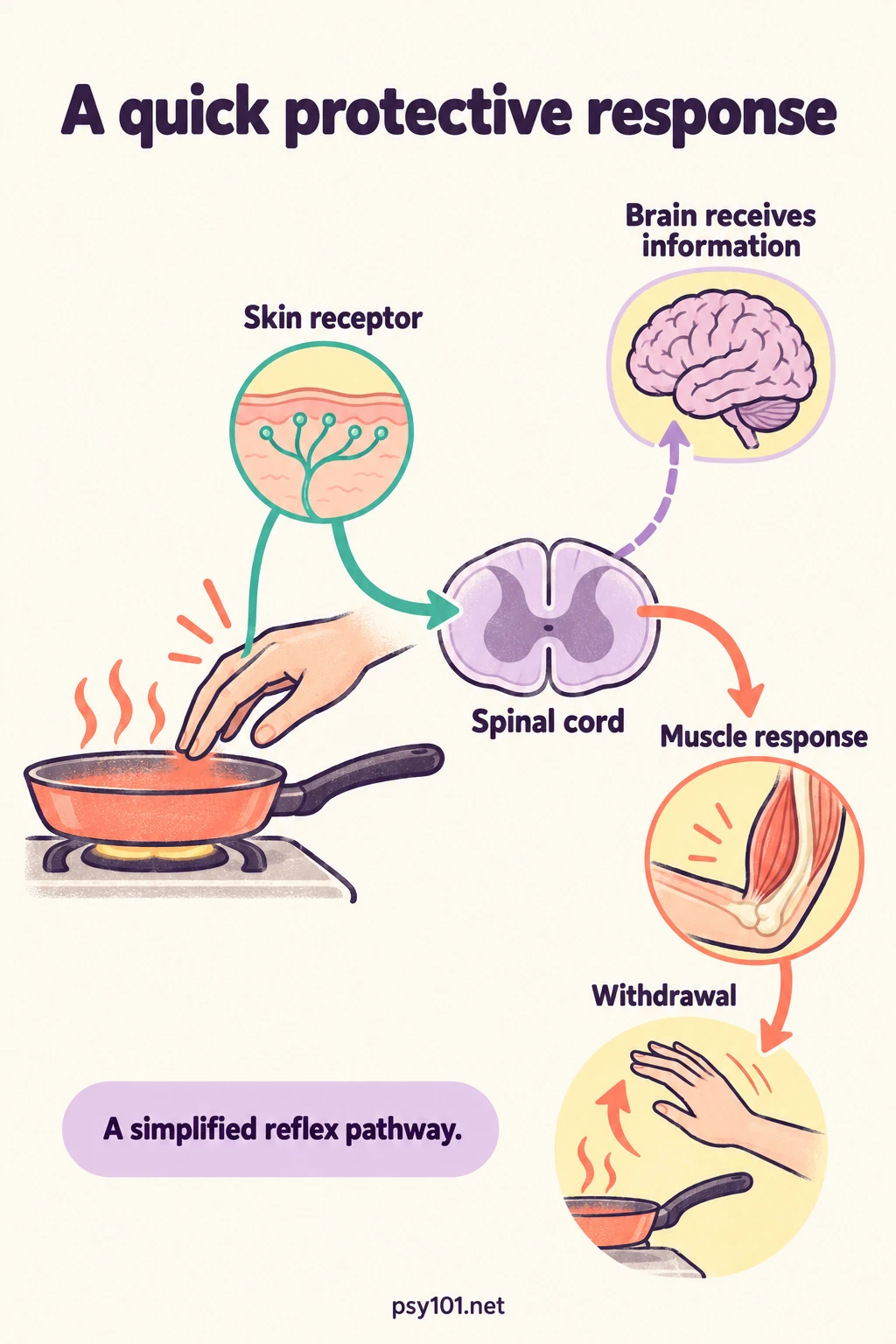 A quick protective responseFollow one simplified pathway involved in withdrawing from heat.Read the illustrated guide
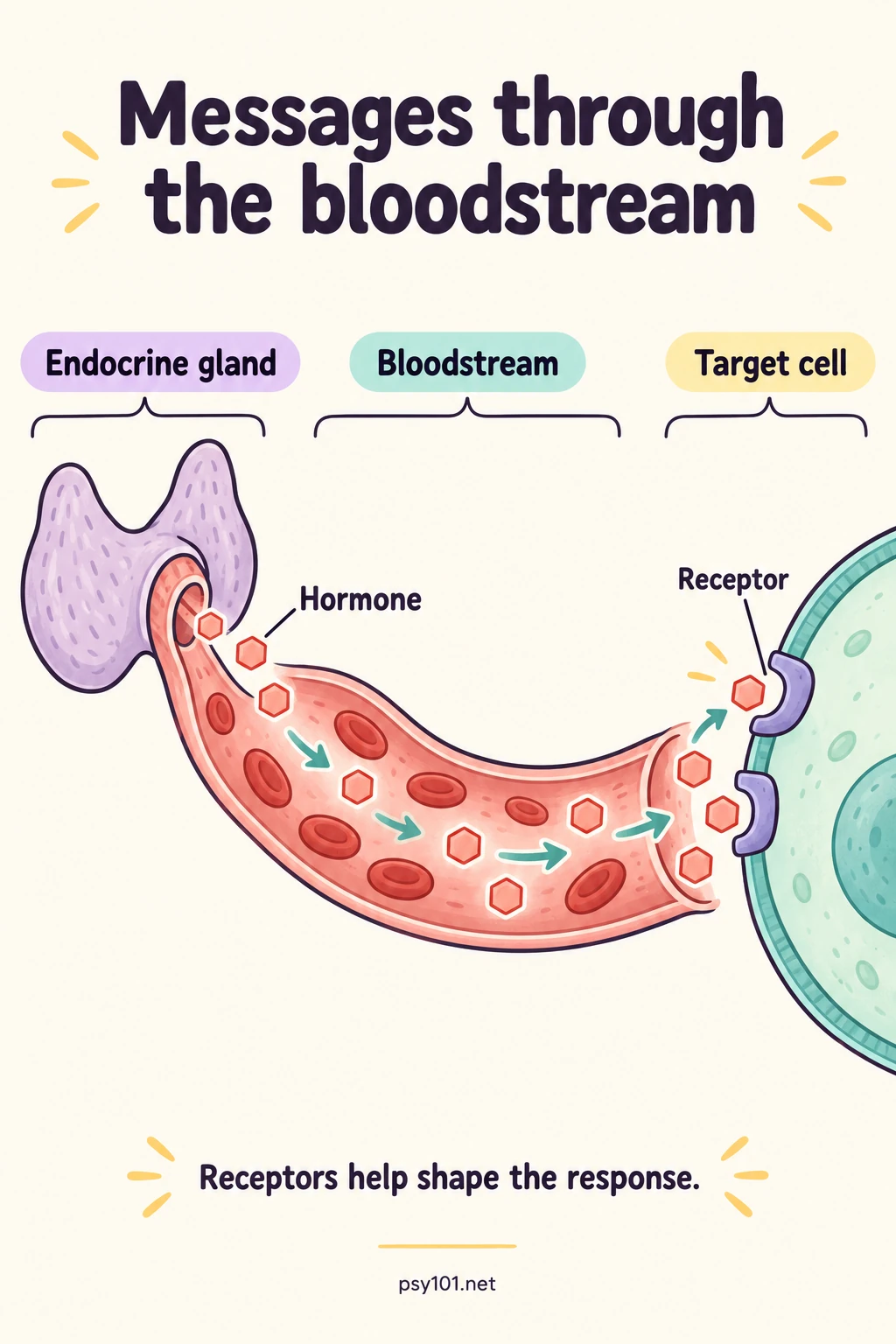 Messages through the bloodstreamTrace a hormone from an endocrine gland to a responsive target.Read the illustrated guide
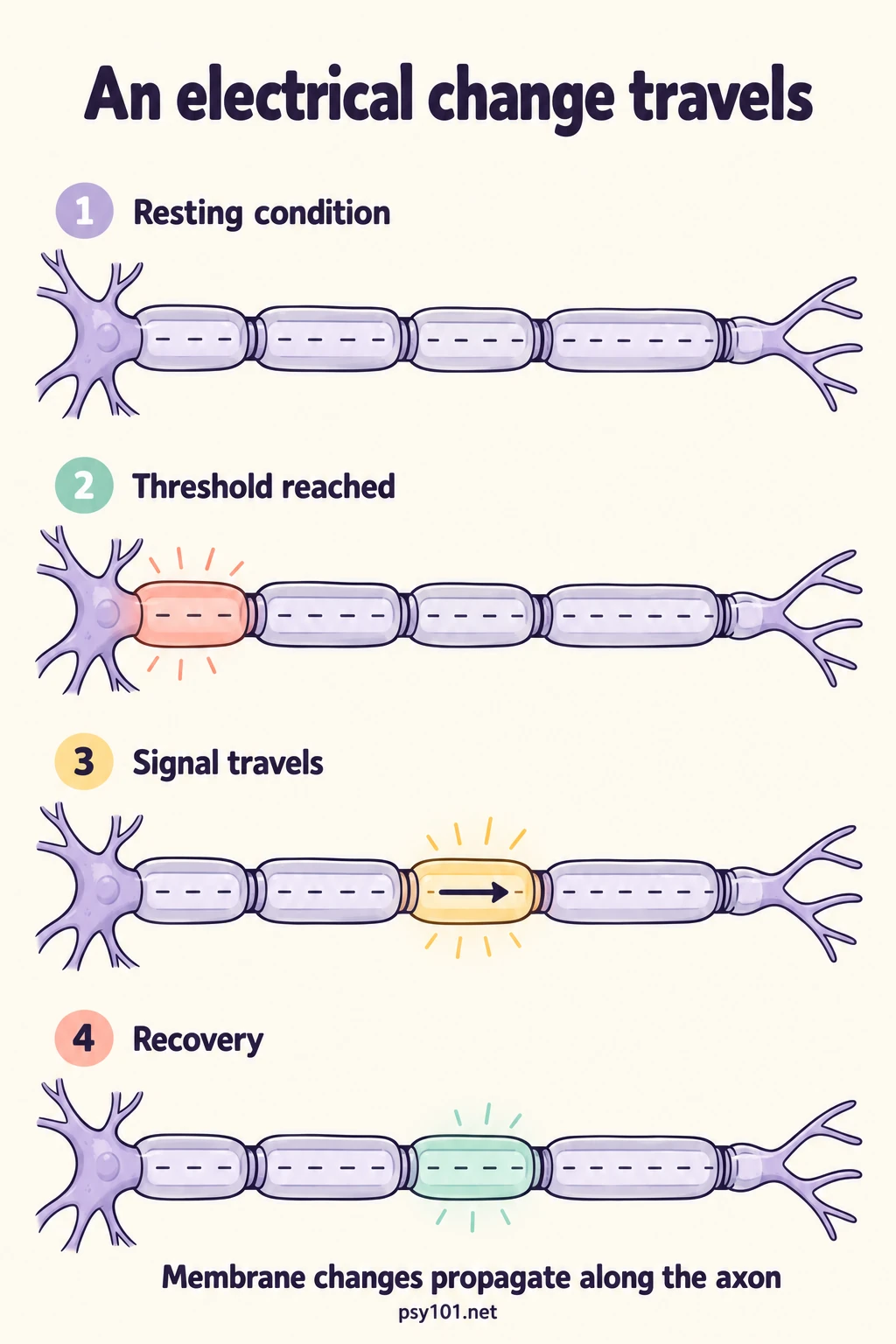 An electrical change travelsFollow a signal as changes in the cell membrane propagate along an axon.Read the illustrated guide
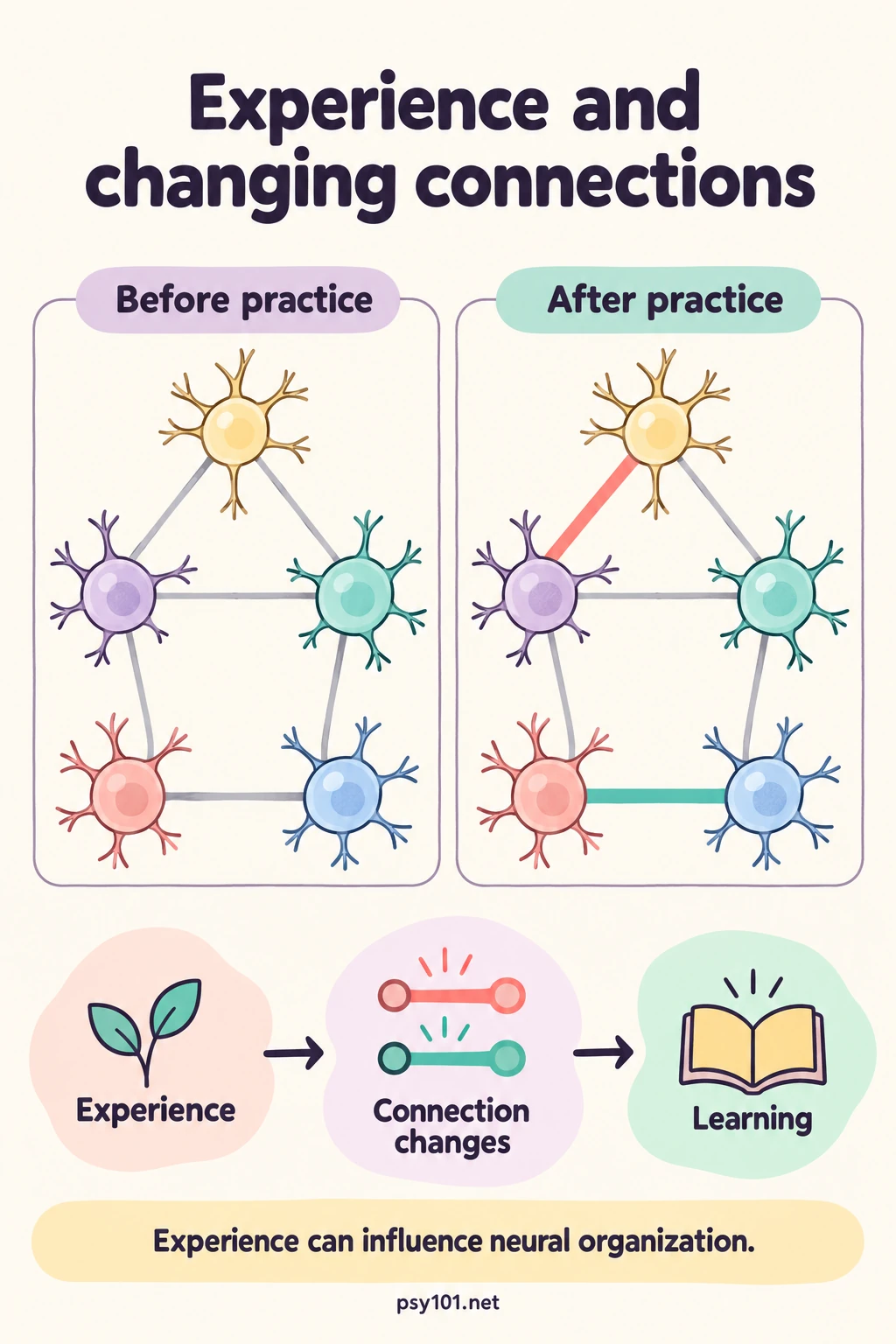 Experience and changing connectionsExplore how experience can be associated with changes in neural connections.Read the illustrated guide
Sleep and daily rhythms
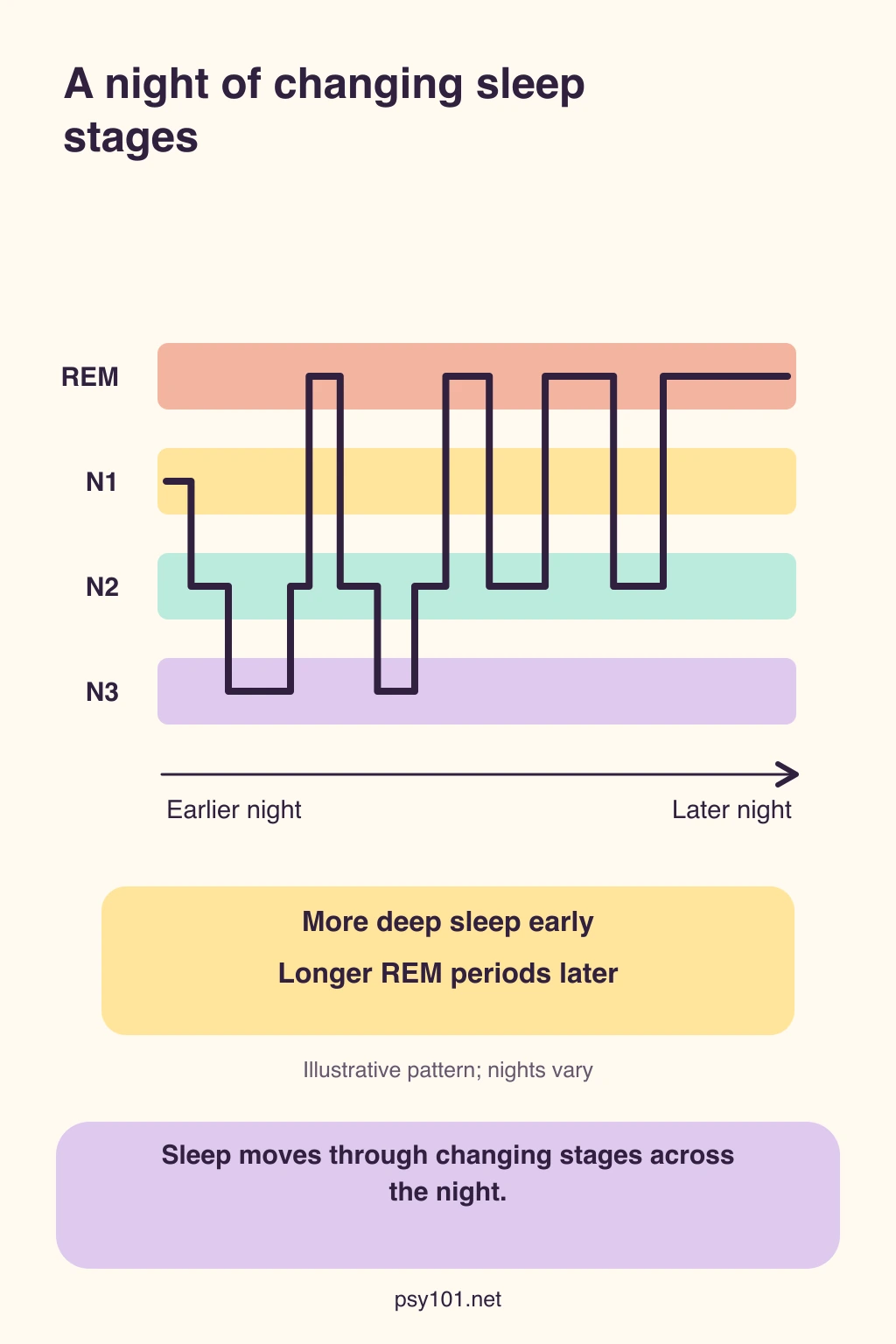 A night of changing sleep stagesFollow a schematic night through non-REM and REM sleep.Read the illustrated guide
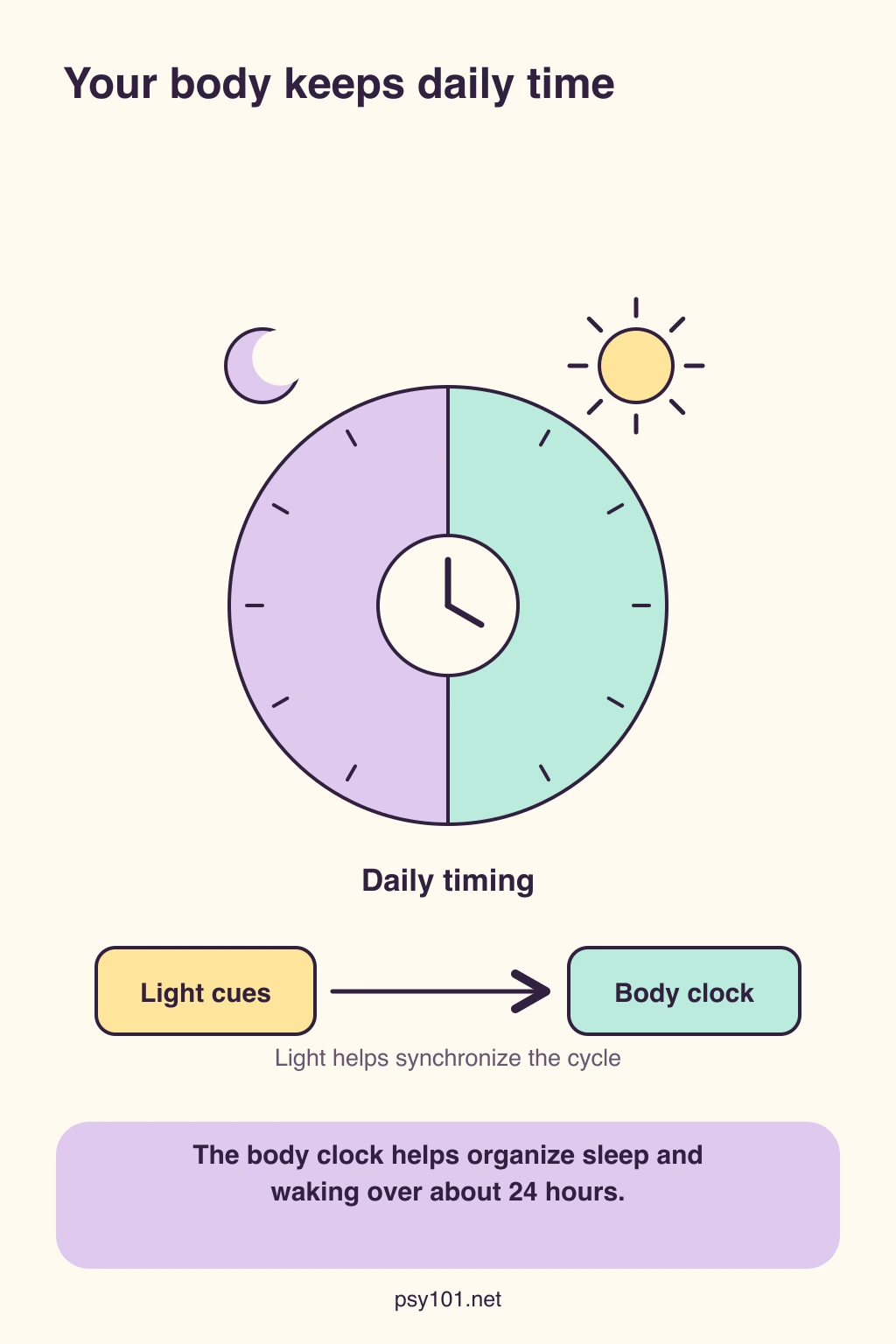 Your body keeps daily timeConnect light cues with the timing of a daily rhythm.Read the illustrated guide
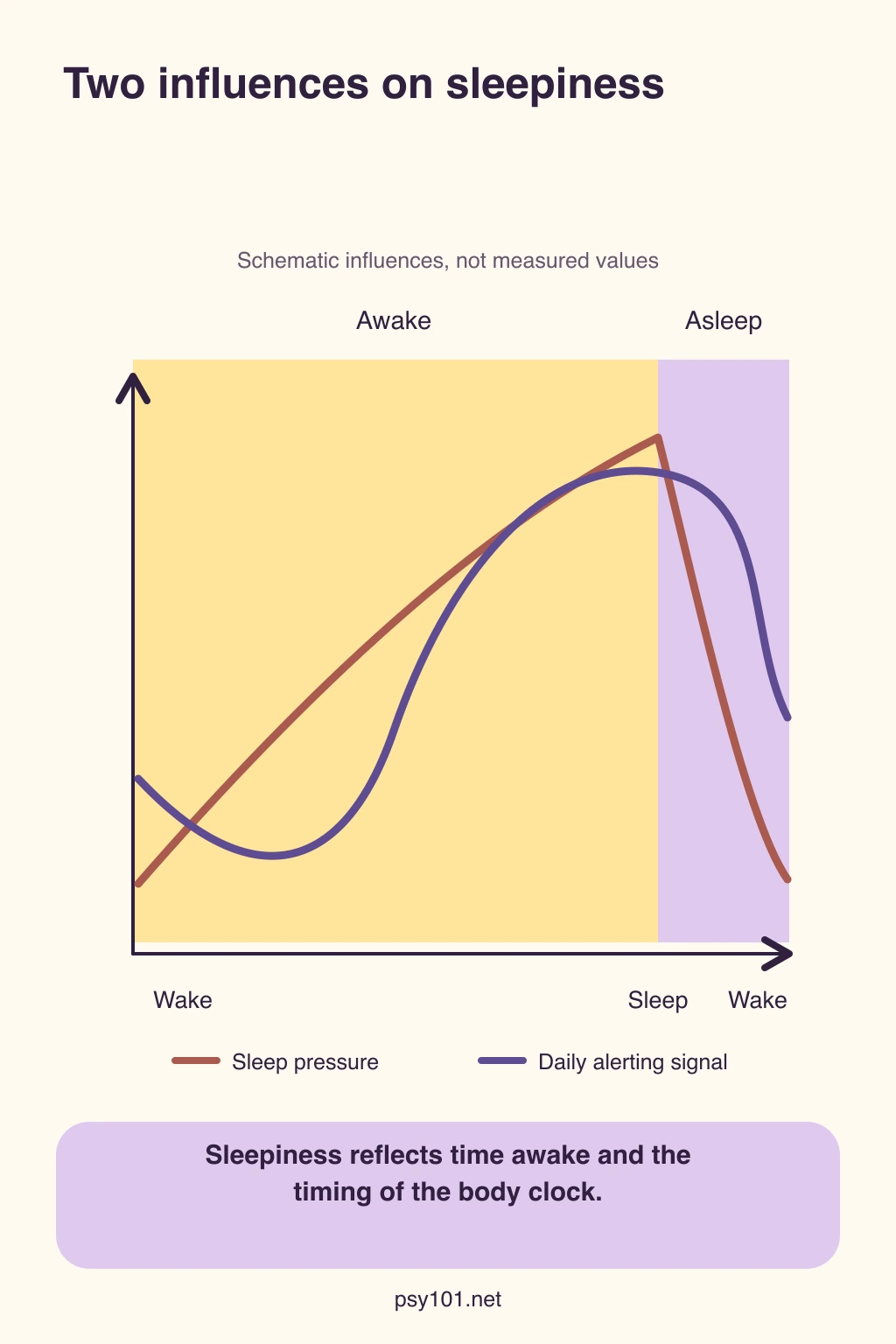 Two influences on sleepinessCompare accumulating sleep pressure with a daily alerting rhythm.Read the illustrated guide