Sensation and perception
How do sensory signals become meaningful?
The basic idea
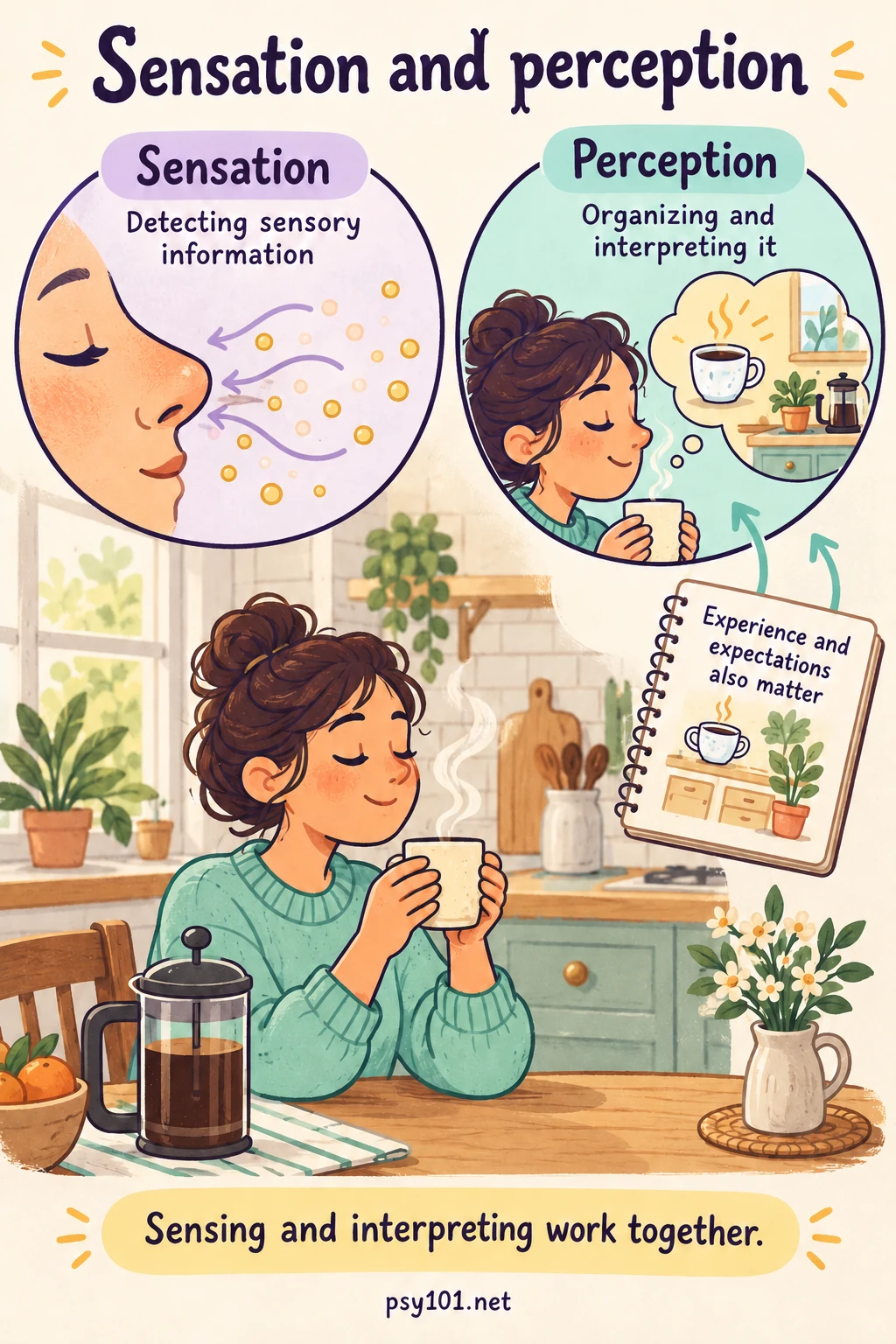
Sensation begins when receptors detect physical input, such as light or sound. Perception organizes and interprets that information. Attention, expectations and the surroundings help shape the interpretation. Together, these processes let us recognize objects, follow conversations and respond to events.
- Detect input
- Organize information
- Interpret in context
Sensation and perception
Use a familiar smell to connect detecting information with interpreting it.
- Sensation
- Sensory receptors detect information from the environment.
- Perception
- The information is organized and interpreted.
- Context
- Familiar places and expectations can shape the interpretation.
Picture this
Original teaching example
A faint sound at a station could be a familiar name or a word from an announcement. Expecting to meet a friend may bring their name to mind. Hearing the full announcement could provide a clearer context.
Your turn
How could hearing the full announcement change your interpretation of the faint sound?
Show the explanation
The surrounding words would help identify what was said. They could support the familiar-name interpretation or suggest another word. Perception draws on this combination of incoming information, context and expectations.
Take the idea further
When a signal is ambiguous, additional sensory information and context can help distinguish possible interpretations.
Explore another angle
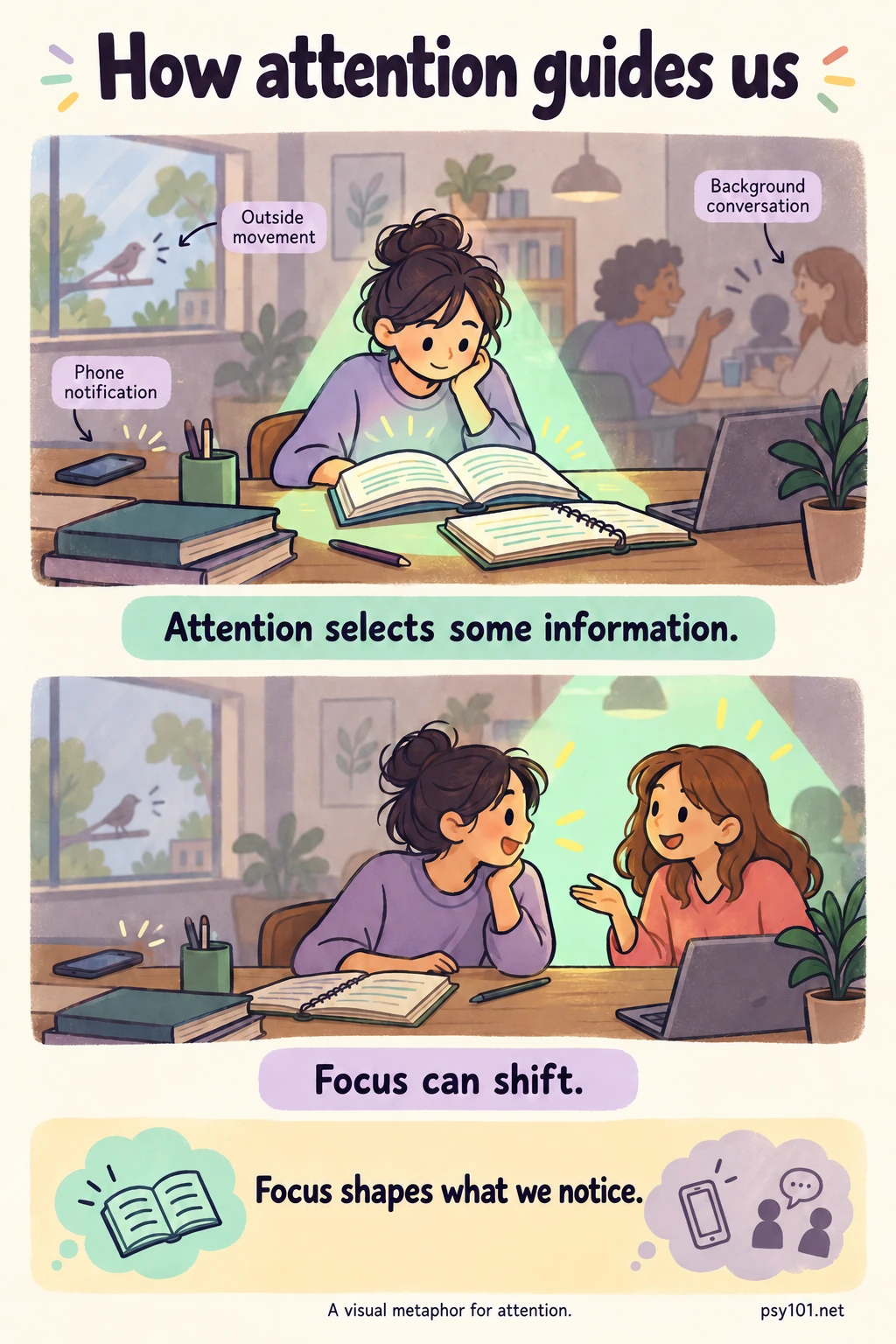 How attention guides usSee how attention selects information and shifts between tasks.Read the illustrated guide
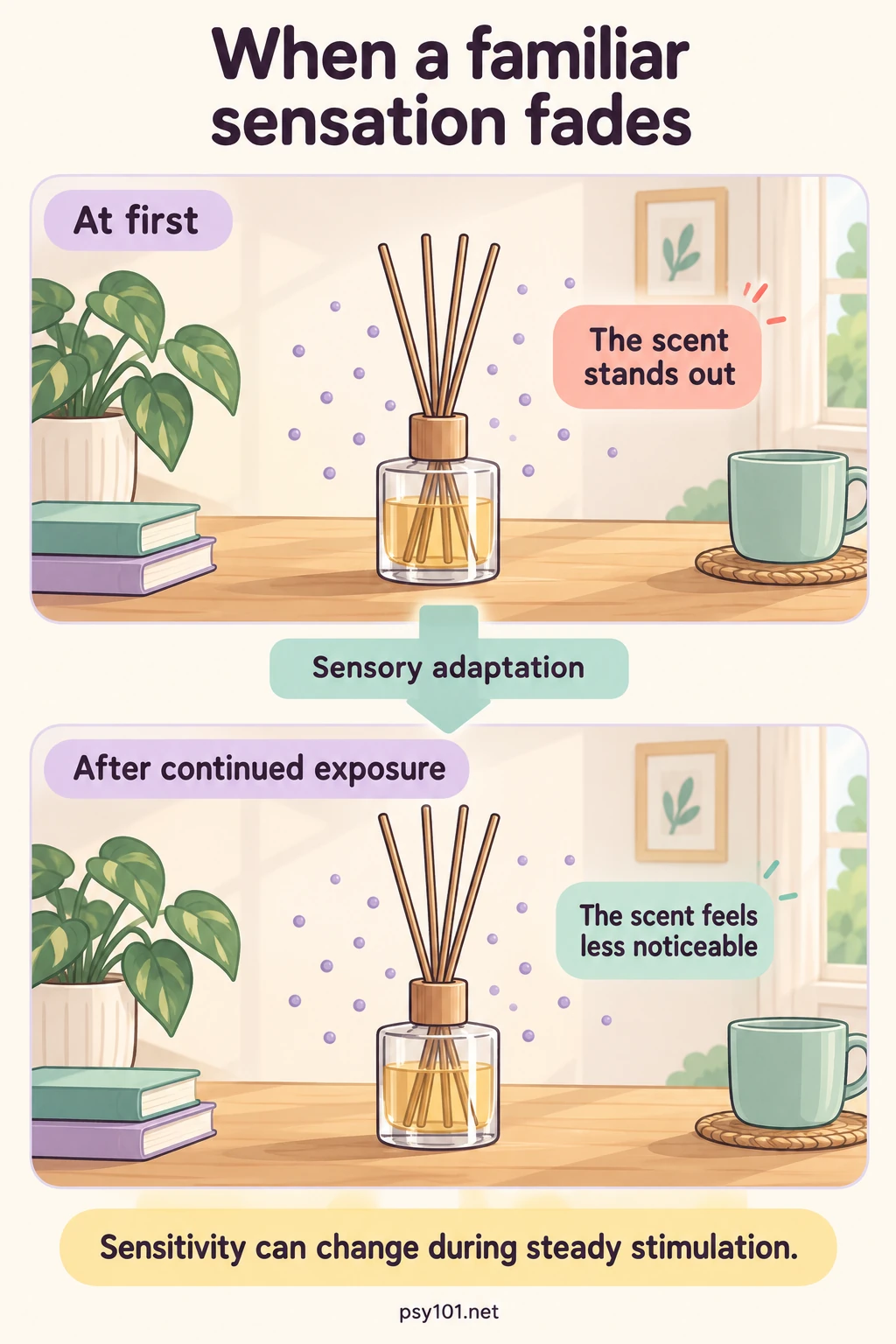 When a familiar sensation fadesFollow a steady scent as it becomes less noticeable during exposure.Read the illustrated guide
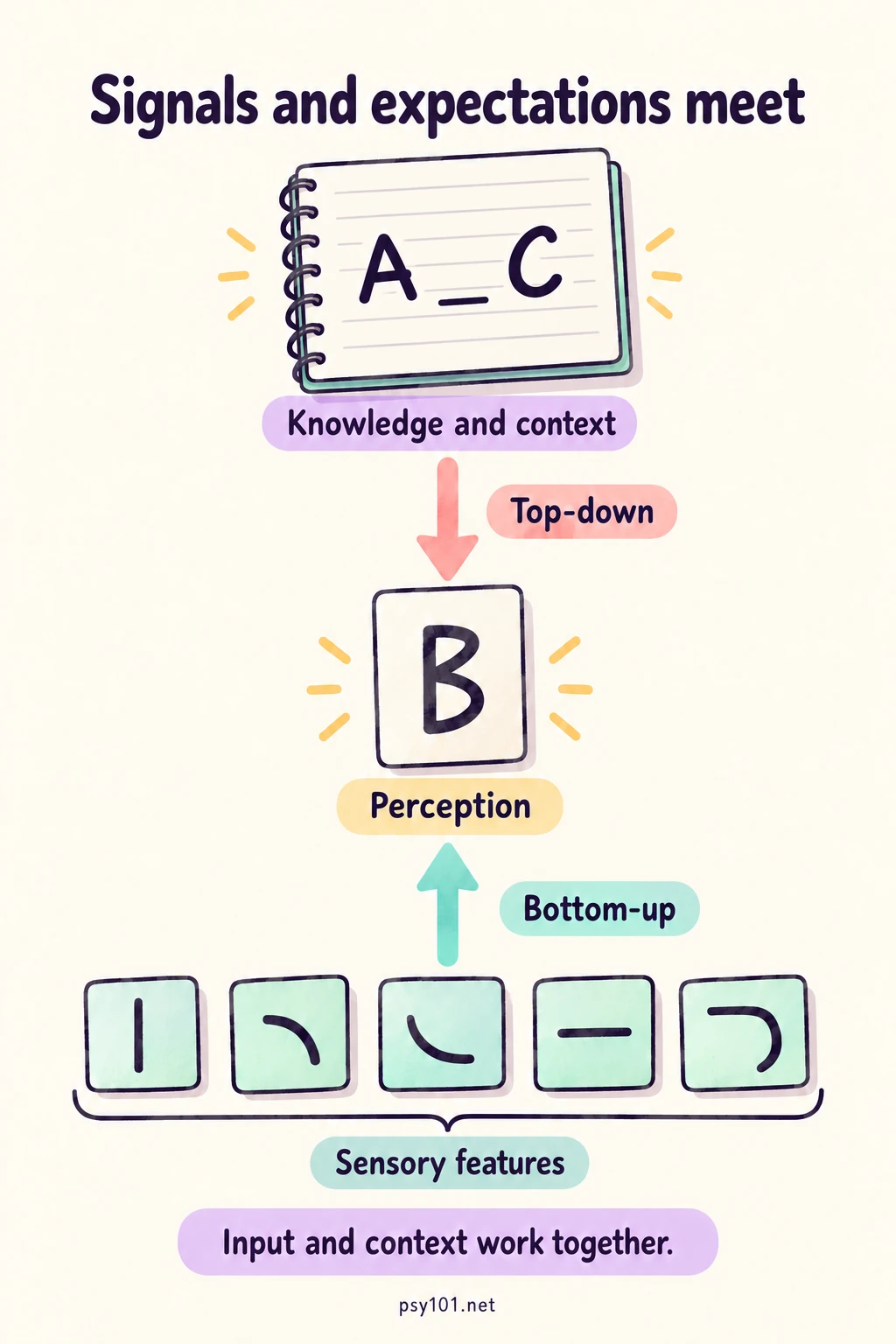 Signals and expectations meetConnect incoming sensory information with knowledge and context.Read the illustrated guide
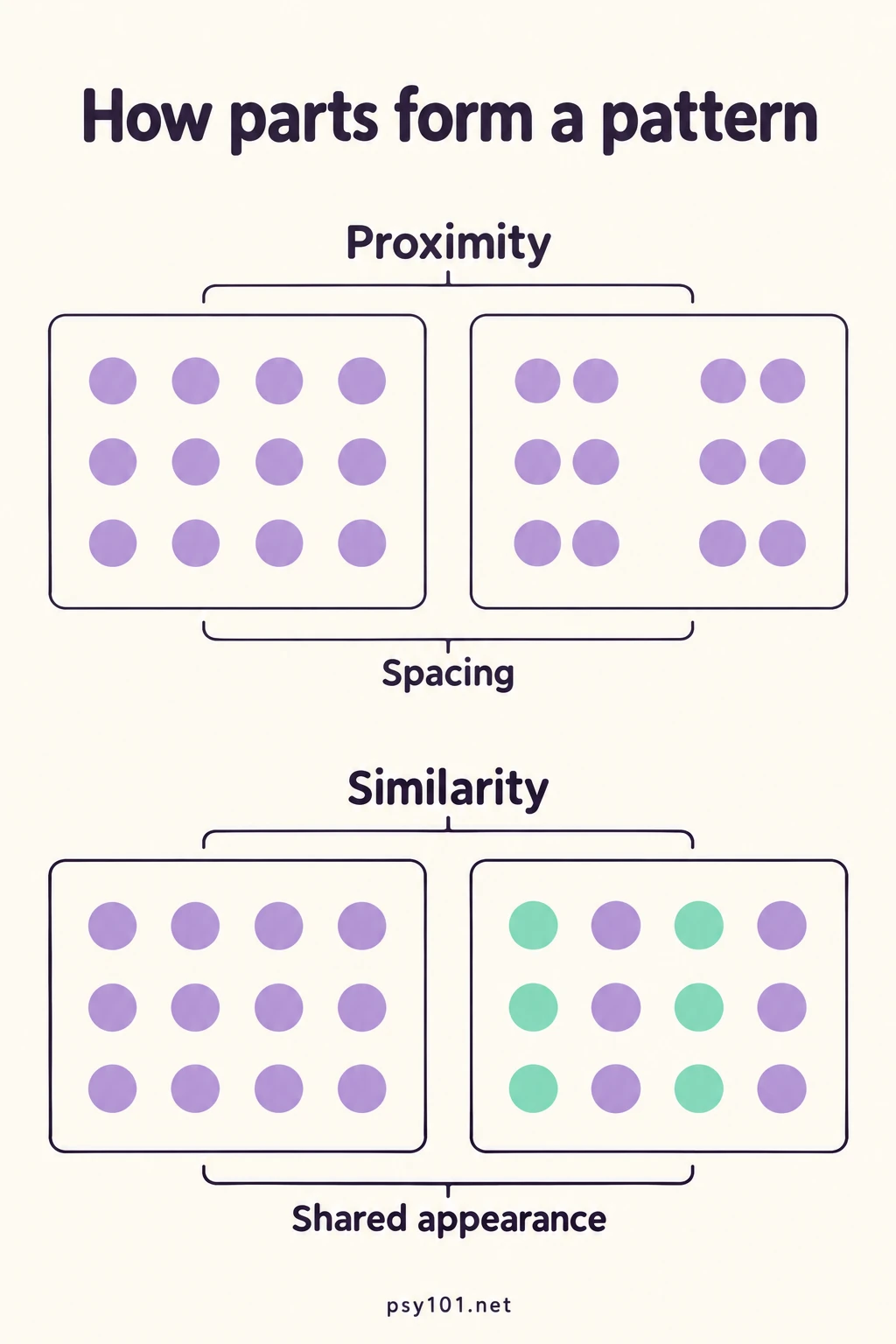 How parts form a patternCompare how spacing and shared appearance influence grouping.Read the illustrated guide
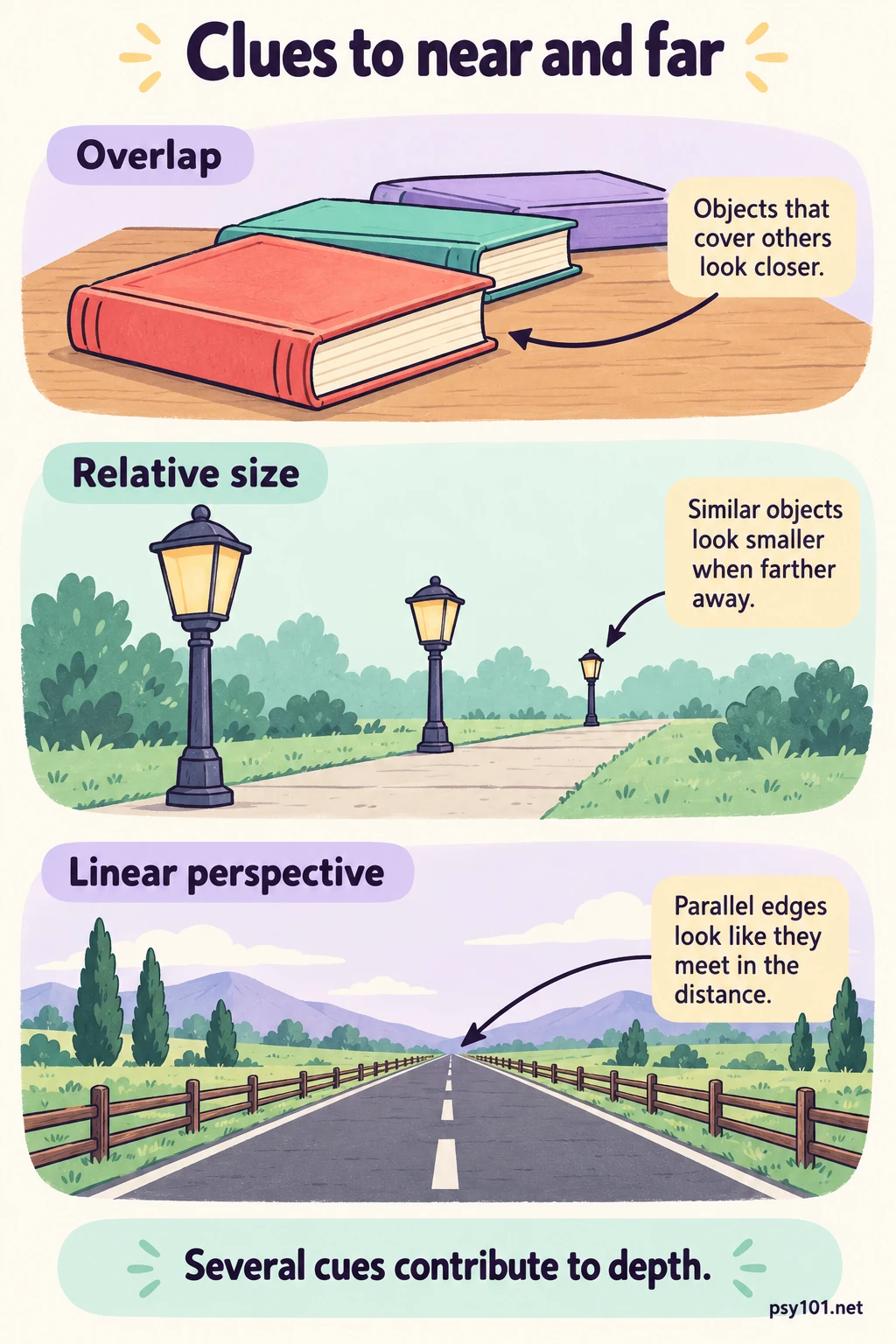 Clues to near and farUse visible relationships to understand depth in a flat picture.Read the illustrated guide
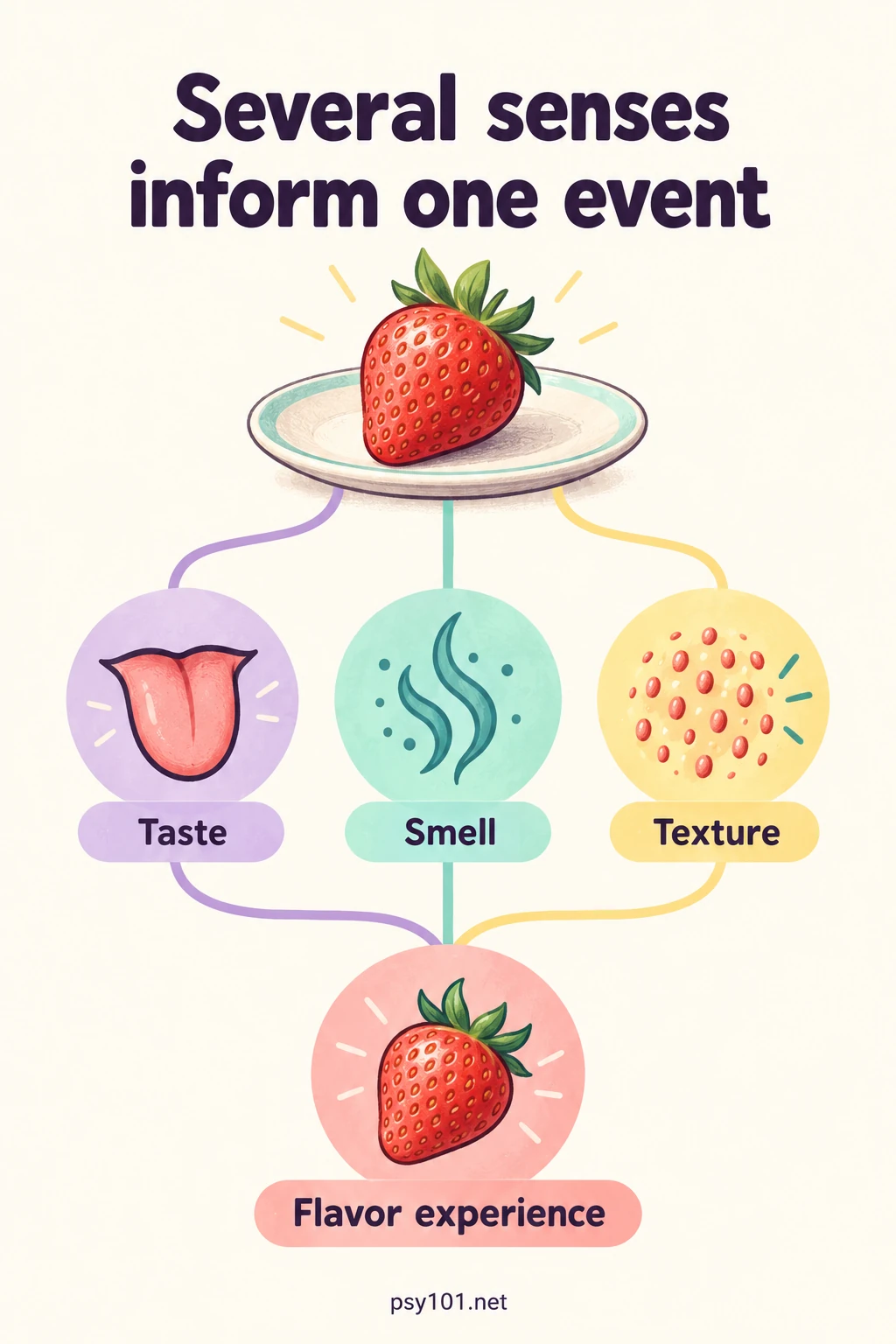 Several senses inform one eventExplore how information from different senses contributes to experience.Read the illustrated guide
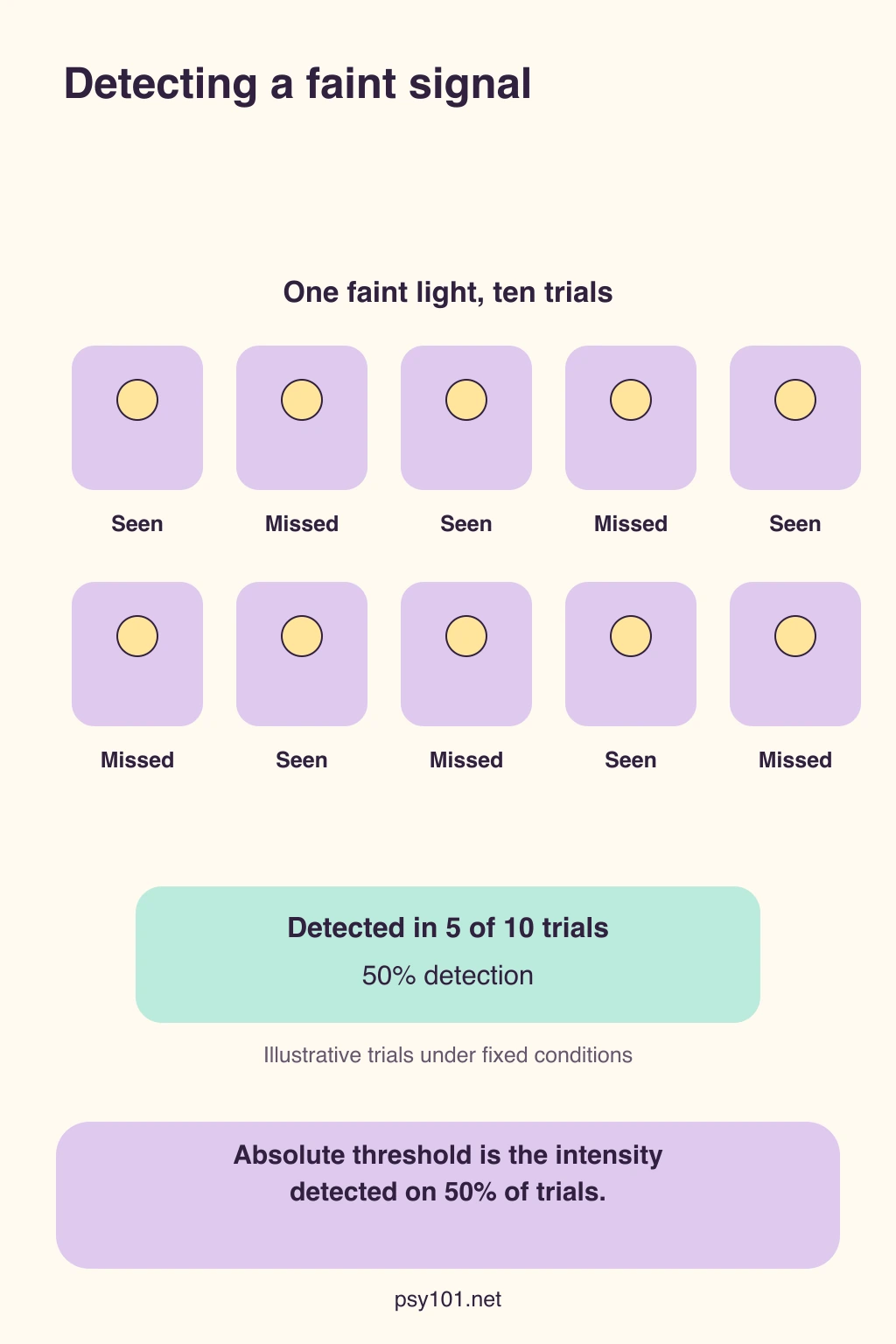 Detecting a faint signalUnderstand detection as a pattern across repeated trials.Read the illustrated guide
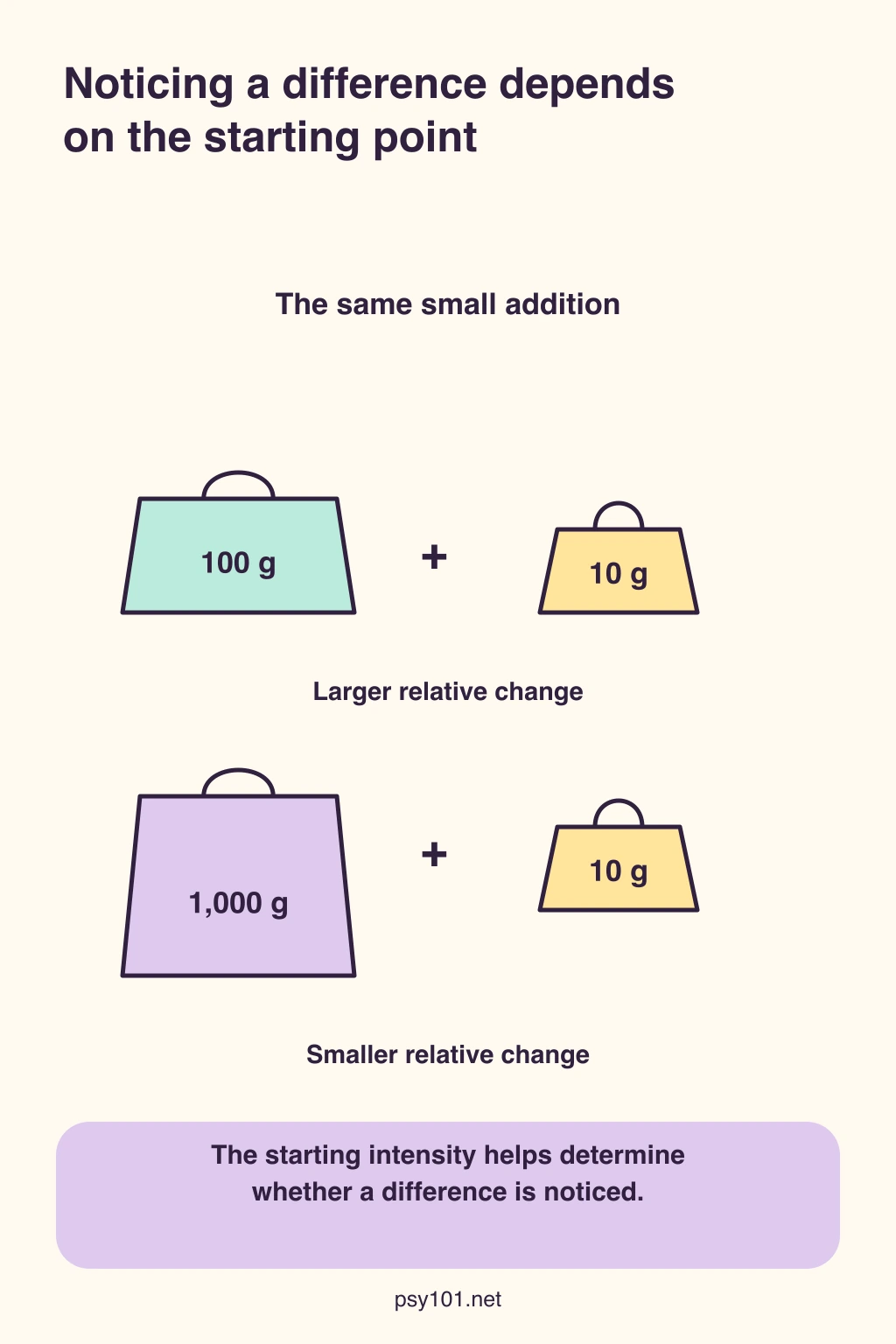 Noticing a difference depends on the starting pointCompare the same addition against different starting amounts.Read the illustrated guide