Learning
How does experience shape a future response?
The basic idea
In classical conditioning, a cue becomes associated with another event. In operant conditioning, consequences affect how likely a behavior is to recur. Reinforcement increases a behavior; punishment decreases it. Positive and negative describe whether something is added or removed.
- A cue predicts an event
- An action has a consequence
- Future responding can change
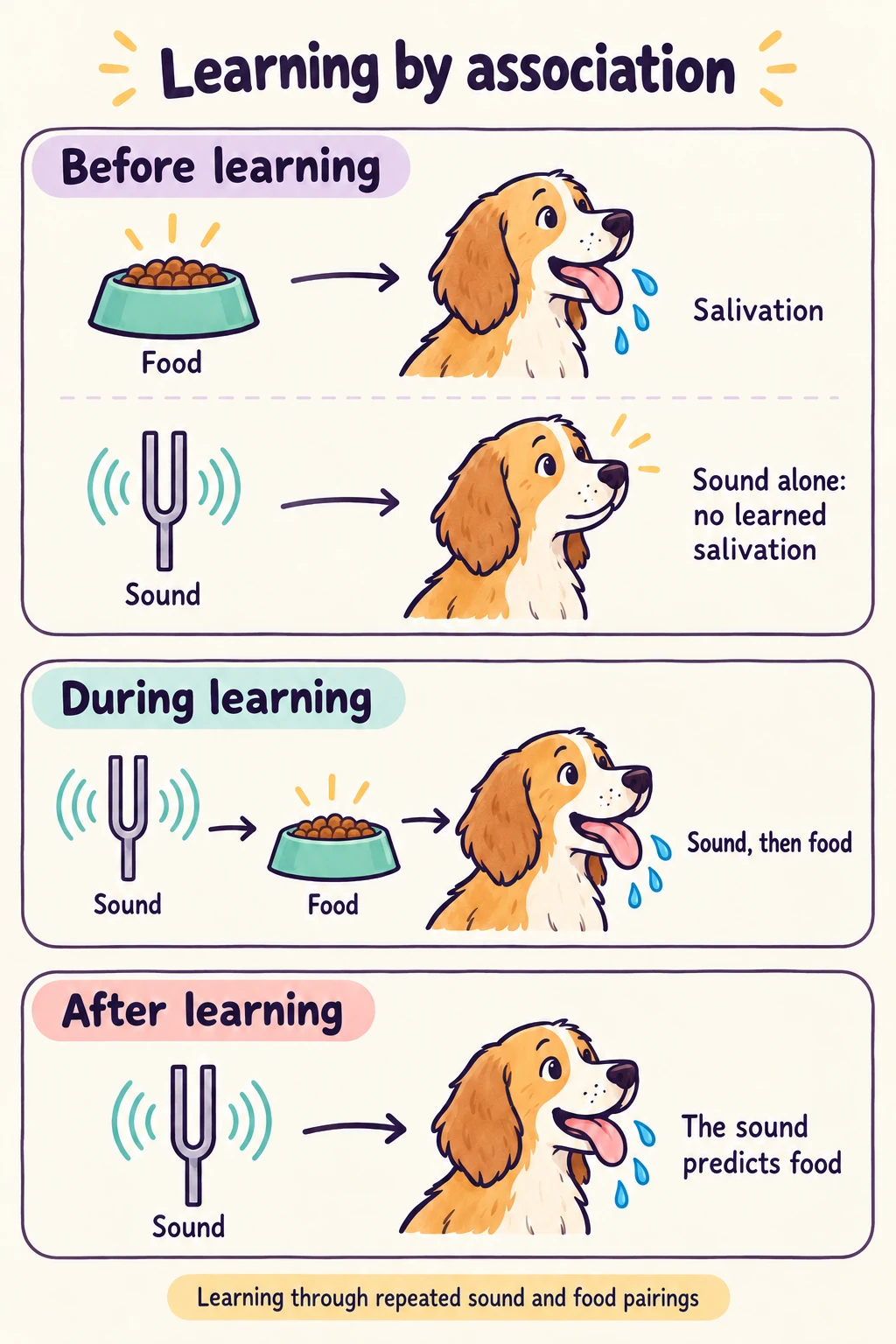
Learning by association
See how a sound can become a useful signal for food.
- Before learning
- Food elicits salivation, while the sound begins as a neutral cue.
- During learning
- The sound is repeatedly followed by food.
- After learning
- The sound predicts food and can elicit salivation.
Picture this
Original teaching example
A particular ringtone becomes associated with enjoyable calls. Separately, turning on a desk lamp is repeated because it makes reading easier. One example concerns a signal; the other concerns the consequence of an action.
Your turn
How does the desk-lamp example show an action being shaped by its consequence?
Show the explanation
Turning on the lamp produces useful light, and the person repeats the action when they want to read. The increased likelihood of that action is what makes the consequence reinforcing in this example.
Take the idea further
Identify reinforcement by observing an increase in the behavior that follows the consequence.
Explore another angle
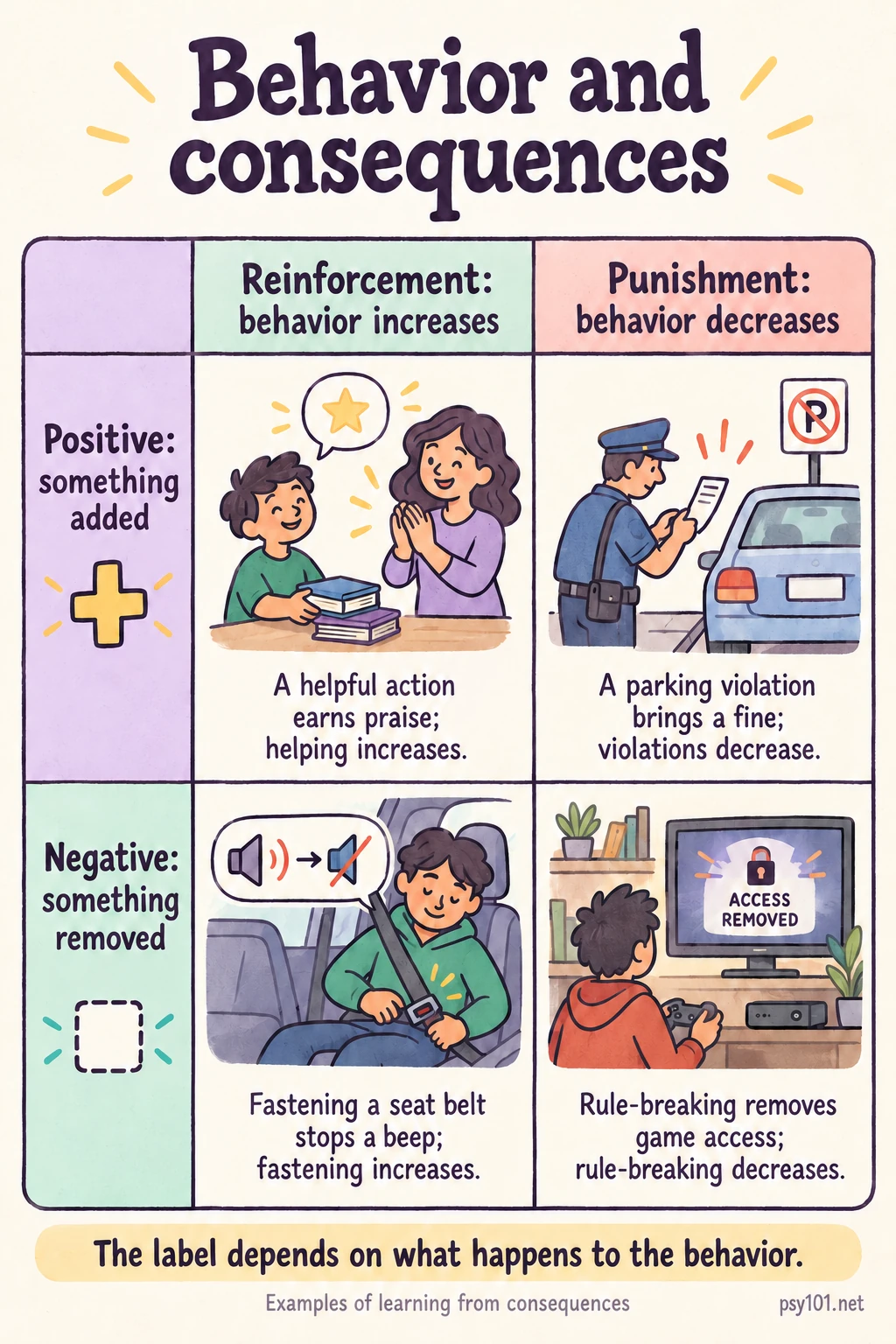 Behavior and consequencesRead consequences by what is added or removed and how behavior changes.Read the illustrated guide
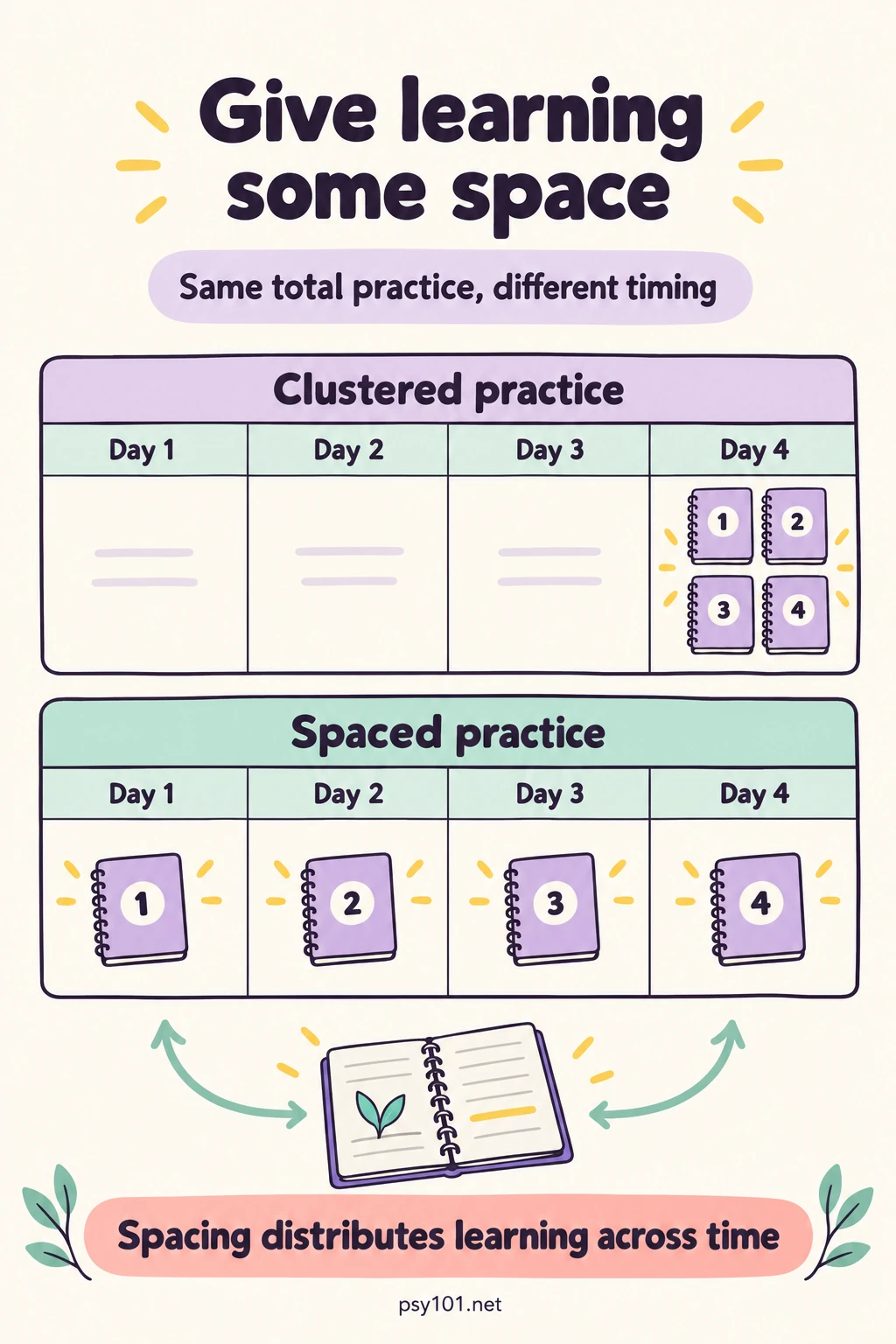 Give learning some spaceCompare the timing of an equal amount of practice.Read the illustrated guide
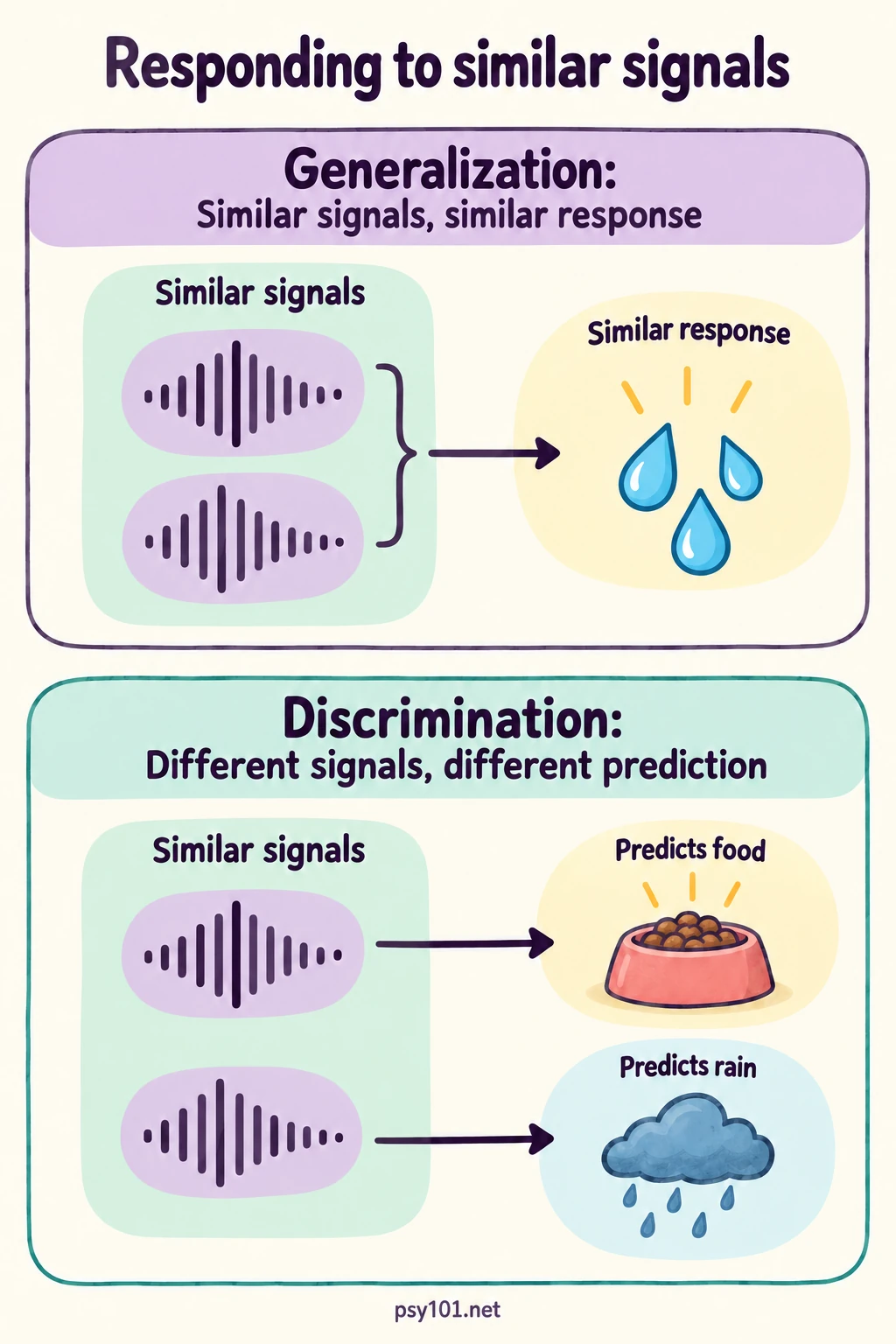 Responding to similar signalsCompare a response spreading to similar cues with learning to distinguish them.Read the illustrated guide
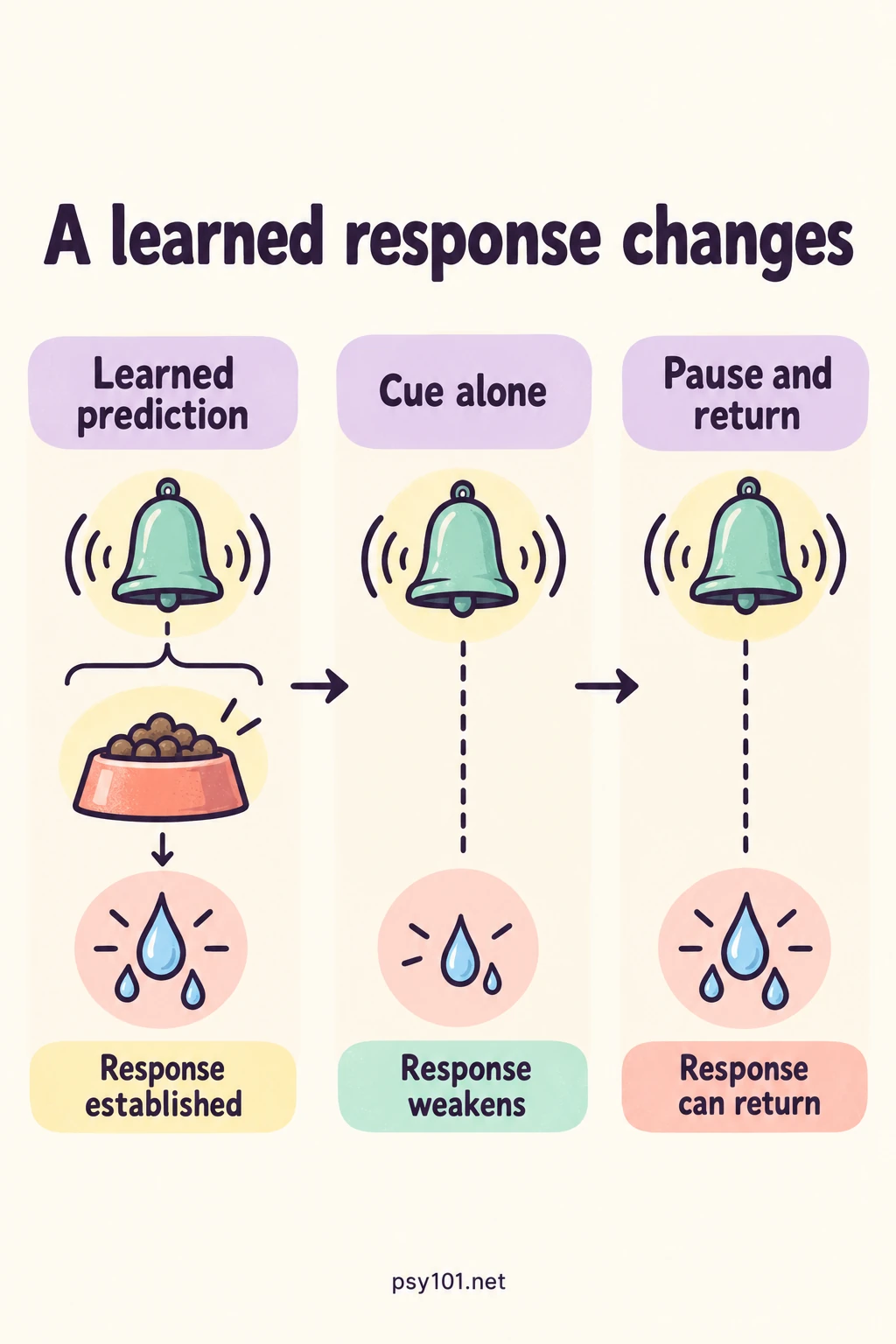 A learned response changesFollow how responding can change when a familiar cue appears alone.Read the illustrated guide
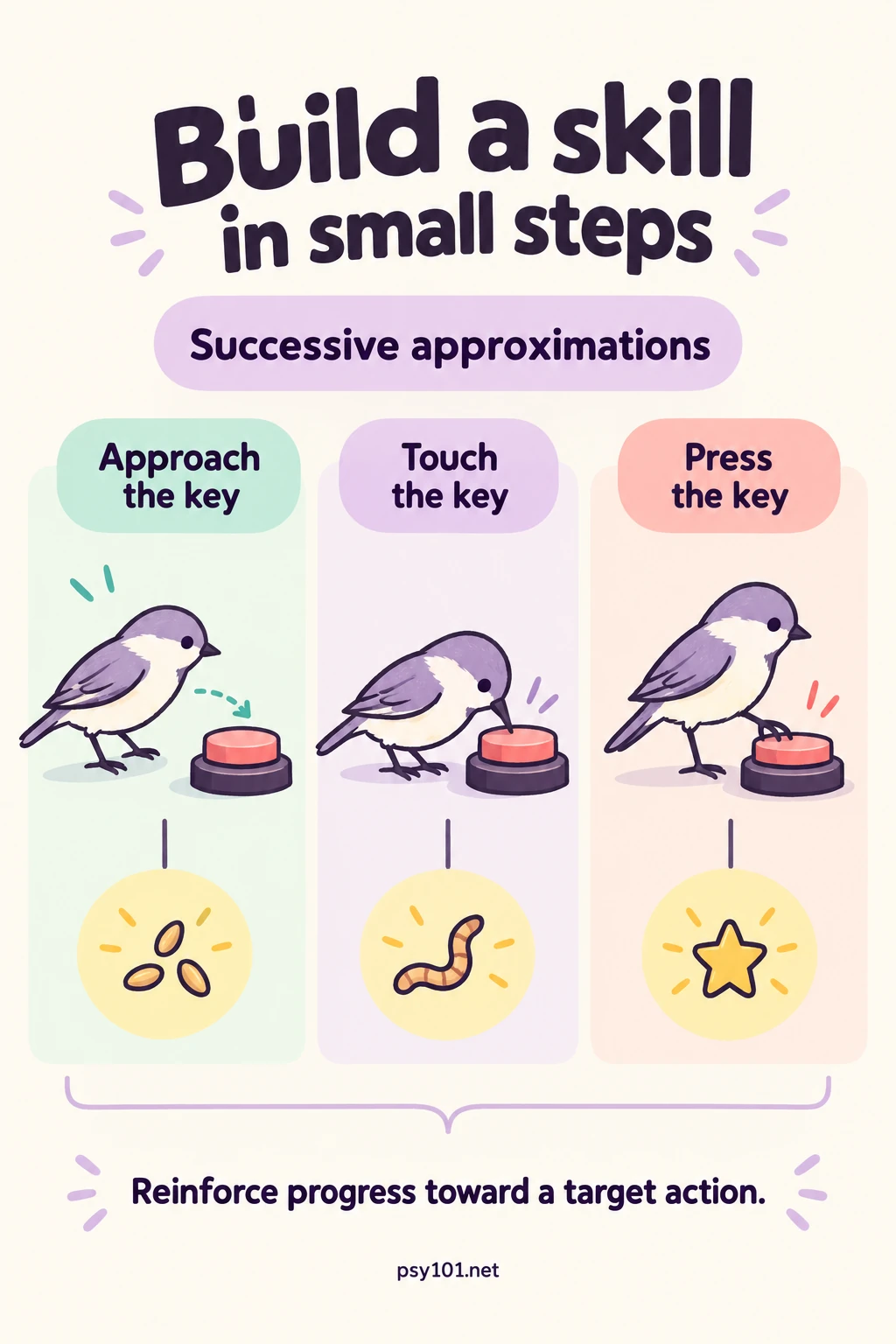 Build a skill in small stepsSee how reinforcing successive approximations can support a new action.Read the illustrated guide
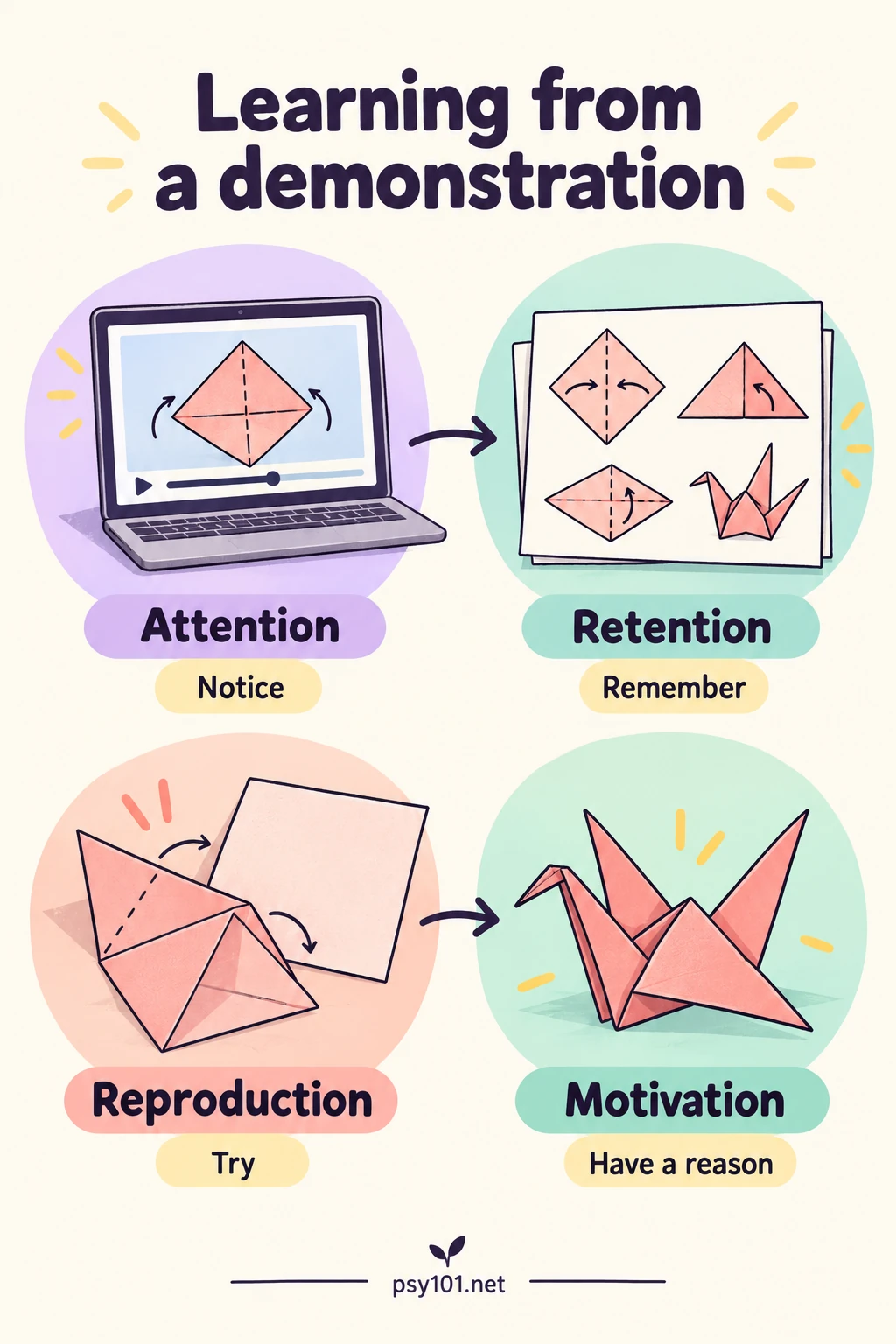 Learning from a demonstrationConnect noticing a model with remembering and attempting an action.Read the illustrated guide
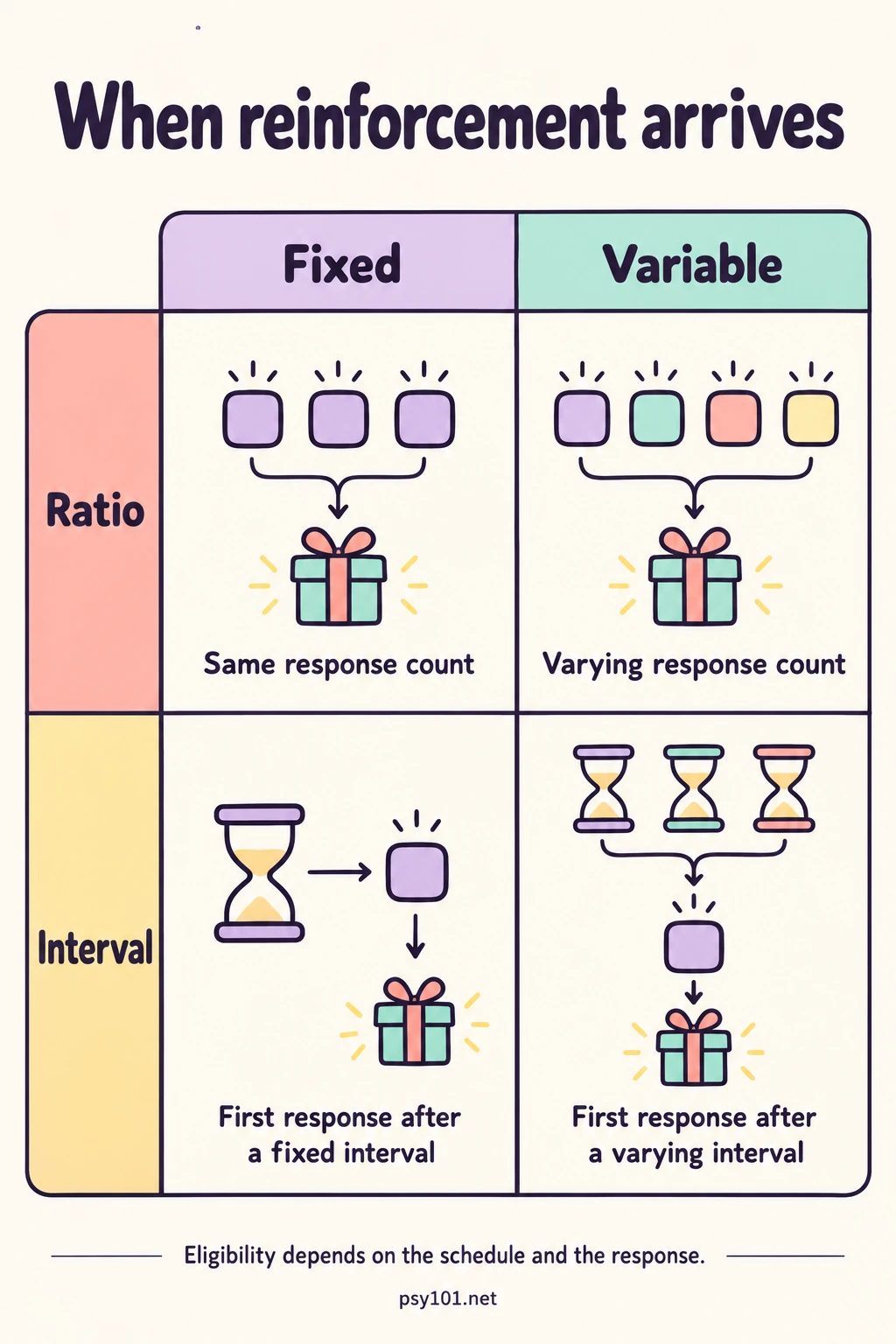 When reinforcement arrivesCompare schedules based on response counts with schedules based on elapsed time.Read the illustrated guide
Follow the question
Read the related OpenStax Psychology 2e section